


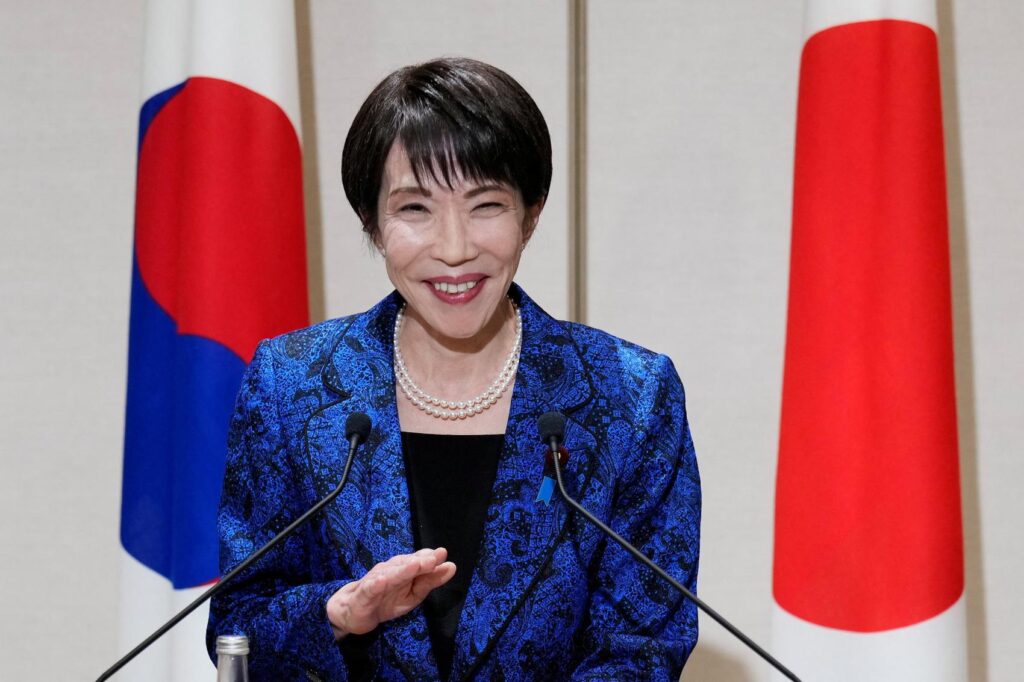
TOKYO (Realist English). Prime Minister Sanae Takaichi plans to dissolve the lower house of Japan’s parliament for a snap general election shortly after the start of the next Diet session, her ruling party and coalition partner said on Wednesday.
Takaichi, who became Japan’s first woman prime minister in October, currently enjoys cabinet approval ratings of around 70%. However, her governing bloc holds only a narrow majority in the powerful lower house, complicating efforts to advance her policy agenda.
“I was notified by Prime Minister Takaichi that she will dissolve the lower house at an early stage of the ordinary parliamentary session,” said Hirofumi Yoshimura, one of the leaders of the Japan Innovation Party (JIP). Yoshimura added that Takaichi plans to hold a press conference on Monday to explain her decision.
Financial markets reacted swiftly. The Tokyo stock market closed 1.5% higher, while the yen fell to its weakest level since mid-2024 amid media reports that the election could be held as early as February 8.
Takaichi also informed Shunichi Suzuki, secretary-general of the ruling Liberal Democratic Party (LDP), of her intention to dissolve the chamber. Suzuki said the election would partly seek public approval for the LDP’s new partnership with the JIP, formed only recently after the ruling party’s previous coalition partner withdrew.
The junior Komeito party ended its 26-year alliance with the LDP last year, citing dissatisfaction with the LDP’s response to a slush fund scandal and concerns over party funding reforms. Komeito was also unsettled by Takaichi’s tough rhetoric on China and her repeated visits to a Tokyo shrine that honours Japan’s war dead, including convicted war criminals.
If the lower house is dissolved on January 23, the opening day of the regular Diet session, February 8 is seen as the most likely election date, according to Japanese media. By keeping the campaign period short, Takaichi aims to limit disruption to parliamentary debate on the budget for the next fiscal year, the Yomiuri newspaper reported.
Her cabinet has approved a record ¥122.3 trillion ($768 bn) budget for the fiscal year starting in April 2026, and Takaichi has pledged to secure swift parliamentary approval to tackle inflation and stabilise the world’s fourth-largest economy.
Takaichi became Japan’s fifth prime minister in five years, initially leading a minority government. Her LDP and the JIP regained a slim lower-house majority in November after three lawmakers joined the LDP, though the ruling bloc remains a minority in the upper house.
A stronger mandate could help Takaichi push through more “proactive” fiscal spending and potentially give her greater leverage in strained relations with China. Ties have worsened since she suggested in November that Japan could intervene militarily if China were to attack Taiwan, the self-governed island claimed by Beijing.