


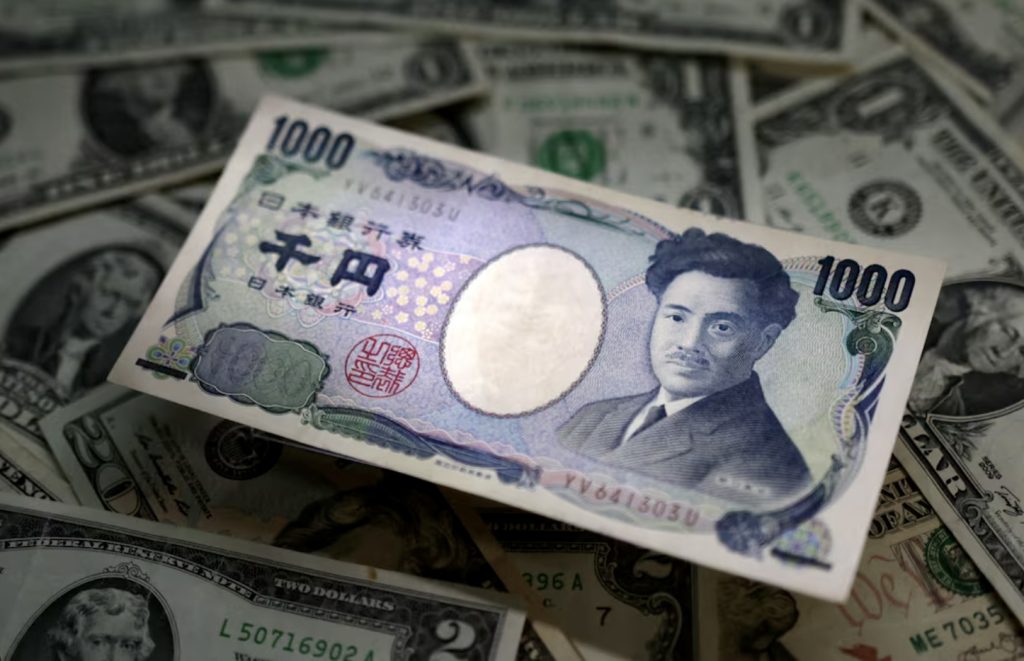
TOKYO (Realist English). The Japanese yen has hit a new 40-year low against the US dollar, breaking through the psychological level of 162 yen per dollar.
On June 30, the currency reached 162.27–162.41 per dollar — the first time since 1986.
The decline has now continued for four consecutive quarters — the longest streak since 2022 — and analysts estimate the yen could weaken to 164 per dollar as early as the beginning of 2027.
Why the Yen Is Falling: Rates, War and Speculators
The main driver of the yen’s weakness is the persistent interest rate differential between Japan and the US. On June 16, the Bank of Japan raised its key rate to 1% — the highest level since 1995.
However, the effect has been minimal: markets expect the US Federal Reserve to maintain tight monetary policy, and traders are pricing in a 63% probability of a Fed rate hike as early as September.
In addition, the war in the Middle East is fueling inflation expectations and disrupting global rate forecasts, while speculators are building short positions on the yen — according to US regulatory data, their volume has reached $11.3 billion, close to a two-year high.
As Bloomberg notes, after the USD/JPY pair broke through the 1986 level, traders’ attention is now focused on the 164–165 zone.
Costly Battle: $72.5 Billion Down the Drain
Japanese authorities have already spent a record 11.73 trillion yen ($72.5 billion) on currency interventions between April 28 and May 27, after the yen first broke through 160 per dollar. However, the effect proved temporary: the exchange rate briefly strengthened to 155 yen, but then resumed its decline.
Finance Minister Satsuki Katayama has repeatedly stated the authorities’ readiness to “take decisive and tough measures against speculative actions.” After meeting with US Treasury Secretary Scott Bessent, she noted that the countries are “increasingly converging” on currency policy and are ready to take “bold steps” if necessary.
However, as Matt Simpson, senior analyst at StoneX, notes, “Japan’s Ministry of Finance will intervene if they can, but they can’t because they are swimming against the current of the Fed’s hawkish policy.”
Japan’s Economy: Exporters Gain, Consumers Lose
The weak yen is a double‑edged sword for the Japanese economy. On the one hand, a weaker currency boosts exporters’ profits and supports the country’s stock market at record highs.
On the other hand, it raises the cost of oil and gas imports, which are denominated in dollars, leading to higher food and electricity prices for households. This puts political pressure on Prime Minister Sanae Takaichi’s government.
The Japanese government is expected to include a call for “appropriate” monetary policy management in its basic policy documents, which markets interpret as an attempt to keep the Bank of Japan from raising rates further.
Investors on Alert: Reforms in Question
Despite the Bank of Japan abandoning its negative interest rate policy in 2024 — a move that was supposed to strengthen the currency — the yen continues to fall. Foreign investors, who had been actively entering the Japanese market on the back of low stock valuations, are now becoming cautious.
Market attention is focused on the US jobs report on Thursday. For three consecutive months, US employment data has beaten expectations, supporting the Fed’s hawkish stance. If the report again proves strong, pressure on the yen will intensify.
If the data disappoints, Japanese authorities may gain an opportunity for more effective intervention amid dollar weakness.
As Carol Kong, currency strategist at Commonwealth Bank of Australia, warns, “it’s not a matter of ‘if’ but ‘when’ Japan’s Ministry of Finance will intervene again to support the yen. However, any intervention is unlikely to change the overall upward trend in USD/JPY.”
The question of whether Japan can stop its currency’s slide remains open — and the answer, it seems, lies not in Tokyo but in Washington.