


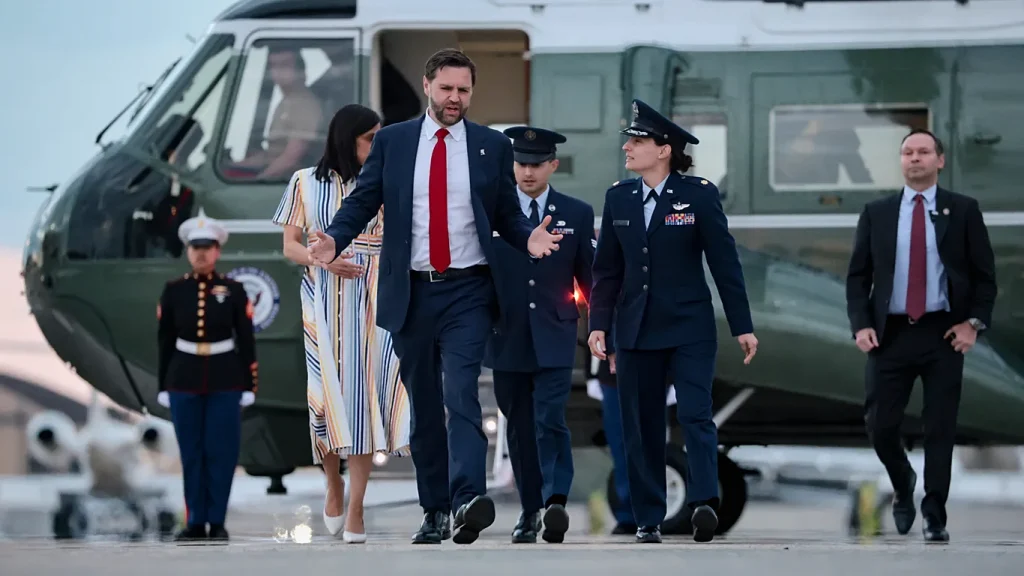
BUDAPEST (Realist English). U.S. Vice President JD Vance has arrived in Hungary in a high-profile show of support for Prime Minister Viktor Orban just days before the country’s closely contested parliamentary elections.
Vance is expected to meet Orban on Tuesday before addressing a rally marking “Hungarian-American Friendship Day” in Budapest. Speaking before departure, he said discussions would cover bilateral relations as well as broader issues including Europe and Ukraine.
The visit comes amid an unusually direct intervention by Washington in a European election campaign. U.S. President Donald Trump has repeatedly endorsed Orban, stating he is “fully behind him” ahead of the vote.
Hungary’s election on April 12 is shaping up as one of the most competitive in recent years. While Orban’s Fidesz party has dominated politics since 2010, recent polling from independent institutes suggests a potential breakthrough for the opposition Tisza Party, led by Peter Magyar.
Magyar, a former ally of Orban, has built a rapidly growing movement centred on anti-corruption and economic reform, positioning himself as a pro-European conservative alternative. Some surveys indicate Tisza could secure a decisive lead, although government-aligned pollsters continue to predict victory for the ruling coalition.
Orban’s campaign has focused heavily on foreign policy, highlighting his ties with Trump and maintaining pragmatic relations with leaders such as Vladimir Putin. His government has also emphasised its hardline stance on migration, a key issue in Hungarian politics since the 2015 refugee crisis.
The Trump administration has departed from the traditional U.S. approach of avoiding overt involvement in foreign elections, instead openly backing leaders aligned with its geopolitical and ideological priorities. Earlier this year, Secretary of State Marco Rubio visited Budapest and expressed support for Orban’s leadership.
Analysts say Vance’s visit highlights the growing international dimension of Hungary’s election, which is being closely watched across Europe and beyond. The outcome could influence not only Hungary’s domestic direction but also broader debates over populism, sovereignty and transatlantic relations.
With polls tightening and external backing becoming more visible, the final days of the campaign are expected to be decisive in determining whether Orban can extend his long rule or face his most significant political setback in over a decade.