


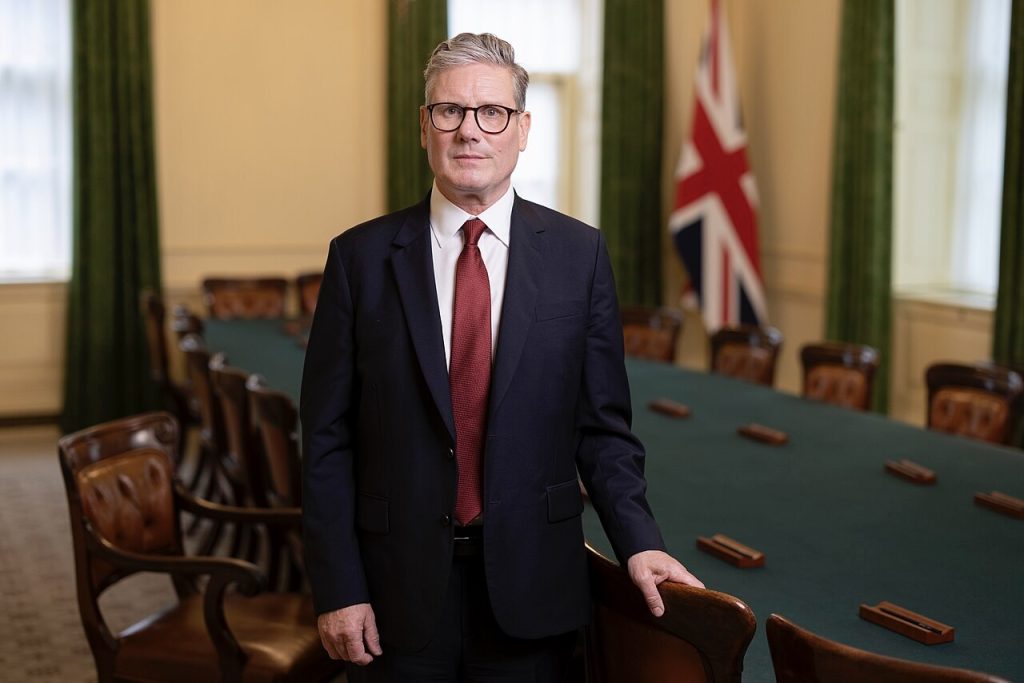
LONDON (Realist English). British Prime Minister Keir Starmer has officially announced his resignation as head of government and leader of the Labour Party after two years in power.
Speaking outside Downing Street, he acknowledged that he was not the best candidate to lead the party into the next general election and said he had informed the King of his decision.
Starmer will remain as caretaker prime minister until the Labour leadership contest is completed. Nominations will open from July 9 to 16, and the new leader is expected to be confirmed before Parliament returns from its summer recess in September. As a result, the United Kingdom will have its seventh prime minister since 2016.
The Road to Resignation: From Triumph to Fall
Starmer came to power on July 5, 2024, winning a landslide general election and ending 14 years of Conservative rule. However, within just two years, his approval ratings and the party’s popularity plummeted.
The decisive blow came with Andy Burnham’s victory in the Makerfield by‑election on June 18. Burnham won nearly 55% of the vote, beating the Reform UK candidate by more than 9,200 votes.
The result was seen as proof that the former Mayor of Greater Manchester could defeat Nigel Farage’s party where Starmer had failed. More than 100 Labour MPs publicly called on the prime minister to step down.
Achievements and Failures of the Starmer Government
Despite his early departure, Starmer listed several achievements of his cabinet in his farewell speech:
- Economic growth: the economy showed growth, and real wages rose faster than inflation.
- Social policy: NHS waiting lists were reduced, workers’ and renters’ rights were improved, and half a million children were lifted out of poverty.
- Defence and immigration: defence spending was increased to its highest level since the Cold War, and the number of illegal migrants crossing the Channel in small boats was reduced.
However, critics point to several missteps that eroded the prime minister’s popularity:
- Unfulfilled promises: the government failed to deliver the rise in living standards that voters had expected.
- Unpopular measures: cuts to winter fuel payments for pensioners and benefit reductions created an image of a leader out of touch with ordinary people.
- Political errors: a series of inconsistent decisions and U‑turns undermined trust in his leadership.
- Low turnout: the 2024 victory was won with a record low share of the vote (33.7%).
Andy Burnham: ‘King of the North’ on Course for Downing Street
The new favourite for prime minister is 56‑year‑old Andy Burnham, widely regarded as the UK’s most recognisable regional politician. Burnham was born in 1970 in Aintree, near Liverpool. He joined the Labour Party at 15 and studied at Fitzwilliam College, Cambridge. He was first elected to Parliament in 2001.
Over the course of his political career, he has held the posts of Health Secretary (2009–2010), Chief Secretary to the Treasury, and Secretary of State for Culture, Media and Sport. He ran twice unsuccessfully for the Labour leadership: in 2010 (finishing fourth) and in 2015 (finishing second to Jeremy Corbyn).
In 2017, Burnham left Westminster to run for Mayor of Greater Manchester. He won and was re‑elected three times. Under his leadership, the region saw a revival: public transport was brought under public control and improved, and a construction boom began.
He also actively supported the campaign for justice for the victims of the Hillsborough disaster. His regional policies and opposition to the Conservatives’ “London‑centric” approach earned him the nickname “King of the North.”
If Burnham wins, he will become the UK’s seventh prime minister in the past ten years. His political stance is seen as more left‑wing than Starmer’s. Financial markets have already reacted to the political uncertainty by pushing the pound to its lowest levels of the year.
The key question for investors is whether Burnham will maintain the tight fiscal rules set by Chancellor Rachel Reeves.