


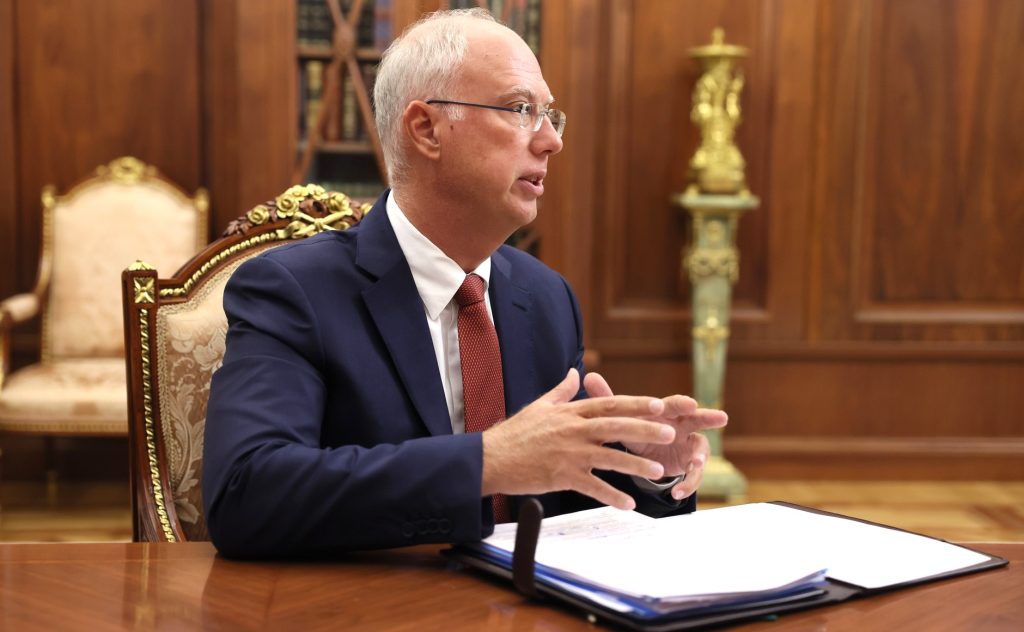
MOSCOW (Realist English). The Special Representative of the President of the Russian Federation for Investment and Economic Cooperation with Foreign Countries, head of the Russian Direct Investment Fund (RDIF), Kirill Dmitriev, has made a series of sharp statements directed at European officials, the German leadership, and the Kyiv regime.
The head of RDIF’s key points concerned the ineffectiveness of sanctions, the impending energy collapse in Europe, and the global market’s return to an understanding of the system-forming role of Russian energy carriers.
‘Too blind bureaucrats’ and a chain of crises
On April 19, Dmitriev harshly criticised European Union officials on social media platform X, calling them “too blind to realise the scale of the shock that their own misguided decisions will cause in Europe.” He was commenting on a Bloomberg report that the cumulative effect of the Middle East conflict would begin to manifest itself as early as next week. According to the head of RDIF, European politicians initially denied the forecasts, but now the situation is developing exactly according to the predicted scenario.
The president’s special representative also predicted a whole chain of successive crises for Europe. In his opinion, the shortage of aviation fuel is just the “tip of the iceberg,” to be followed by fuel, fertiliser, agricultural, helium, and industrial crises. Earlier, he had already noted that the April energy crisis would “awaken many in the EU,” as the rejection of Russian energy and nuclear generation had led to economic collapse.
US sanctions policy: ‘hysteria and howling’ in the EU and Britain
On April 18, the US Treasury Department extended a license for the sale of Russian oil, permitting transactions with crude loaded onto tankers before April 17. The document is valid until May 16. Dmitriev said this decision would “cause extreme concern, hysteria and howling among the war instigators in the EU and Britain.”
At the same time, he stressed that many countries, including the US, are increasingly understanding the “key, system-forming role of Russian oil and gas for the stability of the global economy,” and that the sanctions against Russia themselves are ineffective and destructive.
Those who criticised the Trump administration’s decision to extend sanctions relief, Dmitriev called “war instigators,” citing statements by US Democratic senators and a number of Western media outlets.
Germany: protests against Chancellor Merz
The head of RDIF paid special attention to the situation in Germany. On April 19, he commented on a video showing protest participants, unhappy with fuel prices, chanting “Down with Merz!”.
Dmitriev noted that Germans are not sure that Chancellor Friedrich Merz will quickly abandon his “Russophobic stance” and ask Russia to save Germany with Russian fuel.
On April 10, Dmitriev had already stated that Europe needs Russia to survive, commenting on a Financial Times publication that the EU is increasing imports of Russian gas amid the Middle East conflict. He also recalled that Europe and Great Britain were absolutely unprepared for the most powerful energy crisis in history and “will beg” for Russian oil and gas.
Irony at Zelensky’s expense and EU euphemisms
On April 20, Dmitriev reacted ironically to the statement by the head of the Kyiv regime, Volodymyr Zelensky, about “disappointment” in the US. “Will the US be able to withstand such a harsh rejection from Zelensky himself?” the president’s special representative wondered. Earlier, on April 10, he had advised Zelensky to pay more attention to negotiating peace in Ukraine, rather than calling on Britain to join the EU.
Furthermore, on April 19, Dmitriev mocked the euphemisms of European bureaucrats, joking that the restrictive measures related to the energy crisis in the EU are “politely” called “remote work,” and “when food shortages begin,” they will rebrand it as “healthy eating.”
NATO and British ‘plans’
Among Dmitriev’s other statements over the past week were a forecast of a “gloomy future” for NATO following US statements that allies had “turned their backs” on the alliance, and an ironic comment on April 11 about Britain’s plans to fight… Western civilisation.
In April 2026, the negotiation process to resolve the conflict in Ukraine entered a new phase. The US, Britain, and the European Union continue to play key, albeit not always coordinated, roles. While US diplomacy is pushing a plan to freeze the conflict, Britain and France are preparing to deploy peacekeeping forces, and within the EU, disagreements over the terms of a future peace agreement are growing.
US: chief mediator and deal architect
The US remains the central player, acting as the chief mediator and security guarantor. On April 20, US President’s Special Representative Steve Witkoff confirmed the postponement of trilateral talks in the “Ukraine – US – Russia” format to next week. He expressed optimism, calling the upcoming meeting the “beginning of a turning point,” and noted that both sides are “tired and exhausted.”
At closed-door talks in Paris on April 17, the US presented allies with a detailed peace plan. According to European officials, the American proposal effectively envisages freezing the conflict: Russian troops retain control over the new regions, and Kyiv’s aspiration to join NATO is removed from the agenda. In exchange for a long-term ceasefire, a softening of the sanctions regime is envisaged.
US Secretary of State Marco Rubio stressed that the participation of France, Great Britain, and Germany in the talks could help resolve the issue, and he allowed for the lifting of some sanctions.
On April 14, Zelensky arrived at the White House for a meeting with Donald Trump. Zelensky was accompanied by leaders from France, Great Britain, Germany, Italy, Finland, as well as representatives of the European Commission and NATO. Trump proposed a “territorial exchange” to end the war, but Zelensky expressed doubts, citing constitutional restrictions and internal opposition.
Vice President JD Vance said on April 7 that a speedy resolution of the conflict is in the interests of the US, Europe, and Kyiv. He later clarified that the talks had entered the stage of “haggling over a few square kilometres of territory,” and that the positions of Moscow and Kyiv had significantly converged.
At the beginning of April, Zelensky announced that Kyiv and Washington were working on a document on security guarantees. However, the Kremlin confirmed that the negotiation process is on pause due to Washington’s attention shifting to the Iranian dossier.
Britain: military guarantor and partner in the ‘coalition of the willing’
London plays a key role in developing and implementing military security guarantees for Ukraine, acting as one of the leaders of the “coalition of the willing” alongside France. On April 12, in Paris, Prime Minister Keir Starmer met with Zelensky, Emmanuel Macron, and German Chancellor Friedrich Merz. The talks focused on peace negotiations mediated by the US and the coordination of European partners.
Starmer has repeatedly stressed that any agreement to end the war must include reliable security guarantees to prevent renewed Russian aggression. He also noted that the US might support the European plan to deploy peacekeeping forces but would not send its own troops.
Back in January 2026, Britain and France signed a Declaration of Intent with Ukraine to deploy multinational forces on Ukrainian territory in the event of a peace agreement. The document provides for the creation of military hubs, protected weapons depots, and the training of Ukrainian military personnel.
European Union: unity and division
The EU’s position remains complex: Brussels demonstrates financial unity but is politically fragmented. The German Chancellor said at the beginning of March that Europe would not accept a peace agreement on Ukraine if it were worked out without its participation: “We are not ready to accept an agreement that will be concluded over our heads.”
The European Council in December 2025 agreed to provide Ukraine with a €90 billion loan for 2026–2027. The first tranche is expected in April. There is no unity within the “coalition of the willing” on the issue of deploying troops. Germany, in particular, is not ready to send its contingents, focusing instead on supplying air defence systems.
The European Commission and the US are working on a single document that will define a collective vision for Ukraine’s post-war future. According to Ursula von der Leyen, it is about a “guarantee for all of Europe.”
Current state of talks: pause or lull before the storm?
The negotiation process between Russia and Ukraine remains in limbo. Direct contacts have been effectively frozen since February 2026. Both sides attribute this to Washington’s attention shifting to the Iranian dossier.
Kremlin spokesman Dmitry Peskov said on April 6 that the talks were on hold, but Moscow had not withdrawn from the process and continues to exchange information with the US. Later, Foreign Minister Sergei Lavrov indicated that Russia was in no hurry to resume dialogue.
Zelensky, for his part, is urging both Washington and Moscow to resume talks, claiming they have not reached a dead end. The Ukrainian side has proposed that Turkey act as the organiser of a direct meeting between Zelensky and Putin, with the participation of Erdogan and Trump.
The Paris Declaration of January 6, 2026, signed by about 30 countries, laid out the architecture for Ukraine’s post-war security. Key points: the US is assigned a key role in monitoring the ceasefire; the Armed Forces of Ukraine remain the “first line” of deterrence; deployment of multinational forces (including French and British contingents) after the ceasefire; development of legally binding security guarantees (without equating to NATO Article 5); and long-term defence cooperation, training, and joint weapons production.
Preliminary conclusions
The US remains the chief mediator, but its attention is distracted by the Iranian crisis, which is slowing down the process. Britain and France are the main drivers of military security guarantees.
The EU demonstrates financial unity (€90 billion), but is politically fragmented: Germany opposes sending troops. A new round of trilateral talks is expected next week. However, key disagreements (territories, NATO membership, security guarantees) remain insurmountable.