


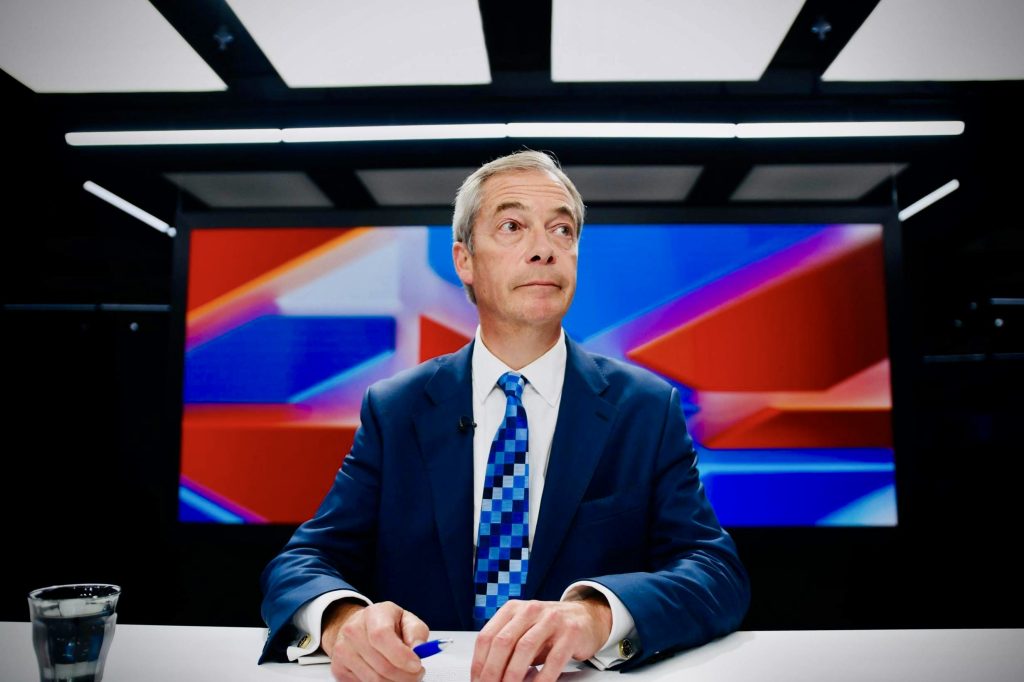
LONDON (Realist English). On 7 May, Britain held local elections, as well as elections to the parliaments of Scotland and Wales. The results came as a shock to the political establishment: Prime Minister Keir Starmer’s governing Labour Party lost more than 1,480 seats in England and lost its majority in around 40 councils.
The main victor was Nigel Farage’s right‑wing populist Reform UK party, which not only seized control of several city councils but also won representation in the Scottish and Welsh legislatures for the first time in history.
Who is Nigel Farage?
Nigel Paul Farage was born on 3 April 1964 in Farnborough, Kent. He began his career in London at the age of 18 as a trader on the London Metal Exchange, having declined a place at university. For three decades, Farage was the face of Euroscepticism in Britain. He was initially a member of the Conservative Party but left in 1992 to protest the signing of the Maastricht Treaty, which he believed would erode national sovereignty.
In 1993, he co‑founded the Eurosceptic United Kingdom Independence Party (UKIP), then a fringe group. In 1999, he was elected to the European Parliament, where he served until 2020, consistently opposing the EU.
Farage served as UKIP leader twice (2006‑2009 and 2010‑2016). His greatest political triumph came in 2016, when he played a key role in the successful campaign for Britain to leave the European Union in the referendum.
After the referendum, he stepped back from leading UKIP. In 2019, when Brexit stalled, he founded the new Brexit Party. In 2021, it was renamed Reform UK. He spent several years in the media: working as a presenter on GB News and even taking part in the reality show “I’m a Celebrity… Get Me Out of Here!”
On 3 June 2024, Farage made a political comeback, once again taking the helm of Reform UK. A month later, he was elected to the House of Commons for the first time, as MP for Clacton. His key political priorities include tough immigration controls, leaving the European Convention on Human Rights, cutting foreign aid and lowering taxes.
Key results
In England, Reform UK took control of the council in Birmingham – Europe’s most populous municipality – for the first time. Party representatives also gained seats in northern counties traditionally seen as Labour strongholds, and in Essex, a traditional Conservative heartland. Reformists won mayoralties in several London boroughs for the first time.
In Wales, Reform UK sensationally became the second largest party in the Senedd (Welsh Parliament), winning 34 seats. Labour, which had governed Wales for more than a century, won only 9 of 96 seats and lost power to the nationalist Plaid Cymru. Welsh First Minister Eluned Morgan lost her own seat and resigned.
In Scotland, Reformists won 17 seats in the Holyrood parliament, tying with Labour. The Conservatives suffered a catastrophe, losing more than 560 seats and becoming the fifth political force in Scotland.
The Green Party won nearly 600 seats, while the Liberal Democrats added 110 new councillors.
Political reaction
Starmer called the results “difficult” and promised to “analyse the mistakes and move forward”, but refused to resign. Labour MP Clive Betts called on the party leader to consider stepping down, while former Labour government minister Catherine West called for “a new leadership”.
Reform UK leader called the success a “truly historic moment” and said the results marked a confident step towards his becoming prime minister. According to exit polls, national support for Reform UK stands at 26%, putting it in first place in the kingdom.
The local elections of 7 May demonstrated the complete collapse of Britain’s traditional two‑party system. Voters, fed up with the cost‑of‑living crisis, corruption and failed immigration policies, are flocking to a populist alternative. Political instability and the radicalisation of the masses are the new reality for a country once seen as a bastion of parliamentary stability.