


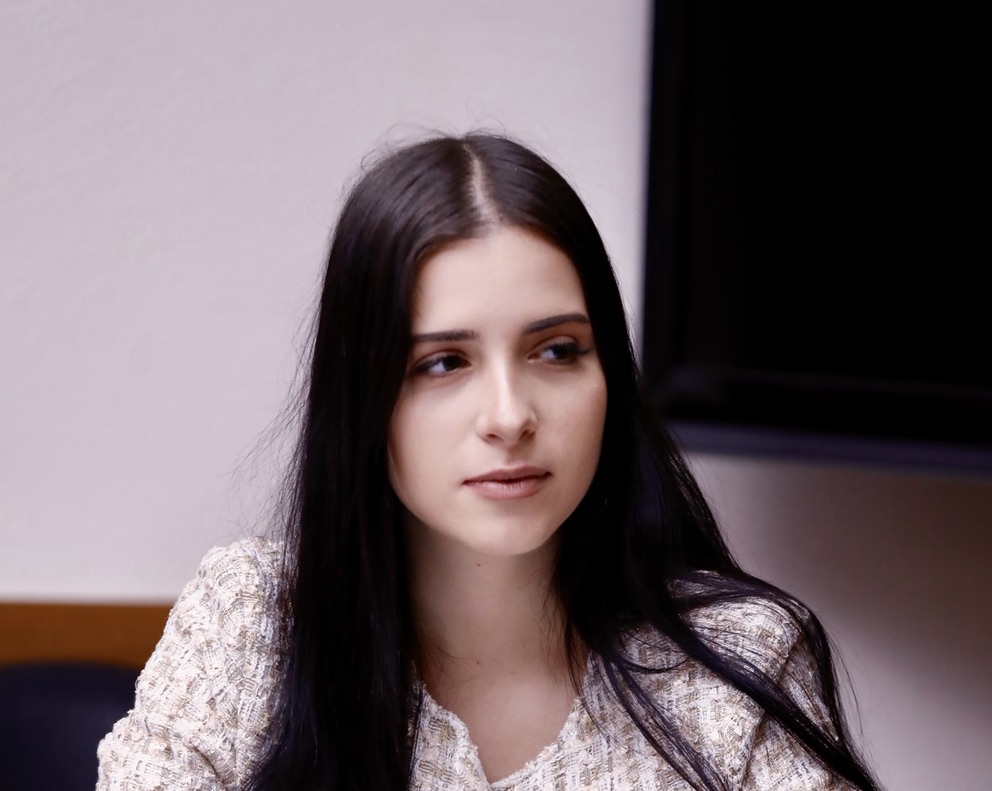
MOSCOW (Realist English). Maria Nikiforova, an expert on youth policy at the Central Committee of the Communist Party of the Russian Federation, could have remained behind the scenes of big politics.
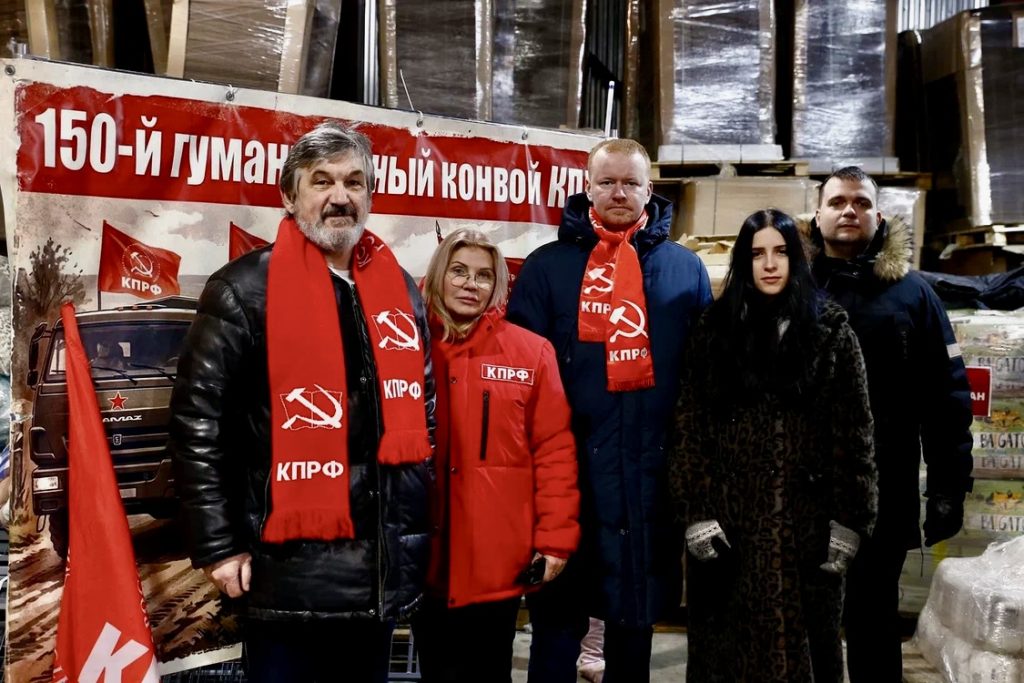
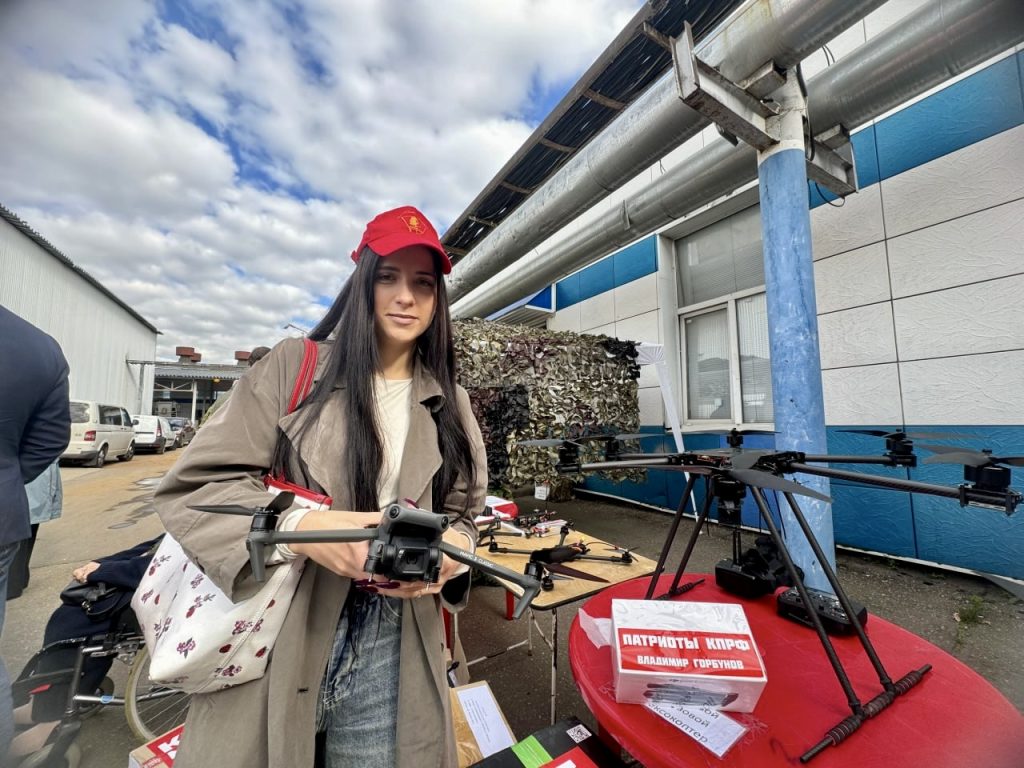
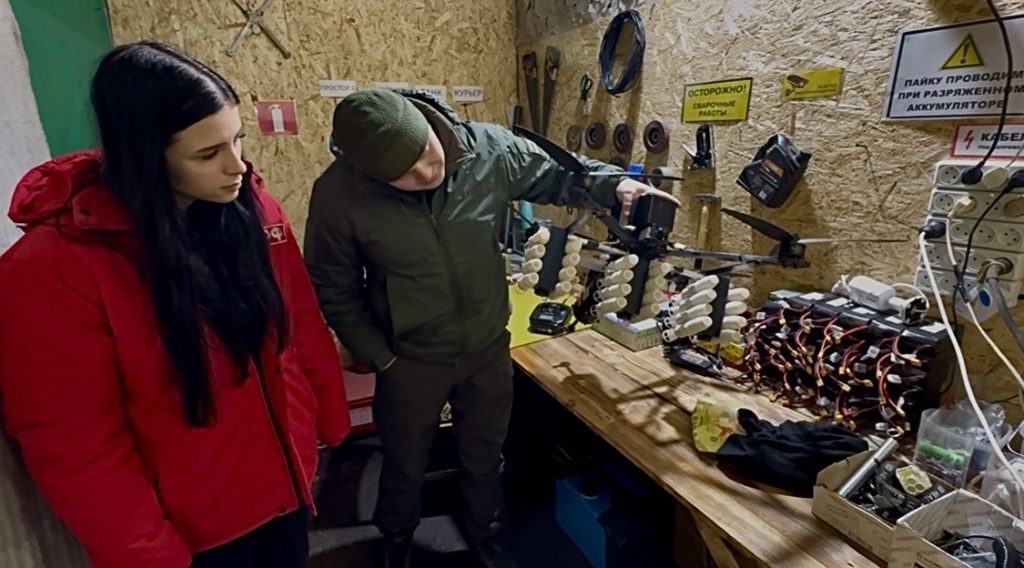
Instead, she regularly travels to Donbass, takes part in humanitarian missions and knows first‑hand how people live in the liberated territories.
On the eve of the September elections to the State Duma, Maria told Realist English about what young people in the new regions are hoping for, how socialist ideas combine with patriotism, and what laws the CPRF could pass to change people’s lives.
In her interview, she speaks about the mood at the front and in the rear, her belief in socialism as a living, evolving system, and explains why the main law for the liberated territories should be a law protecting the rights of every citizen.
What role does young people play today in the life of the liberated territories?
Maria Nikiforova: If we speak frankly, the younger generation now wants the fighting to end. People are exhausted by the constant tension of war. By the way, a curfew is still in effect in the liberated territories. I have also noticed a small trend of young people leaving for larger cities to develop their potential – places like Krasnodar or Rostov‑on‑Don.
There, you’re not so close to the front, and the city is not in a state of “stagnation”. Donetsk still looks that way.
Those who have loved ones killed in the war, or who are currently at the front, are particularly active in collecting humanitarian aid. For them, war is not an abstract concept but a reality that has deeply affected their families.
The socialist idea is often associated with internationalism rather than national patriotism. How do you combine these two – love for your country and belief in social justice for all working people, regardless of nationality?
Maria Nikiforova: I understand that by “internationalism” you probably mean a kind of “levelling”, but that never existed in the Soviet Union. The USSR was governed by the principle of equality before the law and equality before the means of production. It can be summed up in one phrase: “from each according to his ability, to each according to his needs.”

If a person demonstrates their strengths and works successfully, their reward will be higher than others. From my point of view, we should strive to ensure that everyone has the same starting opportunities.
Patriotism, faith in justice and goodness – these concepts do not contradict each other; rather, they complement each other. The state must make a big contribution here.
If the people do not see opportunities for themselves, do not see the authorities caring about their lives and taking responsibility for the country’s future, then there can be no question of patriotism. I believe it is the state that sets the tone, but it must do so unobtrusively, naturally, so as to awaken patriotic feelings in the people.
Which contemporary socialist thinkers do you read and trust? Does socialism have a 21st‑century face?
Maria Nikiforova: I like to turn to our older scholars – specifically to Marxist‑Leninist theory. That is truly the foundation on which an understanding of socialism can be built. Karl Marx and Friedrich Engels gave us not just a theory but a whole method of analysing society that remains relevant today.
Their view of class struggle, the alienation of labour, the contradictions of capitalism – all this helps us understand what is happening and see where the world is heading. It is no accident that even in the 21st century people turn to them to grasp the roots of modern problems.
Let me give you China as an example. It is a shining example of how socialist ideas, re‑thought and adapted to the realities of a new era, can lead to colossal development.
China did not simply copy the Soviet experience; they took the best, combined it with their own culture and strategy, and got a result that amazes the world. Their economic growth, technological breakthroughs, the rise in the living standards of millions of people – all this speaks for itself.
Of course, one cannot say that the Chinese model is an ideal copy of what we had. Time moves on, the world changes. But the very fact that a country, relying on socialist principles, has been able to become such a powerful power commands respect and makes one think.

This shows that socialism is not a frozen dogma but a living, evolving system capable of responding to the challenges of modernity. And here it is important to understand that the “21st‑century face” of socialism is not necessarily a repetition of the past.
It can be a combination of ideas of justice, equality, care for people with the most advanced technologies, flexible forms of management, and consideration of national characteristics. China demonstrates how these elements can work together to create a strong and dynamic society.
So when we talk about socialism today, we must look not only to the past, to the classics, but also to the present, to examples of successful implementation of these ideas.
China is perhaps the most convincing argument that socialism is alive, that it can be strong and attractive, and that its 21st‑century face could well be just that – strong, technological and oriented towards the good of the people.
If you could pass just one law to change the lives of ordinary people on the liberated territories right now, what would it be?
Maria Nikiforova: If I could pass only one law, I would choose a law on the protection and support of the rights of every citizen, regardless of nationality, language or origin.
Such a law would guarantee everyone: the right to a safe life without fear; access to healthcare and education; the opportunity to work and receive a decent salary; the freedom to speak and learn in their native language; protection from discrimination.
Such a law would create the foundation for a just and peaceful life, where people feel protected and confident about tomorrow.
Do you think the attitude of young people in Russia itself (away from the front) towards what is happening has changed over the last four years? Is there a gap between the perception in the rear and in the frontline zone?
Maria Nikiforova: Speaking with young people from both Novorossiya and Russia, I understand that everyone is waiting for peace; no one wants brotherly Slavic peoples to fight.
Young people who are not interested in politics or world news are, I would say, completely distant from concepts like “Bandera”, “Nazis” and so on. Young people who are now fighting at the front are much more aware of what is happening than those in the “civilian” areas.
What will change for the residents of Donbass if the CPRF gains greater representation in parliament? What legislative initiatives will the party propose first for the integration and social support of the liberated territories?
Maria Nikiforova: I will list the most urgent CPRF initiatives that would really change people’s lives:
- abolition of the pension reform (60 years for men, 55 for women);
- free school meals;
- regulation of prices for essential goods, limiting their rise;
- state control over strategic resources;
- introduction of benefits for low‑income and rural residents.
In general, all CPRF initiatives are aimed at protecting ordinary citizens and supporting those in need. By implementing these practices in the long‑suffering territories, we could already achieve a decent standard of living.
What specific CPRF projects focus on patriotic education of young people in the new regions? How actively do young people respond to party initiatives?
Maria Nikiforova: Our party has a great Komsomol organisation, where young people are taught our history and instilled with the ideas of justice, humanism and love for their homeland.
Within the Komsomol, my team and I have organised a number of interesting events: cyber tournaments, strike‑ball games, lessons on developing social networks.
In addition, they regularly take part each month in collecting humanitarian aid and presenting the goods at the Lenin State Farm. In Crimea and Donbass, I know that special party events dedicated to historical anniversaries take place.
Young people today have a demand for justice. They see the indifference of the authorities towards ordinary people, low wages, expensive education and healthcare. This gives them a desire for change and for rights to be protected, not violated.

Our party, for its part, comes up with initiatives that can improve their lives and make them more dignified.
Young people definitely feel that justice is needed not only for them – it is needed for the whole of society. And they are ready to stand up for it, because they understand: only honesty and equal rights will make their future brighter.
What is your personal attitude towards the status of “children of war” for minors who have survived shelling? What benefits or support measures do you think are most necessary in the first place?
Maria Nikiforova: The status of “children of war” should be granted to all minors who have survived hostilities and shelling. That is fair: children are not to blame for war, yet they often suffer more than others.
Such a status would help recognise that these children need special care from the state and society. As for benefits, what is needed is: free medical support, psychological help, free travel, educational and social benefits, and priority in employment.
You have seen how people live under shelling, how they lose loved ones. Has this changed your attitude towards those who today evade military service, leave the country, prefer business to war? What feelings does such a position evoke in you?
Maria Nikiforova: People who have lived under shelling develop a more thoughtful and serious outlook than those who have not seen shootings and rocket attacks. These people have seen terrible things.
When I myself am in Donbass, I involuntarily ask myself questions about the meaning of life, the value of being able simply to live and work. I am grateful that I have not had to endure the hardships of life in the trenches with poor sanitation and lack of food.
As for people, there will always be those who want to leave. For that, it is important to inform citizens openly and honestly about the current situation and shape the appropriate information agenda.
The situation now is not easy. While in the years of the Great Patriotic War the enemy was obvious, today the enemy acts more covertly.
The upcoming elections to the State Duma (September 2026) will take place during the ongoing Special Military Operation. How do you think this will affect turnout and voters’ moods in the liberated territories?
Maria Nikiforova: I think, given the increasing public tension, the blockages, and the rise in VAT, we have every chance of getting a large number of votes. The people have a demand for justice, and our party meets that demand.
The phrase “Russia is a country of opportunities” is widely criticised today. What, in your view, can a socialist Russia – the Russia you want to build – offer to young people who are ready to work, defend their homeland and create?
Maria Nikiforova: Equal opportunities for all. In a socialist society, everyone who wants to work and study will be able to realise their abilities without barriers.
They won’t need connections or a big wallet. If a person is truly talented, they will find their place. Free and high‑quality education, healthcare, housing – that will create equal starting conditions.
The opportunity to participate in the country’s development. Young people will be able to work in programmes for the development of industry, science, culture, agriculture.
The idea of collective responsibility is important – everyone will feel that their contribution matters and is valued.
What do you dream of?
Maria Nikiforova: I would like to see a Russia that is strong and attractive, about which people would say: “Yes, I want to live here, there is everything here, and my work will be appreciated.” In our country we have all the resources to compare ourselves with the Emirates in terms of living standards.