


MOSCOW (Realist English). May became a month of active preparation for the autumn election campaign in Russia, accompanied by high‑profile personnel changes in the regions and the adoption of several controversial legislative initiatives.
United Russia: Primaries with a Double Filter
The ruling party completed its preliminary voting (primaries), which took place from May 25 to 31. United Russia’s General Council Secretary Vladimir Yakushev said that 9.8 million voters (8.8% of the total) took part in the vote, which was described as a record turnout.
More than 20,300 applications were submitted for the primaries, with competition for seats in the State Duma at about 11 people per mandate. Importantly, 535 participants in the special military operation (SVO) were among the party’s candidates.
Party Chairman Dmitry Medvedev has already stated that the primary mechanism will be supplemented by sociological measurements. This means a “double filter”: even primary winners may be excluded from the list if their ratings turn out to be low.
CPRF: “People’s Candidate”
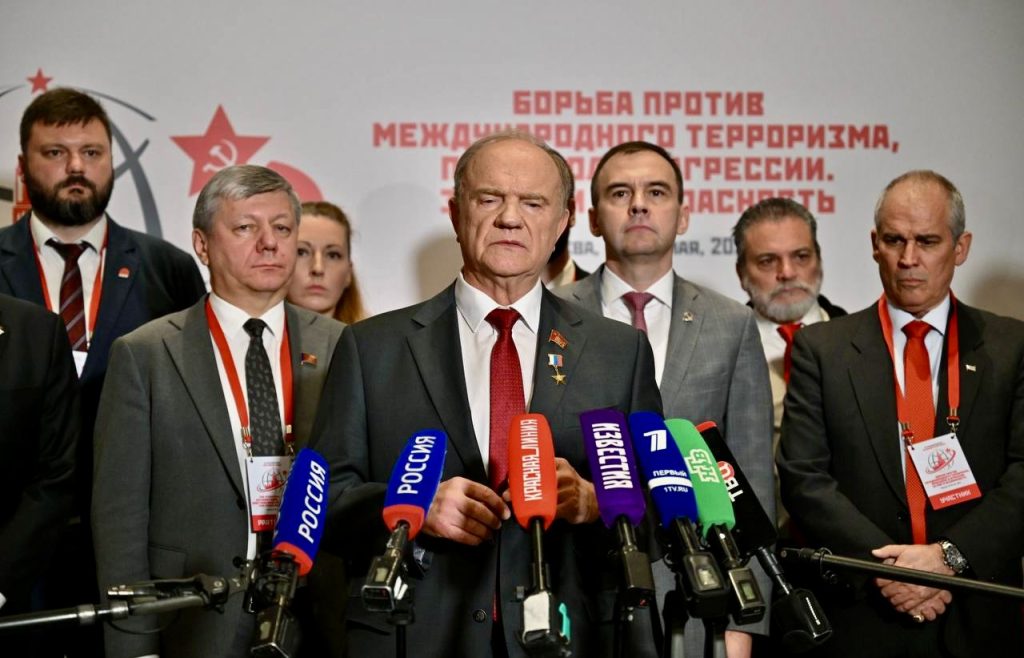
The CPRF also launched active preparations. The party completed the selection of candidates in single‑mandate constituencies and for the first time launched the “People’s Candidate” project (from April 15 to the end of May) – a kind of primary in which anyone could participate.
On May 14, CPRF First Deputy Chairman Yuri Afonin announced that about 40‑50 SVO participants would be included in the party list, running both in single‑mandate constituencies and on party lists. However, the Communists’ voting will be non‑competitive: citizens will only be able to evaluate an already approved list of 225 candidates. Based on the evaluations, as well as monitoring of social networks and activity, the rotation could be up to 20%. The final decision will be made by the party congress, scheduled for June 20.
Other Parties
In a number of regions, including Tatarstan, the Central Election Commission held meetings with nine parties (United Russia, Communists of Russia, CPRF, LDPR, New People, Party of Pensioners, Rodina, A Just Russia – For Truth, and Yabloko).
Personnel Changes: Rotation in the Border Regions
On May 13, the governors of Belgorod Region (Vyacheslav Gladkov, in power since 2020) and Bryansk Region (Alexander Bogomaz, in power since 2014), both considered publicly effective, resigned simultaneously.
The outgoing governors were replaced by leaders with military and managerial experience:
- Belgorod Region: Major General Alexander Shuvaev, a graduate of the “Time of Heroes” and “School of Governors” programs, Hero of Russia.
- Bryansk Region: Yegor Kovalchuk, who previously headed the government of the Luhansk People’s Republic.
According to experts, these appointments are linked to the shift of border‑area governance onto a “war footing” due to the protracted nature of the conflict.
Legislative Activity
Labour and Social Sphere
On May 14, the State Duma passed a law increasing the maximum annual limit on overtime work from 120 to 240 hours. The CPRF faction voted against.
Tightening of Migration Policy
Putin signed a package of laws expanding the grounds for the expulsion of foreigners (from 22 to 43 articles of the Administrative Code) and for the revocation of acquired citizenship for discrediting the army, calls for sanctions and participation in undesirable organisations.
CPRF in May: An Ideological Offensive
The Communists noticeably stepped up their work in May, combining criticism of the authorities with the promotion of an alternative programme.
“Victory Program”
The party’s main political document with which the CPRF will go into the elections. According to CPRF Chairman Gennady Zyuganov, the programme has already been tested at major forums and in the State Duma. Its key themes are strengthening sovereignty through science and education, regulating prices for essential goods and supporting “children of war”. The CPRF leadership criticised United Russia for refusing to consider these bills.
Ideological Struggle
The party leader made a number of resonant statements. Gennady Zyuganov called the so‑called “market reforms” of the 1990s a betrayal of national interests and linked the country’s future to a return to the Soviet model of development.
Speaking at a round table of the faction on May 26, Zyuganov stated that the constitutional status of the Russian people urgently needs to be filled with “real legal, demographic, economic and social content”. The politician warned that the original Russian regions, including his native Oryol Oblast, Tula, Tver and Smolensk, “are literally dying out at an alarming rate”. In his opinion, this threatens the country’s territorial integrity.
CPRF Deputy Chairman Dmitry Novikov, who is also First Deputy Chairman of the State Duma Committee on International Affairs, called anti‑Sovietism a “national threat”.
Novikov linked this to the tragedy in Ukraine, the events in South Ossetia in 2008, the bombing of Yugoslavia and the shelling of Russia’s Supreme Soviet in 1993 – all of which, according to the politician, were a direct consequence of the destruction of the USSR and liberal reforms.
Under these conditions, Novikov stressed, “Russia must be strong and just, so that the imperialists do not inflict Yugoslavia’s fate on us.”
Humanitarian Mission
In May, the CPRF sent its 152nd humanitarian convoy to the SVO zone – with food, medicine and equipment.