


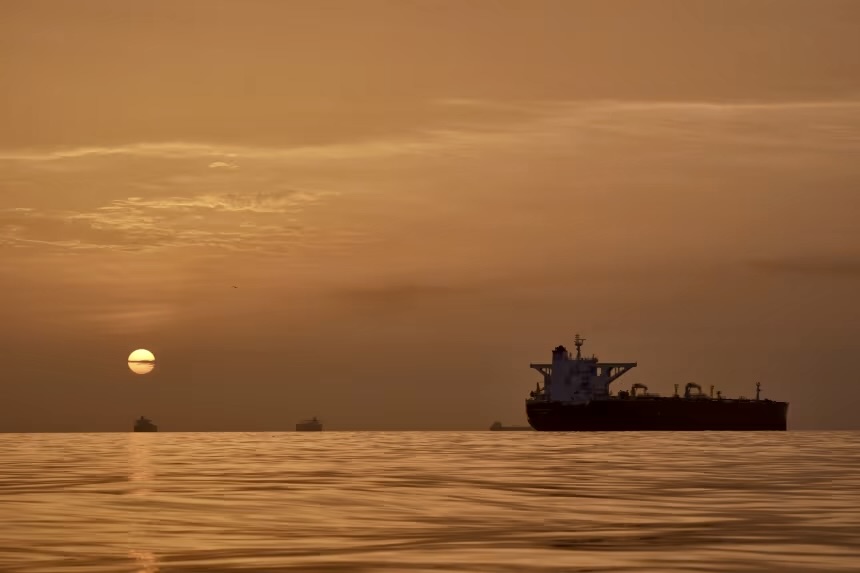
WASHINGTON (Realist English). Just 24 hours ago, one might have been forgiven for thinking more ships might start squeezing through the Strait of Hormuz as the US-Iran ceasefire approaches its expiration date. Analysts Tim Lister and Max Saltman describe in a CNN article how optimistic statements gave way to threats, and hope for the reopening of the world’s key water artery gave way to a new round of confrontation.
‘Fully open’ — and immediate criticism
On April 17, US President Donald Trump enthusiastically welcomed Tehran’s announcement that the Strait of Hormuz was “fully open and ready for full passage. Thank you!” Iranian Foreign Minister Abbas Araghchi wrote on social media platform X that the strait was once again fully open, adding that Iran would coordinate shipping routes. The message sent crude oil prices down 10 percent in a matter of hours.
However, as it turned out, Araghchi created “various ambiguities about the conditions for passage, its details, and its mechanisms,” the semi-official Iranian outlet Tasnim criticized. Trump then said the US blockade of Iranian ports would continue “in full force” until the “transaction” with Iran is complete.
IRGC closes the strait again
Twenty‑four hours later, on April 18, the Islamic Revolutionary Guard Corps (IRGC) announced that it had once again blocked the strait, citing the continued US blockade of Iranian ports. “Approaching the Strait of Hormuz will be considered cooperation with the enemy, and any offending vessel will be targeted,” the IRGC said in a statement.
To reinforce the threat, two vessels were fired upon some 20 miles off the coast of Oman. According to the tanker’s captain, Iranian gunboats carried out the first attack.
Iran’s Supreme Leader threatens ‘new defeats’
In a rare statement attributed to Iran’s Supreme Leader Mojtaba Khamenei, it is said that “Iran’s valiant Navy stands ready to make the enemies taste the bitterness of new defeats.” Khamenei himself has not been seen in public for six weeks — since being elected to the post following his father’s death.
Trump again stated on April 18 that negotiations with Iran are going very well, but that the US would not give in to blackmail. Iran’s powerful National Security Council said Tehran is reviewing “new proposals” from Washington but has not yet responded.
Nuclear file and ceasefire expiration
Beyond navigation through the strait, the two sides remain far apart on the surrender and removal of Iran’s highly enriched uranium, and the ongoing enrichment program. The ceasefire expires in just three days — on April 21. Trump said he does not know whether it will be extended.
“Maybe I won’t extend it, so you’ll have a blockade and unfortunately we’ll have to start dropping bombs again,” he said on April 17.
Iran not inclined to compromise
A senior Iranian military officer, General Mohammed Naqdi, said on April 18: “If the war starts again, we will use missiles whose production date is May 2026.” He also stressed: “We can stop oil production, but we did not want to create disturbances for the world, so we acted patiently.”
Although Iranian sources have told CNN they expect a second round of talks to be held the coming week, the US has still not publicly confirmed its plans as the ceasefire approaches its end.
Washington on edge
There are signs of intense behind‑the‑scenes discussions. On the afternoon of April 18, top US officials were seen arriving at the White House, including Defense Secretary Pete Hegseth, CIA Director John Ratcliffe and the Chairman of the Joint Chiefs of Staff.