


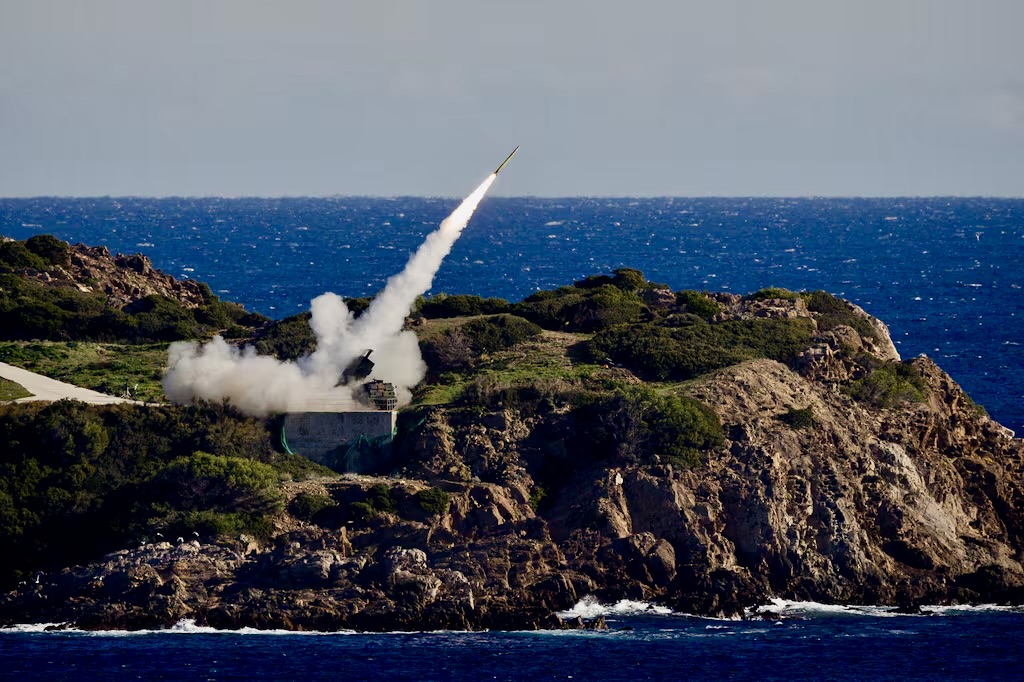
PARIS (Realist English). France is moving closer to a decision on its future rocket artillery system. As Patrick Pailloux, head of the French Directorate General for Armaments (DGA), stated at a parliamentary hearing on April 15, the first tests of a domestically developed system were successful on April 14, and comparative tests with foreign alternatives will be conducted in the coming weeks.
“There is significant pressure from the Army, which considers this its absolute priority requirement in the event of a major engagement — they’ll need to hold out during the first few days. It is a capability they absolutely must have,” Pailloux said.
Comparison with foreign systems
France is developing two competing domestic options: one team — Safran and MBDA, the other — Thales and ArianeGroup. Foreign alternatives already in active service with other European armies include South Korea’s Chunmoo (Hanwha Aerospace), Israel’s PULS (Elbit Systems) and the US HIMARS (Lockheed Martin).
According to Pailloux, France’s goal is to buy 26 systems with 300 munitions and gradually equip a rocket artillery battalion by 2030. The country is in a hurry to replace its nine remaining Lance-Roquettes Unitaire units (a modified version of the M270), which are set to reach the end of their service life in 2027.
“We’ll face a trade-off between sovereignty and speed, costs, timelines, and so on. We’ll have to make the best choice, or the least bad choice, given our needs,” the DGA chief admitted.
Ballistic missile by 2035
France is also working on a land-based ballistic missile with a range of 2,500 kilometers, with €1 billion budgeted to start work on the system this year. The missile will be tipped with a maneuverable hypersonic glide vehicle. According to DGA calculations, this offers the best cost-military performance ratio.
While the official goal is to field the missile by 2035, Pailloux acknowledged that “that is late.” The DGA plans to accelerate the work to bring the date as close to 2030 as possible, for example by fielding an initial version without anti-jamming measures and adding those capabilities later.
Massive ammunition purchases and preparation for a war of attrition
This year, the DGA intends to order more than €6 billion worth of munitions, including SCALP cruise missiles, AASM guided bombs, Exocet anti-ship missiles, MICA and Mistral air-defense missiles, and Meteor air-to-air missiles. An additional €320 million is allocated for an industrial ramp-up where “necessary and useful.”
“We need to prepare for a major conflict by 2030, with the new understanding that we may find ourselves facing a war of attrition,” Pailloux said. “To put it very simply, a war of attrition is one where in the end, the side that still has ammunition left wins.”
Rafale fighter modernization and new missiles
Work on the future F5 standard for the Rafale fighter jet will start this year, with a combat aviation budget of €3.4 billion. Projects include a new Safran engine dubbed T-REX with a thrust of 9 tons (compared to the current M88’s 7 tons), and replacing all sensors, particularly the radar.
The DGA is also accelerating work on the Stratus RS high-supersonic air-to-ground missile and developing an air-to-air missile called Comet with longer range than the Meteor by 2030.
“It’s a new way of working — to develop a new air-to-air missile by 2030,” Pailloux said, describing the target date as “very ambitious.” “The design brief fits on half a page and basically boils down to that the missile works and has a long range.”
Chorus one-way drone from Renault
This year’s projects also include the Chorus one-way drone (loitering munition) with a range of 3,000 kilometers and a 500 kilogram payload, with the goal of having the drone flying by the end of 2026. It will be manufactured by carmaker Renault, with a unit cost of €120,000. Pailloux called it “expensive, but compared to other munitions, a lot less expensive.”