


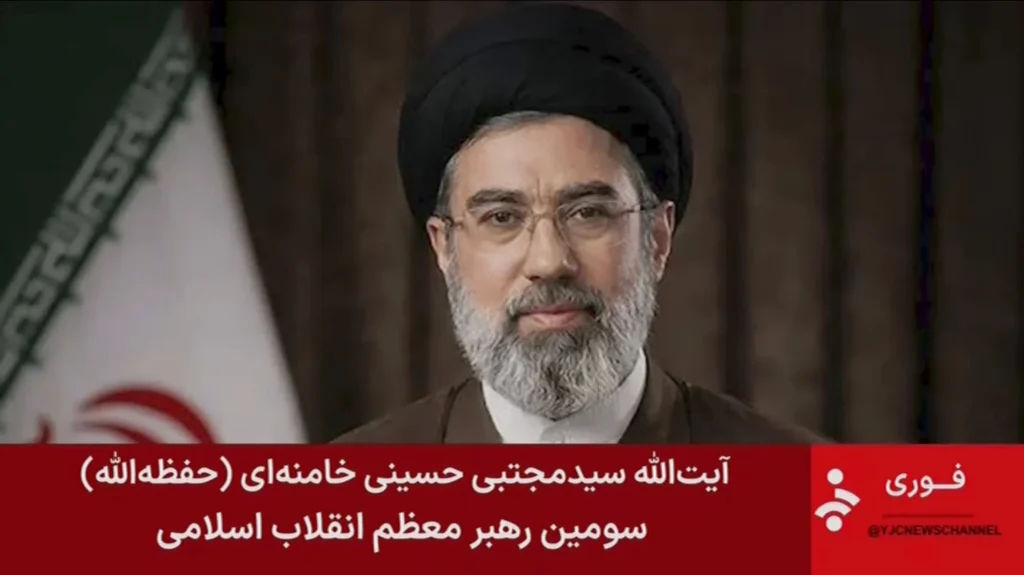
TEHRAN (Realist English). Iran’s Assembly of Experts has appointed Mojtaba Khamenei, the son of the late Supreme Leader Ayatollah Ali Khamenei, as the new supreme leader of the Islamic Republic, authorities announced Monday, as fighting in the Middle East continues to escalate.
The 56-year-old cleric, known for his close ties to Iran’s Islamic Revolutionary Guard Corps, was chosen to lead the country after his father was killed on Feb. 28 during the opening phase of the war between Iran and the United States and Israel.
The decision places Mojtaba Khamenei at the head of Iran’s political and military establishment at a moment of intense regional conflict. Since the start of the war, Iranian forces and allied groups have launched missile and drone attacks against Israel and several Gulf Arab states.
The conflict has already disrupted global energy markets. Oil prices have climbed above $100 per barrel, while supplies of natural gas have tightened after Qatar halted liquefied natural gas production amid the hostilities.
Mojtaba Khamenei had long been considered a possible successor to his father despite never holding an elected government position. He has maintained a low public profile and had not appeared publicly since the war began.
His appointment has sparked debate within Iran’s political elite. Some figures criticized the idea of transferring the country’s highest religious authority within the same family, arguing that such a move resembles hereditary rule similar to the monarchy overthrown during the 1979 Islamic Revolution.
Supporters within the Assembly of Experts, however, have defended the decision, saying the country requires strong leadership during wartime.
As supreme leader, Mojtaba Khamenei will now hold ultimate authority over Iran’s armed forces and strategic decisions, including those related to the country’s nuclear program.
Although several of Iran’s nuclear facilities were heavily damaged during US airstrikes earlier in the conflict, analysts say the country still possesses stocks of highly enriched uranium that could potentially be further processed for weapons use.
Israel has already described the new leader as a potential military target. US President Donald Trump has also publicly criticized the possibility of Mojtaba Khamenei taking power, saying Washington expects a future Iranian leadership capable of bringing stability to the region.
Iran’s Revolutionary Guard issued a statement supporting the appointment, while Lebanon’s Hezbollah movement also expressed backing for the new leader.
Senior Iranian official Ali Larijani praised the Assembly of Experts for convening despite ongoing airstrikes in Tehran and said Mojtaba Khamenei had been closely mentored by his father and was prepared to lead during the crisis.
Meanwhile, the war continues to expand across the region. Iran has carried out strikes against infrastructure in several Gulf states, including oil facilities and desalination plants that supply water to millions of residents.
Saudi Arabia reported intercepting a drone targeting the Shaybah oil field and warned that Iran would face severe consequences if attacks against Arab states continued.
The United States has begun evacuating nonessential diplomatic personnel from several countries in the region, including Saudi Arabia, Bahrain, Kuwait, Qatar and the United Arab Emirates, as tensions rise.
According to regional authorities, the conflict has killed more than 1,200 people in Iran, nearly 400 in Lebanon and at least 11 in Israel. Fighting between Israel and Hezbollah has also displaced more than half a million people in Lebanon, many of whom have sought refuge in schools and temporary shelters in Beirut and other cities.