


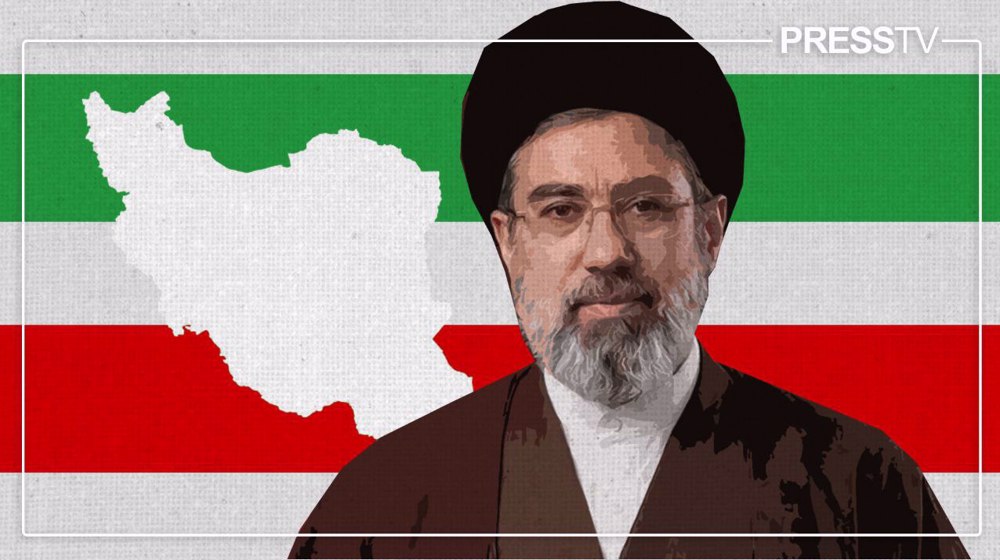
TEHRAN (Realist English). Iran’s Assembly of Experts has elected Ayatollah Seyyed Mojtaba Khamenei as the new supreme leader of the Islamic Republic following a decision reached after more than a week of consultations, according to an official statement released Sunday.
The announcement came during evening Ramadan prayers across the country. In its statement, the Assembly said Mojtaba Khamenei had been chosen by a decisive vote to become the third leader of the Islamic Republic after the death of his father, Ayatollah Ali Khamenei.
Mojtaba Khamenei, born in 1969 in the northeastern city of Mashhad, is the second son of the late Iranian leader, who headed the country for more than three decades after succeeding Ayatollah Ruhollah Khomeini.
He spent much of his early life in Tehran, where he completed secondary education at the Alavi School, an institution known for producing many figures involved in Iran’s political and intellectual establishment.
During the Iran–Iraq War in the 1980s, Mojtaba Khamenei volunteered for military service and served on the front lines as a member of the Habib ibn Mazaher Battalion within the 27th Mohammad Rasulollah Division based in Tehran.
After the war he moved to the religious center of Qom in 1989 to pursue advanced studies in Islamic jurisprudence and theology. Over the following years he continued his seminary education in both Qom and Tehran under several senior clerics.
In 1997 he married Zahra Haddad Adel, with whom he had three children. Iranian officials said his wife was killed during the recent US-Israeli military strikes that also led to the death of the previous supreme leader.
Within Iran’s religious establishment, Mojtaba Khamenei has long been known for his involvement in seminary education and religious scholarship. Clerical authorities in Qom have described him as a scholar focused on jurisprudence, Islamic legal theory and the study of religious traditions.
His lectures at the Qom seminary have drawn large audiences of students, and he has supported the creation of educational institutions and research centers dedicated to Islamic legal studies.
Alongside his academic work, Mojtaba Khamenei has also participated in discussions on national policy issues ranging from economic development and housing to agriculture, technology and emerging sectors such as artificial intelligence.
During his father’s leadership, he served as an adviser and took part in consultations with senior Iranian officials on various domestic and regional matters.
He has also maintained relations with figures associated with Iran’s regional allies, including leaders of the Lebanese Hezbollah movement and the late Iranian military commander Qassem Soleimani.
Despite his involvement in political and religious circles, Mojtaba Khamenei has generally kept a low public profile and rarely appears in the media.
His appointment comes at a critical moment for Iran as the country faces ongoing military confrontation with the United States and Israel.
Iranian officials and military leaders have pledged allegiance to the new supreme leader, saying he will continue the political and ideological course established by his predecessor.