


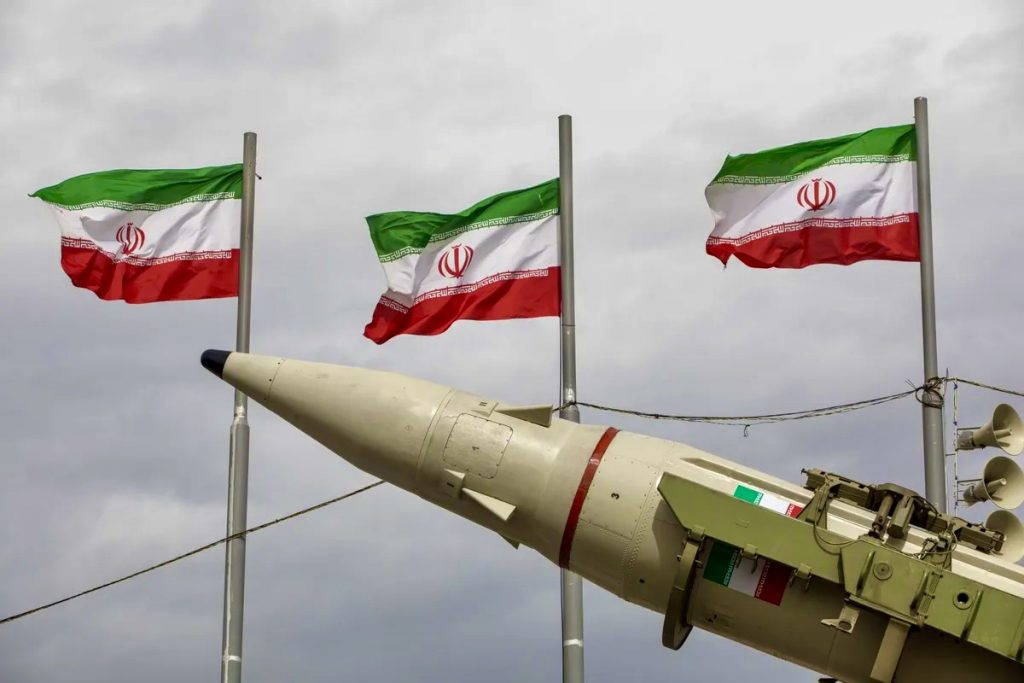
TEHRAN (Realist English). On May 20, the Islamic Revolutionary Guard Corps (IRGC) issued an uncompromising statement: if the United States undertakes new aggression, the conflict will expand beyond the geographical boundaries of the Middle East.
“If aggression against Iran is repeated, the promised regional war will this time go beyond the region, and our crushing strikes in places you cannot even imagine will turn you to ashes,” The Guardian quoted the IRGC statement as saying.
Unlike previous warnings, which only concerned the Middle East, Tehran is openly declaring for the first time this year a global scale of retaliation.
“This time, war will leave the borders of West Asia,” Iranian media emphasized.
The Iran Press agency noted that the United States and Israel have exhausted their “deterrence credit of trust.” The IRGC directly states that previously Iran had restrained its capabilities, but next time there will be no restrictions.
“We were attacked using the full potential of the two most expensive armies in the world, but we did not bring all the capacities of the Islamic Revolution into action. Now everything is different,” Iran Press quoted IRGC representatives as saying.
Details of which specific targets beyond the region might be attacked have not yet been revealed. However, experts and historical precedents offer clues.
Last week, Iranian missiles reached Diego Garcia, home to a joint US-UK base. This is proof of the long-range capability of Iranian weapons.
Potential targets may include remote military installations of US allies, critical communication nodes, and logistics hubs outside the Middle East.
In addition to long-range strikes, more local options for retaliation are traditionally discussed, which could crash the global economy:
- Energy blackmail: Strikes on Saudi and Emirati oil facilities and the final closure of the Strait of Hormuz. On May 20, Reuters reported that tankers from South Korea and China were able to transit the strait with Iran’s special permission. This shows that Tehran reserves the right to let “friends” pass and block “enemies.”
- Proxy war: New attacks by pro-Iranian groups in Iraq on the UAE, where Tehran believes the US uses airbases to strike Iran.
- Cyber attacks: Inflicting critical damage on the infrastructure of adversaries.
NATO Mission in the Strait of Hormuz?
NATO Secretary General Mark Rutte said that allied countries are informally discussing a possible alliance mission in the Strait of Hormuz. The statement came amid a months-long blockade of the strategic waterway, through which a fifth of global oil and liquefied natural gas supplies normally pass. Bloomberg previously reported on the discussions.
Rutte clarified that these are informal consultations, but the situation in the region is developing dynamically. According to the Secretary General, leaders of several countries are already redeploying warships to the Persian Gulf for possible participation in future operations.
Supreme Allied Commander Europe, General Alexus Grynkewich, emphasized that he is discussing the possibility of a mission but is not drawing up concrete plans until a political decision is received from all 32 member states.
“Do I think about it? Absolutely. But there is no planning yet, not until a political decision is made,” Grynkewich said at a briefing in Brussels.
Blockade as a Response to US-Israeli Attack
The Strait of Hormuz has been effectively closed to international shipping since late February, when Iran imposed a blockade in response to the joint US-Israeli military operation. The administration of Donald Trump has repeatedly criticized European NATO allies for refusing to directly participate in breaking the blockade.
Trump has already announced the withdrawal of 5,000 US troops from Germany and threatened to reconsider US commitments to the alliance if allies do not step up.
The ongoing blockade is causing serious damage to the global economy, triggering a sharp spike in energy prices. The European Union has allocated emergency funds to help farmers facing a shortage of fertilizers stuck in the conflict zone.
“The halt of shipping has a very negative impact on all economies, which in the long term affects our military-industrial potential,” General Grynkewich admitted.
Split in the Alliance: Who is For, Who is Against
Despite outward unity on the need to resume shipping, serious disagreements remain within NATO over methods and the degree of intervention.
- Opponents of the mission: Spain, Germany and the United Kingdom are categorically against dragging the alliance directly into the conflict. The UK Foreign Office previously stated that hostilities in the region “are not a mission for NATO.” Madrid has banned the US from using its bases and airspace to strike Iran, fearing escalation.
- Supporters: France and Belgium actively lobby for NATO involvement. According to Bloomberg sources, “several” alliance members have supported the idea of a mission. However, unanimous approval from all 32 countries is required to launch a mission, and that is currently lacking.
- Parallel coalition: Against this backdrop, France and the UK have led a coalition of more than 40 countries developing a plan to secure the strait after the active phase of hostilities ends. Canadian Foreign Minister Anita Anand called for the demilitarization of the strait.
Ankara Summit and the “Deadline” of Early July
A final decision on a possible NATO mission appears to be postponed to the highest level. The main venue for discussion will be the NATO leaders’ summit scheduled for July 7-8 in Ankara, Turkey. This issue is expected to be one of the central items on the agenda.
According to senior sources, the alliance is considering launching a mission if the strait is not reopened by the beginning of July 2026. This timeline is seen as a deadline: after that, the economic damage would become irreversible and require urgent military intervention.