


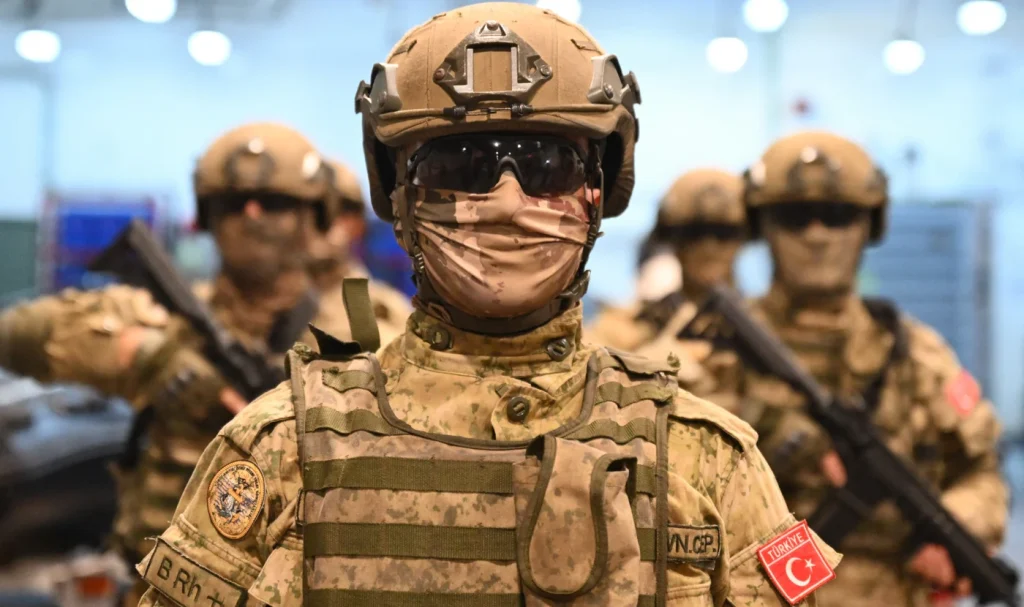
ANKARA (Realist English). NATO is planning to establish a multinational corps in Turkey, as Ankara moves to strengthen its role in the alliance’s southern defence strategy, according to the Turkish defence ministry.
The planned formation, known as MNC-TUR, has been under development since 2023 as part of NATO’s regional defence plans. Turkish officials said the initiative was formally communicated to allies in 2024, with approval procedures still ongoing within NATO structures.
Ankara has designated the 6th Corps Command in Adana as the foundation for the new headquarters. The unit will be led by a Turkish general, with core staffing already assigned. A source familiar with the planning said the project is expected to be completed by 2028.
A multinational corps functions as a command-and-control structure capable of coordinating allied forces in the event of a conflict. NATO’s southern regional plan covers a wide geographic area, including the Mediterranean, the Black Sea, the South Caucasus and parts of North Africa.
Turkish officials said the initiative is not linked to the current escalation involving Iran, noting that planning began before recent regional tensions. A NATO official also confirmed that the process is ongoing and subject to internal alliance approval.
The move would expand NATO’s military footprint in Turkey, which already hosts the alliance’s Land Command in Izmir and the Rapid Deployable Corps in Istanbul. Turkey fields NATO’s second-largest military and plays a key role in the alliance’s southern and eastern security architecture.
Analysts say the new corps could fill a structural gap in NATO’s defence planning. Existing multinational corps in Poland and Romania are focused on the alliance’s northern and eastern flanks, while the planned unit in Turkey would provide a permanent command structure covering southern threats.
Experts note that the Adana location — near the Incirlik airbase, which hosts U.S. and allied forces — offers logistical and operational advantages, including established infrastructure and experience in multinational coordination.
Analytically, the initiative reflects NATO’s shift toward a “360-degree” security posture, addressing threats from multiple directions rather than focusing solely on Eastern Europe.
The key question is whether the expansion of NATO’s command structure in Turkey will enhance deterrence without increasing regional tensions, particularly in a geopolitical environment marked by overlapping security interests in the Middle East and Mediterranean.