


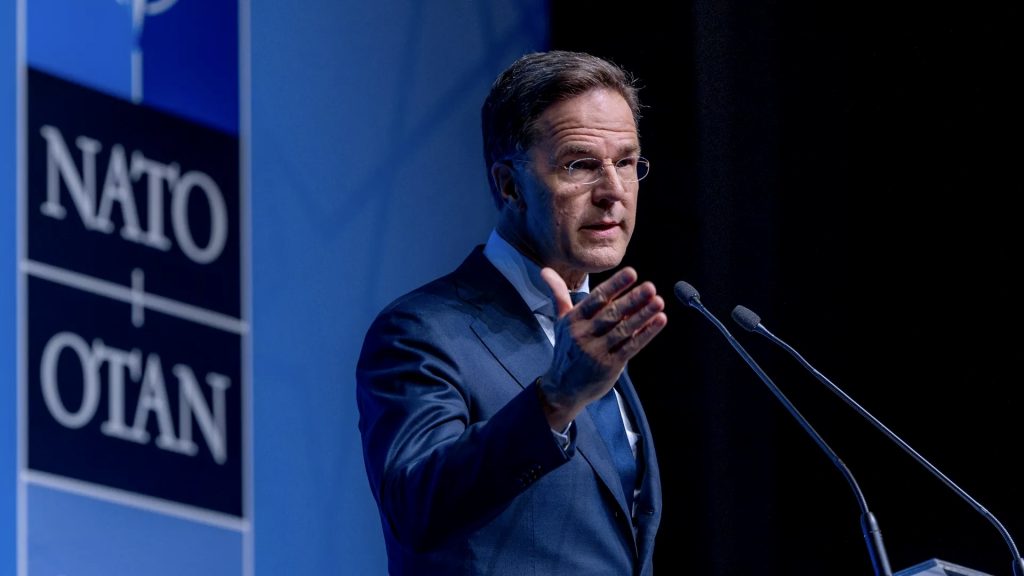
ANKARA (Realist English). At the NATO summit in the Turkish capital, which opened on July 7, alliance Secretary‑General Mark Rutte announced the acquisition of up to five high‑altitude MQ‑4C Triton reconnaissance drones manufactured by Northrop Grumman.
The agreement marks the first time NATO has directly purchased Triton drones for its own needs. Norway, Finland, Germany and Denmark have signed a letter of intent for the joint procurement.
The total value of the contract is estimated at $4.5 billion.
Technical Specifications and Missions
The MQ‑4C Triton is a modification of the well‑established Global Hawk reconnaissance drone, specifically designed for maritime surveillance.
Key characteristics of the drone:
- Flight duration: up to 30 hours;
- Service ceiling: over 15 km;
- Wingspan: 35.4 metres;
- Purpose: maritime patrol, signals intelligence gathering, search‑and‑rescue operations and communications relay.
Equipped with long‑range sensors, the Triton will allow the alliance to “detect threats at an early stage, protect maritime lines of communication and support operations in challenging regions such as the Arctic and the High North.” As Rutte stressed, “these additional assets will provide persistent surveillance over vast maritime areas.”
Basing and Integration with the Existing Fleet
The new drones will be integrated into the existing Alliance Ground Surveillance (AGS) system, already based at Sigonella Air Base in Sicily, Italy. Currently, five RQ‑4D Phoenix — also manufactured by Northrop Grumman — are stationed there.
The decision to base them in Sicily is strategically sound, according to analysts: the island is a key hub in the central Mediterranean, allowing effective monitoring of both the southern direction (North Africa and the Middle East) and the eastern direction (the Black Sea and the Eastern Mediterranean).
Transatlantic Industrial Cooperation
The project envisages the creation of a transatlantic industrial consortium. Northrop Grumman will manufacture the aircraft, while Airbus Defence and Space and other European companies will handle the ground segment, data management, command and control, as well as infrastructure and mission support.
This approach, according to Rutte, allows for the creation of “Made in NATO” capabilities — not by a single country, but through close cooperation between governments and defence industries on both sides of the Atlantic.
The Ankara Summit and ‘NATO 3.0’
The Triton procurement is one of three major air capabilities initiatives announced at the summit. Alongside the acquisition of reconnaissance drones, the alliance is:
- expanding its fleet of A330 MRTT multi‑role transport aircraft;
- launching a programme to replace its ageing AWACS fleet with up to 10 Swedish GlobalEye aircraft.
As analysts note, the Ankara summit marks not just another leaders’ meeting, but a strategic transformation of the alliance, which experts are already calling “NATO 3.0.”
The US is redistributing its assets, demanding that Europe take on greater responsibility for its own security. The procurement of the Triton and other surveillance systems is part of this process, demonstrating that European allies are ready to invest in reconnaissance capabilities that were previously considered Washington’s prerogative.