


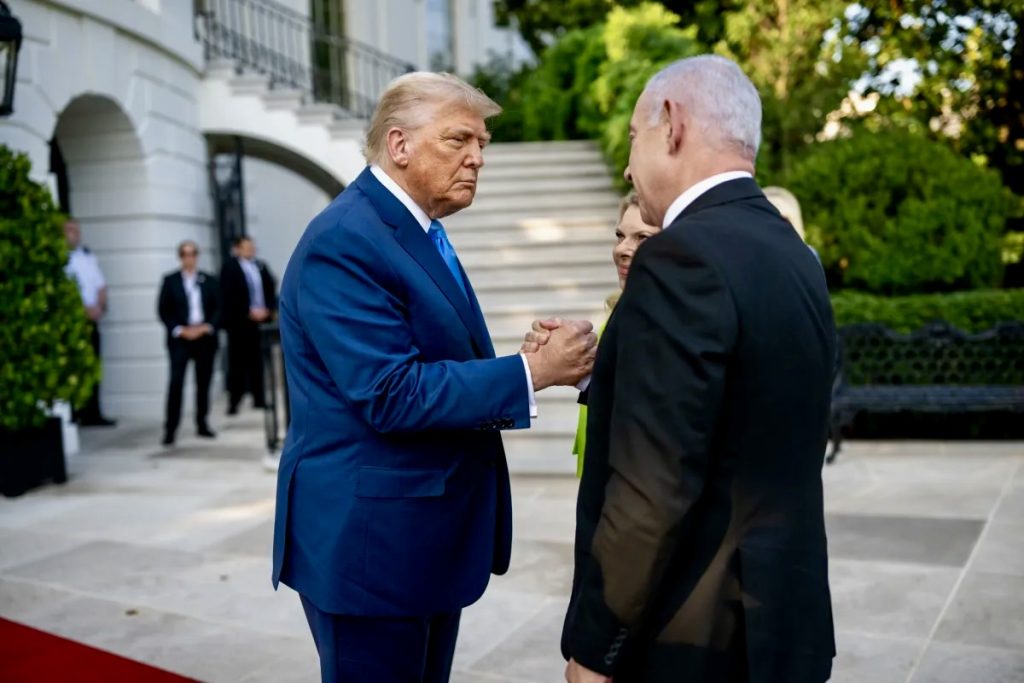
TEHRAN (Realist English). US President Donald Trump заявил that “Iran’s time is running out,” threatening new strikes if Tehran refuses to make concessions.
According to leaks from Iranian and Western sources, the United States is demanding:
— the removal of part of Iran’s enriched uranium stockpile;
— a phased reopening of the Strait of Hormuz;
— restrictions on Iran’s missile programme;
— access for international inspectors;
— Tehran’s abandonment of demands for reparations.
In response, Iran, through Pakistani mediators, submitted a new package of proposals. According to Western media reports, Tehran is prepared to discuss the temporary suspension of certain elements of its nuclear programme and a partial reopening of the Strait of Hormuz, but refuses to fully abandon its strategic capabilities.
What Western experts are saying
American Middle East expert Trita Parsi believes Washington’s current strategy repeats the mistakes of the “maximum pressure” era:
“Coercion did not force Iran to capitulate before, and it is unlikely to do so now.”
According to analysts from Western agencies, neither side is prepared for a politically painful compromise, while the risk of renewed military escalation remains extremely high.
Experts at Chatham House and International Crisis Group note that the United States is trying to achieve three incompatible goals simultaneously:
— lowering oil prices;
— maintaining pressure on Iran;
— avoiding a major war ahead of US elections.
This makes Washington’s strategy contradictory and unstable.
Israel: containing Iran and pressuring Hezbollah
Israel’s foreign policy on the Iranian and Lebanese fronts over the past 24 hours has revolved around two objectives:
— maintaining pressure on Iran;
— preventing the restoration of Hezbollah’s military capabilities in Lebanon.
Prime Minister Benjamin Netanyahu held consultations with the Trump administration regarding the possible resumption of strikes against Iran. Representatives of Israel’s security cabinet openly stated that Israel is ready to support a new phase of military operations immediately if negotiations collapse completely.
At the same time, tensions remain high on the Lebanese front. Despite the formal ceasefire, the Israeli military continues targeted strikes against Hezbollah infrastructure in southern Lebanon. In response, the Shiite movement has intensified drone attacks and rocket launches.
Israeli strategy: views from Western analysts
According to former CIA official Bruce Riedel, Israel is attempting to exploit Iran’s post-war weakening in order to reshape the regional balance of power:
“Netanyahu sees an opportunity to push Iranian influence back in the Levant for a long time.”
Experts from the Washington Institute for Near East Policy and the Atlantic Council argue that Israel is operating according to a model of “managed instability”:
— preventing a full-scale regional war;
— while maintaining constant pressure on Iran and its allies.
Western analysts increasingly point to a strategic divergence between Washington and Jerusalem.
While the Trump administration still seeks a deal with Tehran, part of the Israeli establishment believes a prolonged crisis is preferable to a full compromise, since it economically and militarily exhausts Iran.
Lebanese front: ceasefire without peace
The situation around Lebanon remains one of the most unstable elements of the Middle East crisis.
According to Western observers, the current US-Iran confrontation is gradually “decoupling” the Lebanese front from the broader nuclear negotiations. This means that even if Washington and Tehran reach a partial agreement, clashes between Israel and Hezbollah could continue.
Analysts at the International Crisis Group warn that:
— Israel will not tolerate the restoration of Hezbollah’s military infrastructure;
— Iran views Lebanon as a key element of regional deterrence;
— any major provocation could derail negotiations over the Strait of Hormuz.
The diplomatic window between the United States and Iran is rapidly narrowing.
Washington is escalating ultimatum-style pressure, Iran is attempting to buy time through mediators, and Israel is preparing for a scenario of renewed escalation.
Western experts increasingly agree that the current crisis has long moved beyond a dispute over Iran’s nuclear programme. The struggle is now about the security architecture of the entire Middle East — from the Strait of Hormuz to southern Lebanon.