


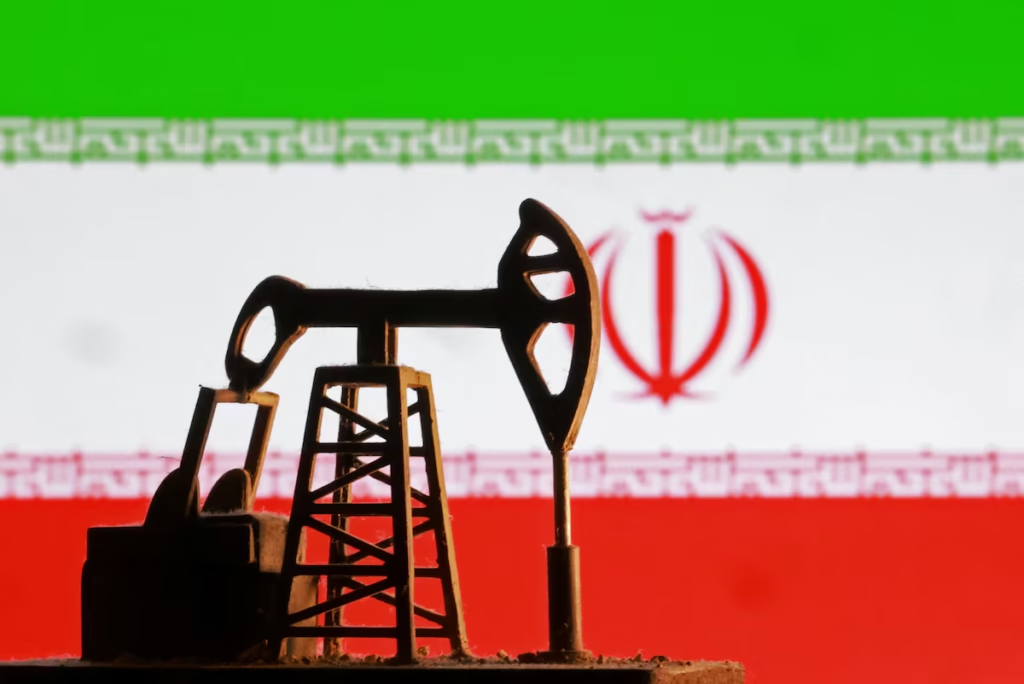
NEW YORK (Realist English). Crude oil prices jumped more than 8% on Sunday evening as investors reacted to the escalating conflict between the United States and Iran and growing concerns over potential disruptions to global supply.
US benchmark West Texas Intermediate rose by $5.55, or more than 8%, to $72.57 per barrel in early evening trading. Brent crude, the global benchmark, climbed roughly 9%, gaining $6.54 to reach $79.41.
The surge followed a wave of coordinated US and Israeli airstrikes against Iran that reportedly killed Supreme Leader Ayatollah Ali Khamenei and several senior officials. The developments have injected fresh uncertainty into global energy markets, particularly given Iran’s role as OPEC’s fourth-largest oil producer.
Market participants are now closely watching the Strait of Hormuz, the world’s most critical oil transit chokepoint. More than 14 million barrels per day moved through the strait on average in 2025, accounting for roughly one-third of global seaborne crude exports. The majority of those shipments were destined for Asian markets, including China, India, Japan and South Korea.
Shipping activity in the strait has effectively paused as companies adopt precautionary measures. Analysts report that tankers are gathering near the passage but are reluctant to transit amid security risks.
Energy analysts say the trajectory of prices will depend heavily on whether traffic through Hormuz resumes quickly and on the scale of any Iranian retaliation. Some projections suggest Brent could rise to $100 per barrel if tensions persist, while more severe supply disruptions could push prices above $120.
President Donald Trump said combat operations would continue until US objectives are achieved but indicated that diplomatic contacts with Tehran remain possible. He told media outlets that Iran had expressed interest in talks and that discussions may take place, leaving open the possibility of de-escalation.
Beyond transit risks, uncertainty inside Iran could further affect supply. Analysts warn that domestic instability, leadership uncertainty and potential labor disruptions in oil-producing regions could significantly reduce Iranian exports. The country currently produces around 3.3 million barrels per day.
With geopolitical risks intensifying, energy markets are bracing for continued volatility as the situation unfolds.