


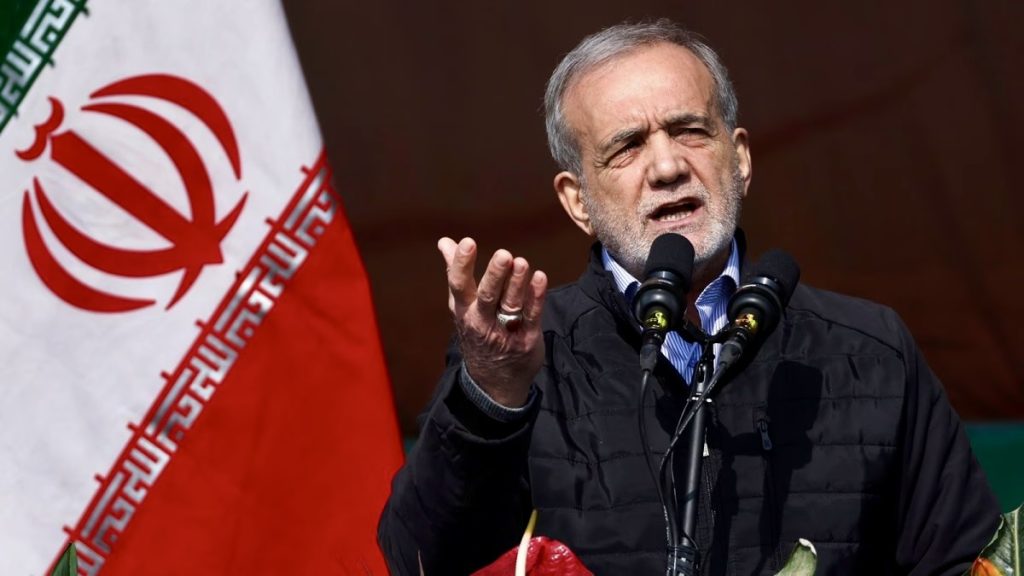
TEHRAN (Realist English). On May 31, Iranian and Western media reported an escalation of the domestic political situation in Iran.
According to the pro‑Western outlet Iran International, President Masoud Pezeshkian sent a letter to Supreme Leader Mojtaba Khamenei requesting that his resignation be accepted. According to these reports, the head of the executive branch explained his decision by citing the “effective usurpation of power” by the command of the Islamic Revolutionary Guard Corps (IRGC), which, he alleged, had excluded the government from key state decisions.
The letter stated that the president was no longer able to fulfil his constitutional duties. An unnamed senior official confirmed that the main cause of the disagreement was the IRGC’s position on the “conduct of the war and its consequences for the economy and the population’s standard of living.”
Official denial
A few hours later, Mehdi Tabatabai, deputy head of the presidential administration’s communications service, denied the resignation, calling it a “media game”. He stated that Pezeshkian “will not abandon the path of serving the nation”.
Nevertheless, the fact of such a swift denial and the existence of anonymous leaks to the media, in the opinion of observers, indicates serious contradictions at the highest levels of power.
Background to the conflict between the president and the IRGC
Tensions between the civilian leadership and the military structures had been building for several months. As early as March 2026, reports emerged of the president’s dissatisfaction with the IRGC’s actions, particularly regarding the death of Secretary of the Supreme National Security Council Ali Larijani (killed on March 17).
In private conversations, Pezeshkian was reported to have complained about being sidelined from military matters and about a lack of information.
A turning point came when the president made public apologies to the Arab monarchies of the Persian Gulf for the strikes that had been carried out, which drew criticism from conservative circles and the clergy. Deputy Hamid Rasai called the president’s position “unprofessional and weak”, after which Pezeshkian retracted his apologies.
The real distribution of power in Iran
What is happening reflects fundamental changes in the decision‑making system of the Islamic Republic following the death of Supreme Leader Ayatollah Ali Khamenei on February 28 and a series of strikes against the IRGC’s top command.
- Supreme Leader Mojtaba Khamenei, according to Western intelligence, was wounded on the first day of the war and is reportedly in hiding, communicating via couriers. Analysts describe him as a “rubber‑stamp” figure who approves decisions taken by the National Security Council and military commanders.
- Actual control of the country is exercised by a group of senior military officers, including IRGC commander Ahmad Vahidi (responsible for tactics), parliament speaker Mohammad Bagher Ghalibaf (a link to political structures) and the National Security Council.
- Pezeshkian’s government, according to analysts, has been excluded from discussions on war strategy and negotiations with the United States. One Reuters source described the situation as follows: “This is a generals’ war; politicians are forbidden from entering.”
Expert opinions
Beni Sabti, an Iranian expert at Israel’s Institute for National Security Studies (INSS), believes that open clashes between elites may subside because the regime now has a nominal leader. “The radical wing managed to push Mojtaba through, which shows their dominance,” he said, suggesting that the struggle will now move into the shadows.
Analysts believe that even if Pezeshkian remains in his formal post, his real powers will be minimal. “Civilian institutions have been marginalised,” confirms CBS commentator Sanam Vakil. “We are witnessing a transition from ‘divine authority’ to the ‘raw force’ of the IRGC.”
International context
The crisis comes amid ongoing US‑Iran talks to extend the fragile ceasefire and unblock the Strait of Hormuz. US President Donald Trump had earlier said that “chaos reigns” in Iran’s leadership and “no one knows who is in charge”. While negotiators await a response on the nuclear ultimatum, the domestic political situation in Tehran remains tense.