


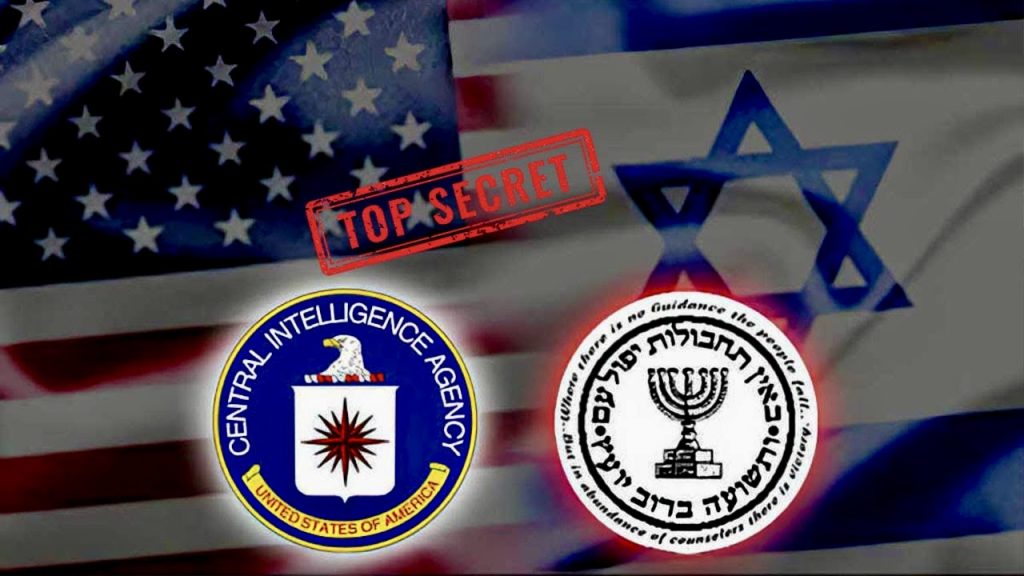
MOSCOW (Realist English). The war between the United States and Israel against Iran has not led to the activation of Kurdish forces in the region, and attempts by the CIA and Mossad to “play the Kurdish card” have failed. Iranian Kurds, like Azerbaijanis and Baluchis, are in no hurry to join the fight against the ruling regime, retired Colonel Stanislav Ivanov, a leading researcher at IMEMO RAS and the Institute of Oriental Studies of the Russian Academy of Sciences, told Realist English.
“Iraqi Kurds building a new democratic state.”
Commenting on reports of tension between the federal government of Iraq and the Kurdistan Region, Ivanov called them “greatly exaggerated.” “Baghdad and Erbil are cooperating perfectly, and all contentious issues are being resolved at the negotiating table,” he stressed.
The expert noted that the president of Iraq is a Kurd, and there is a substantial Kurdish faction in parliament.
“Kurds are, first and foremost, Iraqis and are building a new democratic Iraqi state together with the Arabs. Iraqi Kurdistan will not allow itself to be drawn into any regional conflict,” Ivanov said.
Time to stop relying on Erdogan in the Kurdish question
According to the expert, who has long worked on the issue of Iraqi Kurdistan, it is time for Russia to reconsider its position. “It’s time to stop relying on Erdogan in the Kurdish question,” he said, adding that there have long been no Kurdish formations in Turkey, and even the Turkish PKK has been dissolved.
“As for Syrian and Iraqi Kurds, they are citizens of foreign states in relation to Ankara, and they are building their relations with central authorities independently without external interference,” Ivanov added.
The Kurdish people are the most tolerant of all peoples
Ivanov recalled that Kurds are one of the indigenous peoples of the Russian Federation, actively participated in the Russo-Turkish wars and the Great Patriotic War. In Russia, there are public Kurdish organizations, and Zelimkhan Mutsoev represents them in the State Duma.
“The Kurdish people are the most tolerant of all other peoples,” the expert stated, adding that Kurdish militias played a decisive role in the victory over the jihadists of the Islamic State (banned in Russia), while the rulers in Damascus and Baghdad “cowardly hid in the basements of presidential palaces, and their armies shamefully fled the battlefield, leaving behind military equipment and heavy weapons.”
Kurdish factor: what is happening on the ground
Ivanov’s assessment comes amid active attempts by Washington and Tel Aviv to use Kurdish forces to open a new front against Iran. From the first days of the war, which began on February 28, US President Donald Trump held telephone conversations with the leaders of the leading political forces of Iraqi Kurdistan. According to sources, the goals of the US in the war and possible coordination were discussed.
According to The New Arab, the US and Israel were preparing to support an uprising of Iranian Kurdish factions in western Iran in the coming weeks. A coalition of political forces of Iranian Kurdistan (CPFIK) announced the start of armed operations on Iranian territory as of March 2. According to Sky News, several thousand fighters had already entered Iran.
However, the leadership of Iraqi Kurdistan has taken an extremely cautious stance. An official representative of the Kurdistan Regional Government called reports of the transfer of militants across the border “completely false.” The reason for caution is the bitter experience of the Syrian Kurds, who, after the fall of the Assad regime in December 2024, lost 80% of the territory they controlled and were effectively abandoned by Washington.
Iran’s strikes and Turkey’s position
Tehran is actively countering attempts to open a “Kurdish front.” Iran has launched missile and drone strikes on bases of Iranian Kurdish opposition groups located in Erbil and Sulaymaniyah provinces. At the same time, strikes continue on positions of pro-Iranian Shiite groups and Peshmerga positions.
Turkey has expressed particular concern. The Turkish Ministry of Defense officially stated that it is closely monitoring the actions of the PJAK Kurdish group (linked to the PKK, banned in Turkey). Ankara emphasized that “the activities of groups inciting ethnic separatism negatively affect not only the security of Iran but also the overall peace and stability in the region.”
Attacks on Iraq and tensions
On the morning of March 28, a strike was carried out on the home of Kurdistan Region President Nechirvan Barzani, as well as on Peshmerga positions in Duhok. The Prime Minister of Iraq condemned the attack and ordered the creation of a joint federal-Kurdish commission to investigate. On the same day, three fighters from the pro-Iranian militia Hashd al-Shaabi were killed in a strike in Kirkuk province; the PMF blamed “Zionist-American forces” for the attack.
Despite external pressure, Iraqi Kurds maintain a wait-and-see stance, fearing a repeat of the fate of their Syrian brethren. Iran is carrying out preemptive strikes on Kurdish bases, Turkey is monitoring developments, and the region remains on the brink of a large-scale escalation.
Trump’s revelations about weapons for the Kurds
On April 6, US President Donald Trump stated that the United States had tried to covertly arm Iranian protesters through Kurdish intermediaries weeks before the war began. “We sent guns to the protesters, a lot of them,” Trump said, adding that he believed the Kurds kept the guns for themselves.
Several Iranian Kurdish opposition groups categorically denied this claim. A senior official from the Kurdistan Democratic Party of Iran (KDPI) told Rudaw that “those statements made are baseless and we haven’t received any weapons. Our policy is not to make demonstrations violent,” while a member of the general command of the Kurdistan National Army stated that “Donald Trump’s message is unclear to us. What is there is that we as our army have in no way received weapons from the US or any other country, not even a single bullet.”
A failed plan by the CIA and Mossad
Israeli media reported that leaks to the press and distrust among the Kurds scuttled the plan to use this national group to fight the Iranian regime at the initial stage of the war. According to an investigation by Channel 12, the United States and Israel carried out intensive attacks on Iranian security forces in northwestern Iran at the beginning of the war, aimed at facilitating the invasion of Kurdish forces “all the way to Tehran.”
The plan called for “tens of thousands of armed Kurdish fighters to cross the border from Iraq in the first days of the war,” then unite forces and deliver weapons to Kurdish fighters in Iran. However, the plan was postponed when it was leaked to the American media in early March. Kurdish leaders were wary, fearing that the US and Israel would withdraw from hostilities, the Tehran regime would regain strength, and the minorities would face retaliation.
Trump wants Kurds to stay out of the war
On April 6, Trump said the United States would prefer Kurdish forces not to interfere in the US-Israeli military operation against Iran.
“I would prefer they stay out of the way. They bring with them some problems and difficulties,” the American president commented on the issue of possible Kurdish participation in the war with Iran. “They bring death. To themselves,” the head of the White House added.
Iraqi Kurdistan under fire
Since the onset of the war between the US, Israel, and Iran, the Kurdistan Region has endured 678 drone and missile attacks, with 540 targeting Erbil province, 111 striking Sulaimani, 25 in Duhok, and two in Halabja, according to Rudaw tracking. On April 7, a drone “coming from Iran” killed a Kurdish couple in Iraqi Kurdistan after crashing into their home. The couple left behind two orphaned daughters. The US-led anti-jihadist coalition base near Erbil airport has also come under repeated attacks.
Turkey’s position on the Kurds
Turkey’s Ministry of National Defense confirmed that the activities of an armed Kurdish separatist group pose a threat to Iran’s security and regional stability. Ankara has also issued a warning to the United States, the Iraqi government, and Kurdish formations that Turkey may resort to military measures if Kurdish organizations are involved in operations against Iran.
According to media reports, Turkish President Recep Tayyip Erdogan “categorically objected” to the use of Kurdish formations in the war with Iran during a telephone conversation with Trump.
The Kurdish organizations themselves were told that if they participated in the war, the Turkish side “would strike them, no matter what, just as it did earlier in Syria,” where a series of cross-border operations were conducted.
At the same time, jailed PKK leader Abdullah Ocalan reportedly sent a message to the organization’s leadership in northern Iraq that there should be no interference in Iran’s affairs and warned against “falling into Israel’s trap.”
Syrian Kurds: cautious about alignment with the US
Kurdish residents of northeast Syria warned Iran’s Kurds against aligning with the United States to fight the Iranian government, citing their own experience as evidence that their Iranian counterparts would be “abandoned.”
“In my opinion, the Kurds in Iran should maintain a firm stance against being drawn into regional conflicts and being used as a tool in the plans of external powers,” one Kurdish resident of Qamishli told Reuters.
Meanwhile, on April 6, the Syrian authorities announced that, for the first time in the country’s history, Kurds could officially apply for citizenship, in line with a presidential decree under an agreement to integrate Kurdish civilian and military institutions into Syrian state institutions.