


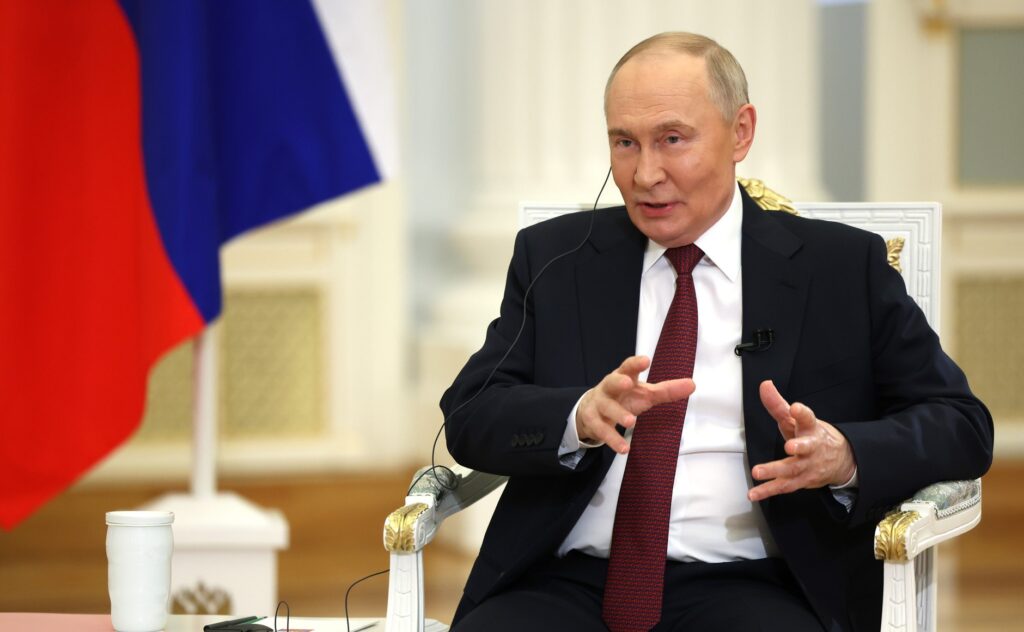
MOSCOW (Realist English). Ahead of his upcoming state visit to India, Russian President Vladimir Putin has lauded the “unique” character of Russia–India relations, praised Prime Minister Narendra Modi’s leadership, and outlined key areas for new bilateral agreements in a wide-ranging interview with Indian broadcasters Aaj Tak and India Today.
Putin said India had undergone a “colossal path of development” in the 77 years since independence, adding that his personal rapport with Modi enables both leaders to discuss sensitive issues “in a friendly and open manner.” The Russia–India partnership, he stressed, “has enormous significance that extends beyond the bilateral agenda.”
New agreement package in the works
Putin confirmed that Moscow and New Delhi are preparing a package of new agreements to be unveiled during the visit, without disclosing details ahead of formal talks. Priority areas include high technology, nuclear energy — notably the Kudankulam Nuclear Power Plant project — as well as aviation, shipbuilding, and artificial intelligence.
Energy cooperation remains “stable and long-term”
The Russian president underscored that energy cooperation between the two countries remains resilient despite Western sanctions. “This is not about current politics. Our companies have built these relations over decades,” he said, noting Russia’s largest-ever investment in India: a refinery acquisition valued at more than $20 billion.
Putin criticised Western efforts to limit India’s role in global oil markets, calling such moves “a political tool of competitive struggle” aimed at constraining India’s growing influence.
“We always have something to talk about”
Reflecting on his personal interactions with Modi, Putin recalled their spontaneous shared car ride during a Shanghai Cooperation Organisation summit, describing it as a gesture of camaraderie. “We always have something to talk about,” he added.
Putin’s visit comes at a moment of renewed diplomatic intensity between Moscow and New Delhi, as both countries seek to expand cooperation across strategic industries while navigating shifting geopolitical pressures.