


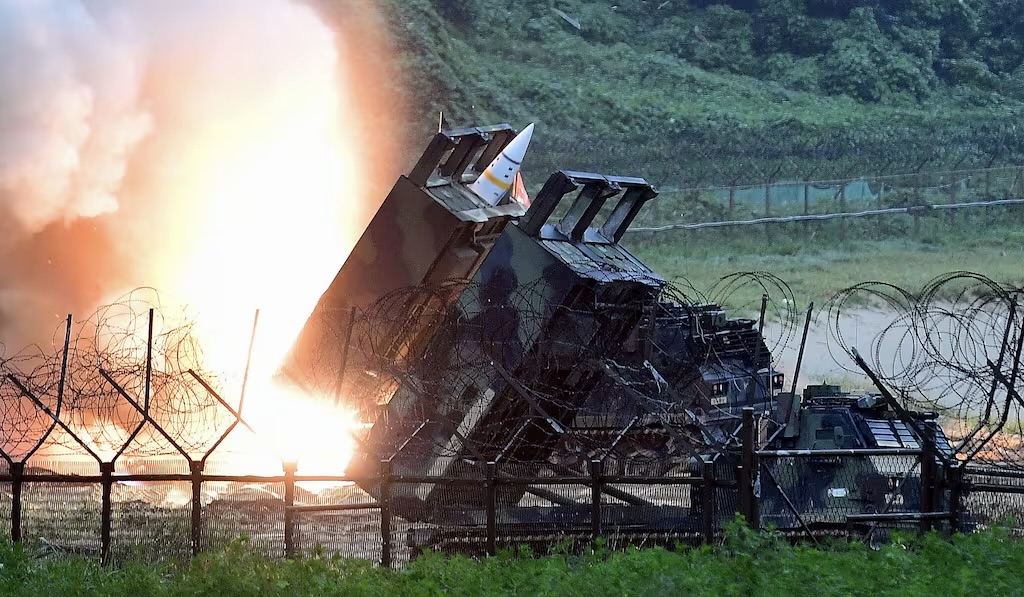
ANKARA (Realist English). On July 7, on the sidelines of the NATO summit in Ankara, US-based Lockheed Martin and Germany’s Rheinmetall signed a memorandum of understanding paving the way for the creation of Europe’s first production centre for tactical ballistic missiles ATACMS.
The agreement, backed by the US and German governments, provides for the deployment of a production line at Rheinmetall’s facility in Unterlüß, Lower Saxony.
This step marks a historic breakthrough: for the first time in the nearly 35-year history of the ATACMS missile system, it will be produced outside the United States.
Unterlüß Becomes Europe’s Defence Hub
Rheinmetall’s Unterlüß facility has been in operation for over 125 years and employs about 4,000 people. In recent years, the site has been rapidly expanding: in August 2025, an artillery shell plant was opened there with a capacity of up to 350,000 155mm shells per year by 2027.
The rocket engine plant, whose construction is already being completed, is set to begin producing rocket engines and components for guided missiles as early as 2027.
Rheinmetall’s management estimates the annual European and Ukrainian demand for ATACMS at 600–800 units. Full-scale production, according to Rheinmetall CEO Armin Papperger, should reach design capacity in 2028–2029.
Weapon That Changed the Course of the War
ATACMS (Army Tactical Missile System) is a solid-fuel ground-launched ballistic missile about 4 metres long, fired from HIMARS and M270 launchers. Its range reaches 300 km. The missile carries a 500-pound WDU18 fragmentation warhead.
During the fighting in Ukraine, ATACMS proved its high effectiveness, being used to destroy command posts, ammunition depots, fuel storage facilities and air defence systems, including Nebo-M radar complexes. The weapon was also widely used during the US military operation against Iran, which began on February 28, 2026.
European Autonomy and Cooperation
Setting up ATACMS production in Germany addresses several strategic challenges. First, it eases the acute “bottleneck” problem: until now, all missiles were produced on a single line in Arkansas, and any increase in demand was constrained by that plant’s limited capacity. The German line will become a fully independent production loop that does not compete for resources with US plants.
Second, it strengthens European defence autonomy. As Papperger stated, “by setting up ATACMS production at the Rheinmetall site in Unterlüß, we are creating new opportunities for Germany and Europe, ensuring supplies for our customers and strengthening our autonomy in defence policy.”
Lockheed Martin International President Jay Pitman called the partnership “a turning point for European security and allied industrial cooperation.”
Lockheed Martin will continue to operate its production line in Camden, Arkansas, until the transition to European production is complete. Final approval of the joint venture depends on US government consent to technology transfer.
The companies had previously signed cooperation agreements on missile systems in 2024, expanded them in April 2025, and since August 2025 had been negotiating the production of ATACMS and Hellfire in Unterlüß.
An Era of Transatlantic Cooperation?
The decision to locate ATACMS production in Germany has become an important signal against the backdrop of the NATO summit in Ankara, where European defence and transatlantic industrial cooperation were discussed.
As Lockheed Martin’s European head Dennis Göge noted, “locating joint ATACMS production in Germany is a strong signal for the European defence industry and NATO’s long-term resilience.”
For Rheinmetall, Unterlüß is becoming Europe’s largest ammunition production centre, where both artillery shells and tactical missiles will be manufactured. Construction of the rocket engine plant is already being completed, with commissioning scheduled for 2027.