


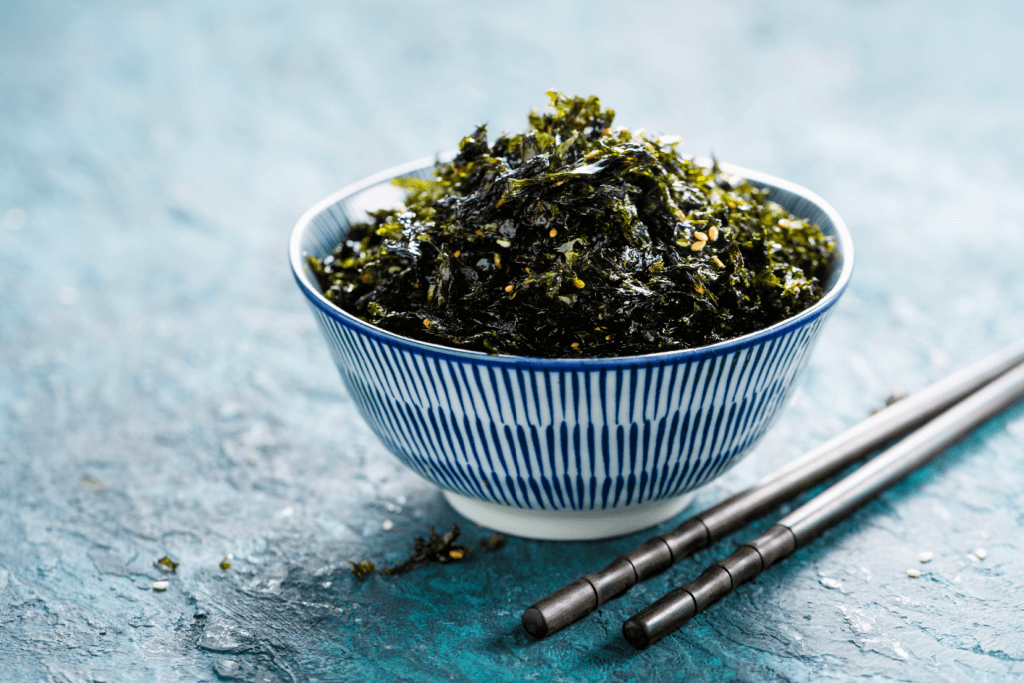
SEOUL (Realist English). Dried seaweed, known locally as gim, has long been a cheap staple on South Korean dining tables. But soaring global demand is now pushing prices to record levels, raising concerns among domestic consumers and highlighting the growing export focus of the industry.
South Korea is the world’s largest producer and exporter of gim, supplying markets across Asia, North America and Europe. Exports reached a record $1.13 bn in 2025, according to data from the Korea Maritime Institute, reinforcing the product’s reputation as one of the country’s most successful food exports — sometimes dubbed Korea’s “black semiconductor”.
As overseas demand has grown, domestic prices have followed. In 2024, a single sheet of gim typically sold for around ₩100 ($0.06), usually bundled in packs of 10 or more. Last month, prices rose above ₩150 per sheet, the highest level on record, with premium varieties reaching as much as ₩350 per sheet, according to market vendors.
Lee Hyang-ran, who has sold gim for nearly five decades at a traditional market in central Seoul, says foreign customers now make up a growing share of her business. “People used to think it looked like black paper,” she said. “Now they come from all over the world to buy it.”
Consumers are beginning to adjust their habits. Kim Jaela, a Seoul resident in her 30s who typically buys hundreds of sheets at a time, said she may cut back if prices continue to rise. “If I see the same or higher price next time, I probably won’t restock,” she said.
Analysts link the surge in global demand to the broader popularity of Korean culture, from K-pop to television dramas, which has drawn international attention to Korean cuisine. In 2023, Korean-style gimbap sold by the US grocery chain Trader Joe’s went viral and quickly sold out nationwide.
“From Asia to Western countries, more people are becoming familiar with gim,” said Lee Eunhee, a consumer studies professor at Inha University. “To meet overseas demand, domestic prices are being pushed up.”
Producers say capacity constraints are adding to the pressure. Kim Namin, who runs a family-owned gim processing factory in Wando — a major seaweed-producing region — said most of his output is now exported. “There aren’t enough factories compared to rising demand,” he said, adding that even small price increases tend to provoke strong public reaction in South Korea, where gim has traditionally been seen as an affordable food.
Government officials cite multiple factors behind the price rise, including inflation, higher labour costs and reduced overseas production. Still, many acknowledge that global demand is the main driver.
The Ministry of Oceans and Fisheries has said it will closely monitor prices, while food companies are investing in land-based seaweed research and development to enable year-round harvesting and stabilise supply.
Despite the domestic concerns, vendors like Lee remain upbeat. “Gim has been selling like hot cakes,” she said. “I’m glad Korean gim is becoming popular around the world — even if it’s getting harder to keep prices low at home.”