


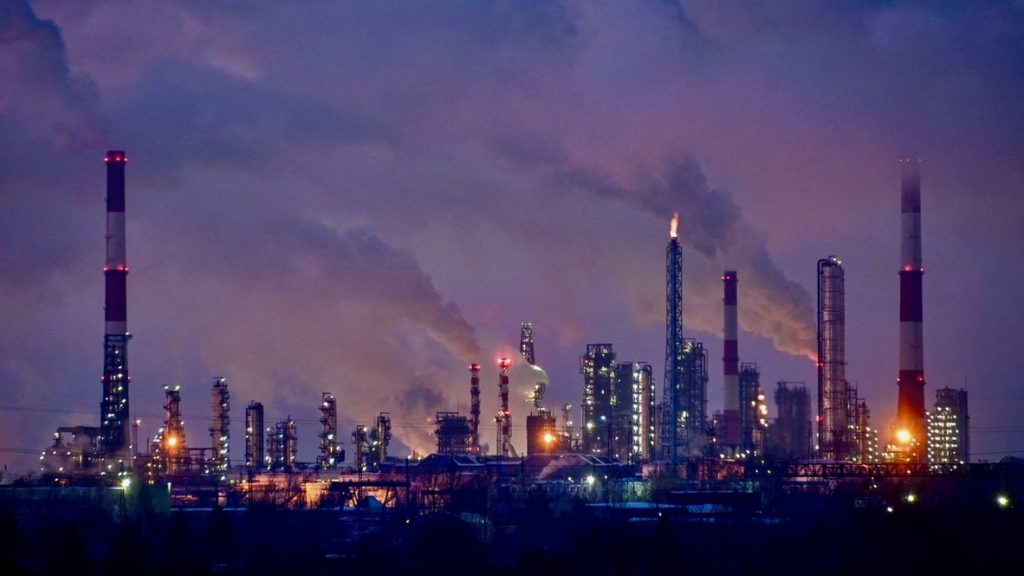
MOSCOW (Realist English). Over the past seven days (April 12–19, 2026), Russian oil and gas revenues have shown sharp growth, driven by the escalation of the conflict in the Middle East and the temporary easing of sanctions pressure from the United States. As of April 18, Russia is earning about $760 million per day from oil and gas exports.
The average price of Urals crude in the first half of April reached $106.30 per barrel, 42% higher than March levels. On some days, the price exceeded $125, while the discount to Brent narrowed to minimal levels, and in some cases Urals is even trading at a premium.
Oil production: gradual growth below potential
Despite the explosive price growth, Russia’s oil production is increasing only slightly. According to OPEC data, in March 2026, production rose by just 3,000 barrels per day (b/d) from February, reaching 9.167 million b/d. At the same time, Russia’s production ceiling for March was 9.574 million b/d, meaning the country was producing 407,000 b/d below its target.
Deputy Prime Minister Alexander Novak said on April 10 that Russia’s oil production in 2026 could reach 515 million tonnes (the medium-term macro forecast is 525.2 million tonnes), but this forecast remains uncertain. “It could be revised either way. Only the first quarter has passed, with eight months still ahead,” Novak noted. He also stressed that Russian companies have the capacity to increase oil production, but this requires investment and time: “The process is not fast, it is gradual.”
Analysts estimate Russia’s production potential (the level achievable within 90 days) at 9.4 million b/d. Amid the blockade of the Strait of Hormuz, which has created a market deficit of 13 million b/d, the increase in Russian production was only 0.29 million b/d — a drop in the ocean. Meanwhile, global oil prices rose 17% in March and have jumped 56% since the start of the year.
Sanctions waiver from the US
On April 17, the US Treasury Department extended for 30 days a license allowing transactions with Russian oil. The decision was made to stabilise the global market amid the war between the US, Israel and Iran. The temporary easing of sanctions has already led to increased demand for Russian barrels from Asian buyers.
Revenue and export structure
According to the International Energy Agency (IEA) on April 14, Russia’s revenues from oil and petroleum product exports doubled in March compared to February, reaching $19.04 billion. Seaborne exports of crude oil rose to €372 million per day.
Main buyers: China accounts for nearly half (43% of revenue). In January 2026, imports of Russian Urals reached 405,000 b/d — the highest since June 2023. India has increased purchases to 2 million b/d. However, Indian imports fell to 1.159 million b/d in February amid US sanctions pressure. At the same time, Urals for India was trading above $120 per barrel at the end of March — at a premium to Brent.
Natural gas: Revenues from pipeline gas amount to about €57 million per day. LNG revenues rose to €47 million per day, with 65% of cargoes still heading to European Union countries.
According to Dmitry Kasatkin, Managing Partner of Kasatkin Consulting, oil and gas budget revenues in April will rise 60% compared to March and amount to about 1 trillion roubles. In March, budget revenues were 617 billion roubles, calculated on February prices ($44.59 per barrel). The price surge will only be reflected in revenues in April, as the Mineral Extraction Tax (MET) is paid on the 28th of the following month, plus a quarterly payment under the Additional Income Tax (AIT) is due in April.
Forecasts and development scenarios
Natalia Milchakova, leading analyst at Freedom Finance Global, forecasts that the implementation of current targets could increase additional budget revenues from high oil prices in 2026 to 3 trillion roubles.
According to VEB estimates, in the event of a medium-term shock and a prolonged blockade of the Strait of Hormuz, revenues of fuel and energy companies from exports could grow by $130 billion compared to 2025, while the physical volume of oil exports could increase by 29 million tonnes, to 256 million tonnes. Additional oil and gas budget revenues in this scenario would amount to about 1.4 trillion roubles.
Bloomberg estimates Russia’s potential additional oil revenues at $40 billion if high prices persist until the end of the year. If the conflict ends quickly and the strait reopens, prices will return to previous levels within three months, with additional revenues amounting to at least $10 billion.
Pavel Maryshev, Development Director of the engineering company Energia Plus, identifies three price scenarios:
- Peace scenario (settlement in the coming weeks, the strait returning to a publicly accessible waterway): Urals price would fall to $65 per barrel.
- Compromise scenario (transit through the strait with mandatory approvals or fees): price would fall to $75 per barrel.
- Escalation scenario (continuation of the conflict): price would rise to $160–170 per barrel.
Alexander Shneiderman, Head of Client Support and Sales at Alfa-Forex, notes that the market has begun to price in a de-escalation scenario, which has accelerated price growth and increased export revenues. However, he says, Russia’s current revenues have arisen largely due to geopolitical tensions, and the existing speculative premiums risk shrinking along with prices.
Geopolitical factor
Iran’s blockade of the Strait of Hormuz has cut off more than 13 million barrels per day of Middle Eastern oil, sharply increasing demand for Russian grades. OPEC+ production as a whole fell by 9.4 million b/d, while non‑OPEC+ supplies fell by 770,000 b/d. According to OPEC, in March, countries participating in the OPEC+ agreement cut oil production by 7.59 million b/d.
This situation has become the main driver of rising Urals prices and increased Russian export revenues. Russia, which is not dependent on passage through the Strait of Hormuz, finds itself in a winning position, offering the market virtually irreplaceable volumes of crude. As Bloomberg notes, the war around Iran is already bringing Russia billions in additional revenues, particularly from oil, gas and other resources.