


GENEVA (Realist English). On June 30 – July 1, the 67th round of the International Discussions on Security and Stability in the South Caucasus (IDSC) took place in Geneva.
The meeting was attended by official representatives of the Republic of Abkhazia, Georgia, the Republic of South Ossetia, the Russian Federation and the United States. The co‑chairs were the UN, the OSCE and the European Union.
Participants reaffirmed their commitment to continuing work within the IDSC format, which remains the only platform for direct dialogue between Tbilisi, Sukhumi and Tskhinvali. However, despite the continuation of the negotiation process, the sides were unable to overcome fundamental disagreements on key security issues.
‘Legally Binding Agreement’: Russia’s Position
The Russian delegation made an urgent appeal to adopt practical measures guaranteeing lasting security for Abkhazia and South Ossetia. This concerns the development of a legally binding agreement on the non‑use of force between Georgia and the two republics.
Moscow stressed that its conclusion would not only give tangible impetus to the negotiation process under the IDSC auspices but would also be a “significant contribution to strengthening stability in the region as a whole.”
The Russian side insists that such a document would be a “legal guarantee” of security for Abkhazia and South Ossetia. At the same time, according to Abkhazia’s Foreign Ministry, the Georgian side is obstructing the agreement, insisting that Abkhazia is under “Russian occupation.”
Concern Over Georgia’s Integration into NATO
Moscow also expressed concern over the further increase in interaction between NATO and Georgia: “The relevance of the steps proposed by Russia and its Abkhaz and South Ossetian allies is growing against the backdrop of further increased interaction between the NATO bloc and Georgia, including the conduct of exercises and other military training activities of this aggressive alliance on the territory of the Transcaucasian country.”
In the Russian view, Georgia’s integration into NATO creates additional risks for regional stability and makes the preservation of the current status quo unacceptable.
Situation ‘On the Ground’
The Russian side noted with satisfaction the relatively calm situation “on the ground,” made possible by the steady functioning of existing IDSC communication channels:
- round‑the‑clock “hotlines”;
- regular meetings of the Incident Prevention and Response Mechanism (IPRM) on the Georgian‑South Ossetian border in the settlement of Ergneti.
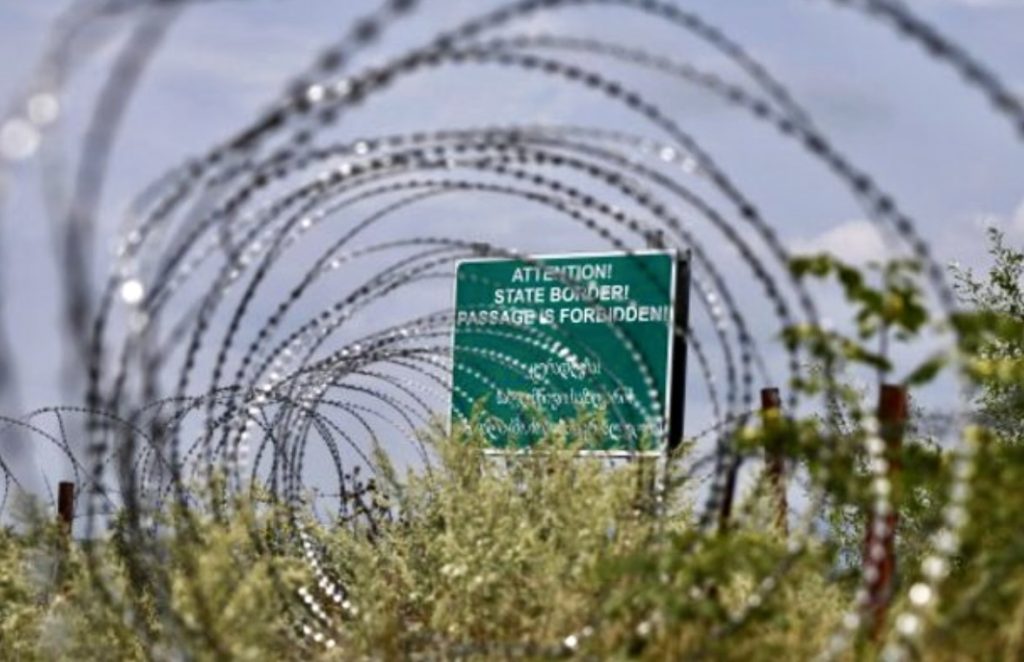
At the same time, the need to resume the activities of a similar Mechanism on the Georgian‑Abkhaz border in the settlement of Gali was stressed, as well as the start of delimitation of Georgia’s state border with Abkhazia and South Ossetia.
According to the co‑chairs’ press release, participants “explored possible ways to ensure the resumption of the Gali Incident Prevention and Response Mechanism.” However, according to Abkhazia’s Foreign Ministry, the lack of agreement on the technical aspects of organising IPRM meetings continues to hinder the practical implementation of this task.
Humanitarian Agenda and Disputes Over the UN Resolution
One of the most acute issues was the humanitarian agenda. The Russian side stressed the inadmissibility of Tbilisi’s continued speculation on individual topics, which, in its view, seriously impedes constructive dialogue.
Particular indignation in Moscow was caused by the UN General Assembly resolution on internally displaced persons and refugees, adopted literally on the eve of the next round. According to the Russian Foreign Ministry, this was done “in violation of existing agreements to discuss this topic within the IDSC framework, and not on other platforms, to which representatives of Sukhumi and Tskhinvali are denied access.”
The second Working Group discussed freedom of movement, crossing the border between Abkhazia and Georgia, education and healthcare issues, as well as the search for missing persons. Representatives of the Abkhaz delegation again raised the issue of protecting citizens’ rights to freedom of movement and external mobility.
The delegations of Abkhazia, South Ossetia and Russia did not participate in the discussion on the return of refugees and internally displaced persons. According to the co‑chairs, this topic “could not be discussed because some participants left the meeting.”
Proposal to Move the Venue
During the discussions, the delegations of Russia, Abkhazia and South Ossetia proposed moving the International Discussions venue from Switzerland to another country, while preserving the existing negotiation format. In their view, Switzerland no longer meets the criteria of a neutral state.
The co‑chairs are expected to consider this proposal in preparation for the next round.
Prospects: Next Round in November
A preliminary agreement was reached to hold the next round of IDSC in November 2026.
As is customary, the meeting will be preceded by a series of consultations between national delegations and co‑chairs in their respective capitals.
17 Years of Talks Without Breakthrough
The International Discussions on Security and Stability in the South Caucasus (IDSC) were launched in October 2008 in implementation of the Medvedev‑Sarkozy Plan, which established a ceasefire after the August war.
Over nearly 17 years of talks, the sides have managed to create incident prevention mechanisms and maintain communication channels, but the key political issues — the status of Abkhazia and South Ossetia, the non‑use of force agreement, the return of refugees — remain unresolved.
The past round once again demonstrated that compromise between the sides remains unattainable: Moscow and its allies demand legal security guarantees and accuse Tbilisi of militarisation, while Georgia continues to insist on its territorial integrity and integration into Euro‑Atlantic structures.
The question of whether the 68th round in November can bring the sides closer to resolving even one of these issues remains open.