


MOSCOW (Realist English). The past week was crucial for Russia’s foreign policy, primarily due to the escalation in the Middle East. Moscow consistently called for a ceasefire while simultaneously stepping up political and military-technical cooperation with Iran.
Islamabad talks and Russia’s role
On April 11, the Russian Foreign Ministry issued a statement welcoming the start of US-Iran talks in Pakistan, calling them a “window of opportunity” for a settlement. Moscow urged participants to act responsibly and not to derail the peace process. After the talks ended without result on April 12, Russian diplomacy stepped up.
On April 13, Foreign Minister Sergey Lavrov held a telephone conversation with his Iranian counterpart Abbas Araghchi, stressing the importance of “preventing a relapse of armed confrontation” and reaffirming Moscow’s readiness to assist in resolving the crisis. That same day, President Vladimir Putin spoke by phone with Iranian President Masoud Pezeshkian, stating his readiness to “mediate in efforts to achieve a just and lasting peace.”
Reaction to the Strait of Hormuz blockade
One of the main irritants in Moscow’s foreign policy rhetoric was the US plan to impose a naval blockade. On April 14, Russian Foreign Ministry spokeswoman Maria Zakharova called these actions “illegal” and capable of leading to even greater destabilization in the region.
Position at the UN and the Chinese vector
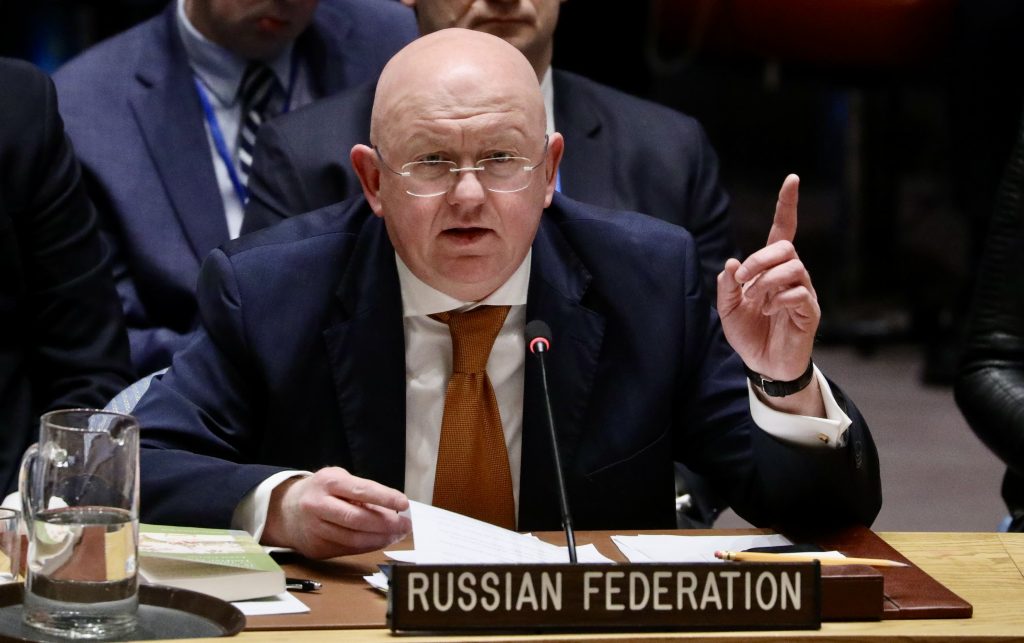
On April 7, Russia and China vetoed a UN Security Council resolution proposed by Bahrain that condemned Iran’s actions in the Strait of Hormuz. Moscow and Beijing considered the document one‑sided and not taking into account the concerns of all parties.
This move was part of a coordinated line on the international stage, which Russia and China confirmed during Lavrov’s visit to Beijing on April 14–15. The ministers discussed a wide range of issues, including cooperation at the UN, BRICS, and the SCO, as well as preparations for President Putin’s upcoming visit to China. During the talks, the Chinese side reaffirmed its invitation to the Russian leader.
Strengthening multilateral ties: BRICS and the “Greater Eurasia.”
To counter Western pressure, Moscow continued to strengthen ties with non‑Western centers of power, focusing on economic cooperation.
- Indonesian vector: On April 13–14, Indonesian President Prabowo Subianto paid an official visit to Moscow. The key topic of his talks with Vladimir Putin was energy cooperation, including oil refining, trade, and technology. Prabowo thanked Russia for supporting Indonesia’s accession to BRICS, which was another step in strengthening the country’s position on the global stage.
- Indian energy partnership: In response to energy market instability caused by the Middle East crisis, Russia offered India to increase supplies of crude oil and liquefied natural gas (LNG). Moscow reaffirmed its reliability as a “trusted partner” for New Delhi amid rising prices and supply chain disruptions.
- BRICS initiatives: On April 13, Russia proposed creating joint food reserves within BRICS to mitigate risks caused by the Middle East crisis. This proposal aims to strengthen the economic security of member countries.
Ukrainian front: criticism of the West and mutual accusations
Against the backdrop of Middle East events, the Ukrainian issue did not leave the agenda. Moscow accused Kyiv of violating the Easter truce. According to Rodion Miroshnik, the Russian Foreign Ministry’s ambassador‑at‑large, the Ukrainian side failed to reciprocate the Easter pause, indicating Kyiv’s unwillingness to take “goodwill steps.” Meanwhile, the EU and Ukraine reported more than 10,000 ceasefire violations by Russia.
On April 11, Lavrov stated that the Ukrainian conflict cannot be resolved without taking into account Moscow’s legitimate demands, including security guarantees.
Key facts of the week
- Telephone diplomacy: In addition to talks with Iran and Indonesia, the Russian president held telephone conversations with the leaders of Turkey this week, focusing on the situation in the Persian Gulf and energy cooperation.
- Military‑technical cooperation: According to Western data, Russia has stepped up military cooperation with Iran. Reports indicated the transfer of satellite imagery of Middle East targets, as well as an agreement to begin production of strike drones on Russian territory using Iranian components. A “Treaty on Comprehensive Strategic Partnership” for 20 years was signed, covering military, economic, and technological spheres.
- Position at the UN: Russia and China used their veto power to block a UN Security Council resolution on the Strait of Hormuz.
- High‑level visits: Moscow hosted top‑level talks with the President of Indonesia, and the Russian Foreign Minister paid an official visit to China.