


CHIȘINĂU (Realist English). On April 8, laws came into force in Moldova denouncing three basic agreements within the CIS – the Charter of the Commonwealth, the Agreement on the Establishment of the CIS, and its Protocol.
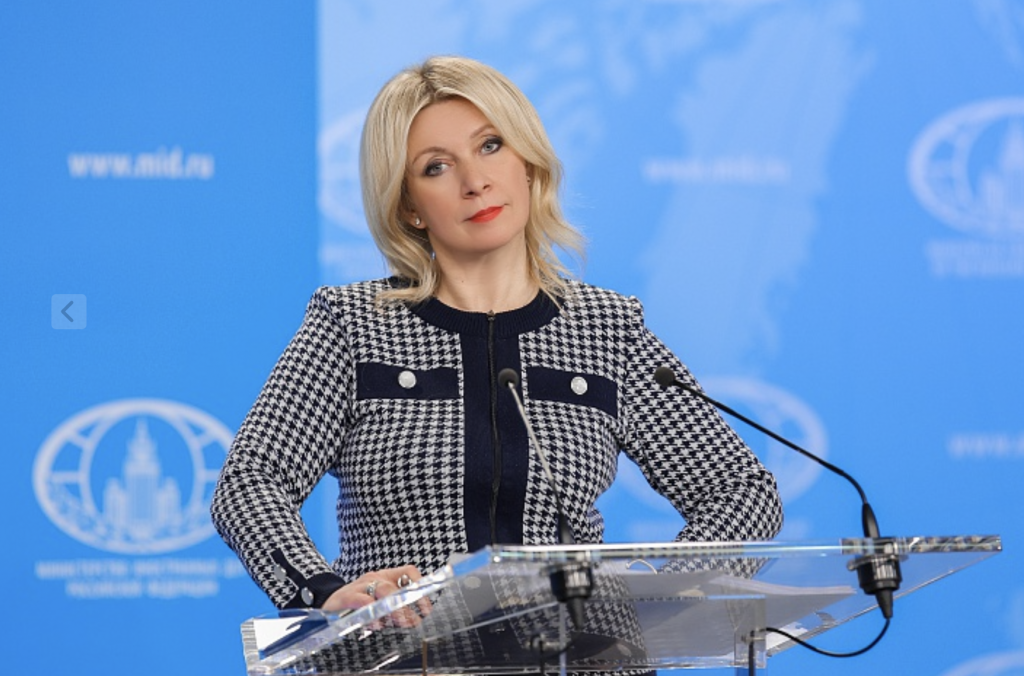
Official Russian Foreign Ministry spokesperson Maria Zakharova, answering a media question, said that Moscow has repeatedly commented on the Moldovan authorities’ desire “at any cost to finalize a divorce from the CIS.”
“Let us stress again: this is Chișinău’s sovereign right,” the diplomat noted.
“Termination of membership is not instantaneous.”
Zakharova drew attention to the fact that withdrawal from the Commonwealth is preceded by a clear procedure enshrined in the organization’s Charter. It provides for an inventory of about 200 treaties and more than 600 decisions of the supreme statutory bodies of the CIS to which Moldova is a party, as well as settlement of the accumulated financial debt of Chișinău to the unified budget of the CIS bodies. More detailed information, according to Zakharova, is available on the website of the CIS Executive Committee.
“The decision is purely opportunistic.”
The Russian Foreign Ministry representative stressed that from an economic point of view, Moldova’s exit from the CIS is destructive.
“The calculation of the authorities in Chișinău that losses from the severance of business ties developed within the Commonwealth will be compensated by wider access to the EU market is not justified,” Zakharova said.
She cited official Moldovan statistics: in 2025, imports exceeded exports of goods by three times, and the trade balance deficit increased by almost a third compared to 2024, exceeding $7 billion. “It is primarily the economy of Moldova, balancing on the brink of collapse, and the people of this country that are suffering,” the diplomat added.
“Special cynicism” and the absence of a referendum
Zakharova noted that the decision to withdraw from the CIS was taken by the local authorities without open dialogue with society – it was “pushed through” by the votes of the pro-government majority in parliament.
“It is indicative that in 2024 a referendum was held in Moldova on the issue of joining the EU, in which, by the way, the majority of citizens permanently residing in the country voted ‘against’. Now, the authorities in Chișinău did not dare to take such a step, apparently realizing that the outcome of a referendum would not be in favor of breaking with the CIS,” the official representative of the Russian Foreign Ministry stated.
Behind the authorities’ decision is an attempt to distance themselves from Russia.
According to Zakharova, behind the decision to leave the CIS lies not only a desire to emphasize the “irreversibility” of the course toward European integration, but also an attempt – contrary to the will of ordinary Moldovans – to completely and finally distance themselves from Russia and the processes taking place in the Eurasian space.
In 2024, a referendum was held in Moldova in which 50.16% of voters supported the inclusion of a provision on EU membership in the constitution. At the same time, residents inside the country voted against, and the advantage was provided by votes of Moldovans abroad. Moscow called the results “questionable” and spoke of pressure on opponents.
On April 2, 2026, the parliament approved, and on April 8, President Maia Sandu signed laws denouncing three basic CIS agreements: the Charter, the Agreement on the Establishment of the CIS, and its Protocol. Moscow stressed that Chișinău did not dare to hold a referendum on withdrawal from the CIS, “realizing that the outcome of the vote would not be in favor of the break.”
According to the Russian ambassador, exports of Moldovan products to Russia in 2025 fell by half to $273.6 million, while imports from Russia reached $1.7 billion. The official representative of the Russian Foreign Ministry stated that in 2025, imports exceeded exports of goods by three times, and the trade balance deficit exceeded $7 billion.
Gas supply halt (January 2025): Gazprom halted gas transit to Moldova due to the expiration of the transit contract through Ukraine and Chișinău’s unresolved debt. The amount of the debt became a subject of dispute: Gazprom insisted on $709 million, while an audit commissioned by Moldova showed only $9 million in debt.
Search for alternatives and energy crisis (2025–2026): In August 2025, Moldovagaz was stripped of its supply license. The authorities announced a course toward diversification. However, by April 2026, Moldova’s commercial gas reserves were running out, and tariffs had increased sevenfold since 2021.
Paradox of energy cooperation: Contrary to the overall cooling, in March 2026, information appeared about plans to sign a Russian-Moldovan agreement on energy cooperation that would also affect Transnistria.
Transnistrian settlement: The Transnistrian issue remained a key irritant, but the format of dialogue changed.
- Russia’s position: Moscow remains ready to facilitate a settlement, calling Chișinău’s actions “unconstructive.” Tiraspol also fears that Moldova’s exit from the CIS will allow Chișinău to dismantle the negotiation process.
- Direct dialogue between Chișinău and Tiraspol: The sides sought to establish direct contacts. A “1+1” format meeting on February 26, 2026, was the first since April 2025.
- Chișinău’s desire to marginalize Moscow: The goal of direct negotiations, according to Moldovan politicians, was to “keep the Russian Federation out of the process” and eliminate the “gray zone” in the economy of the left bank.