


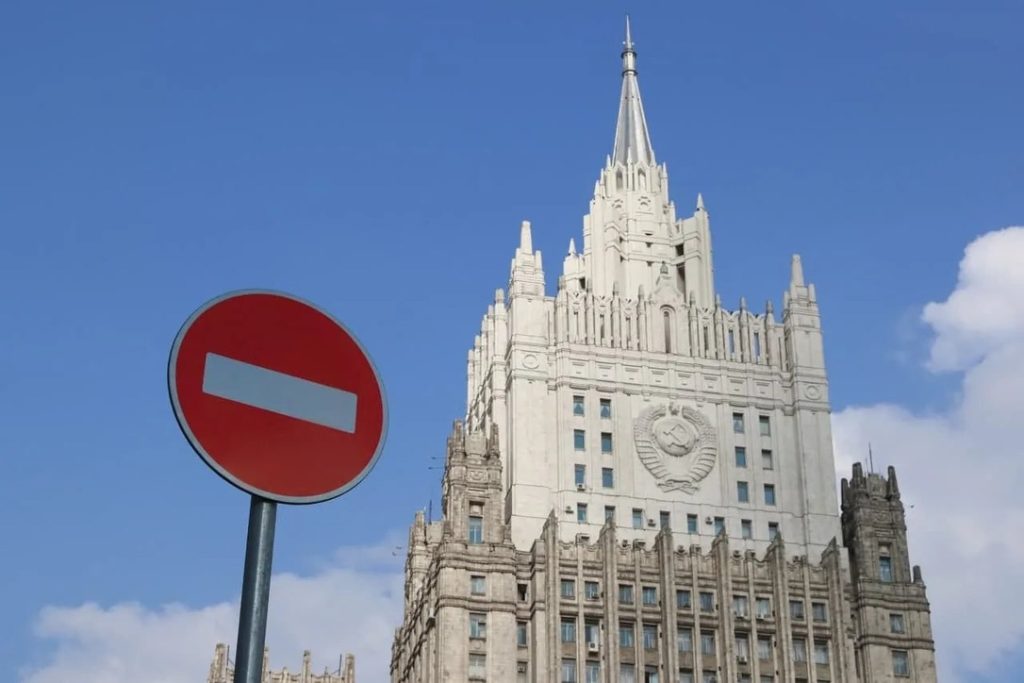
MOSCOW (Realist English). The Russian Foreign Ministry has expressed concern over the escalation of the Afghan-Pakistani conflict and has called on the parties to immediately cease hostilities.
According to a statement from the Russian Foreign Ministry, “Moscow is concerned about the ongoing military confrontation between Afghanistan and Pakistan, which primarily affects civilians.”
The statement was prompted by Pakistani airstrikes on three eastern Afghan provinces — Paktia, Paktika and Kunar — carried out on the night of June 29. According to the UN, at least 28 civilians, including minors, were killed and about 50 more people were wounded.
The UN Assistance Mission in Afghanistan (UNAMA) confirmed the deaths of 28 civilians and injuries to 49 people.
Airstrikes and ‘Double-Tap’ Tactics
Pakistani forces struck three targets in the eastern Afghan provinces, stating that the operation was directed against hideouts of militants from the Tehrik-i-Taliban Pakistan (TTP) and Jamaat-ul-Ahrar groups. Pakistan’s Information Minister Attaullah Tarar said that 25 militants were killed in the operation, and including a ground operation in Pakistan’s Bajaur district — 29.
According to local residents and Afghan officials, the strike in Paktia province hit a residential house in the Mandi Khel village of the Tsamkani district. Eyewitnesses said the attack occurred around midnight. Pakistani forces carried out a second strike on the same location as residents gathered to clear the rubble and rescue the wounded.
This tactic, known in military doctrine as a “double-tap” strike, resulted in numerous civilian casualties. The deputy head of the affected Samkani district, Khalid Ahmad Sajjad, confirmed that the first strike hit the house, followed by a second.
Response from Kabul and the Parties
The Afghan government strongly condemned the airstrikes. Government spokesman Zabihullah Mujahid called the incident a “cowardly act” and an “atrocity.”
Deputy government spokesman Hamdullah Fitrat said that 36 civilians were killed and 163 wounded in the strikes. Afghan authorities also accused Pakistan of violating airspace and international law.
The Afghan side warned that “the attack will definitely be avenged at the appropriate time.” On June 30, Taliban forces launched retaliatory strikes against targets along the border with Pakistan, wounding several people in Pakistan’s Balochistan province. Pakistani military officials said they shot down four drones and warned that “any further provocation will receive a fitting response.”
Pakistan, for its part, insists that the operation was a response to a series of militant attacks on Pakistani security forces. On June 27, Jamaat-ul-Ahrar militants attacked the headquarters of the Sindh Rangers paramilitary force in Karachi, killing three servicemen.
Pakistani authorities said that militants are using Afghan territory to organise attacks and vowed to continue counter-terrorism operations “until the threat is completely eradicated.”
Escalation Amid a Fragile Truce
The current escalation follows several months of relative calm. In October 2025, Afghanistan and Pakistan, with mediation from Qatar and Turkey, agreed to a ceasefire.
However, since then the sides have repeatedly exchanged strikes: in February 2026, clashes claimed dozens of lives, and in March, a Pakistani strike on a rehabilitation centre in Kabul killed hundreds of people.
Earlier in June, Pakistan had already carried out airstrikes that, according to the Afghan side, killed 13 civilians, mostly children.
The Russian Foreign Ministry stressed that civilians are the primary victims of the conflict and called on the parties to “end the armed conflict and resolve contentious issues through political and diplomatic means.” Moscow, according to the statement, continues to monitor the situation.