


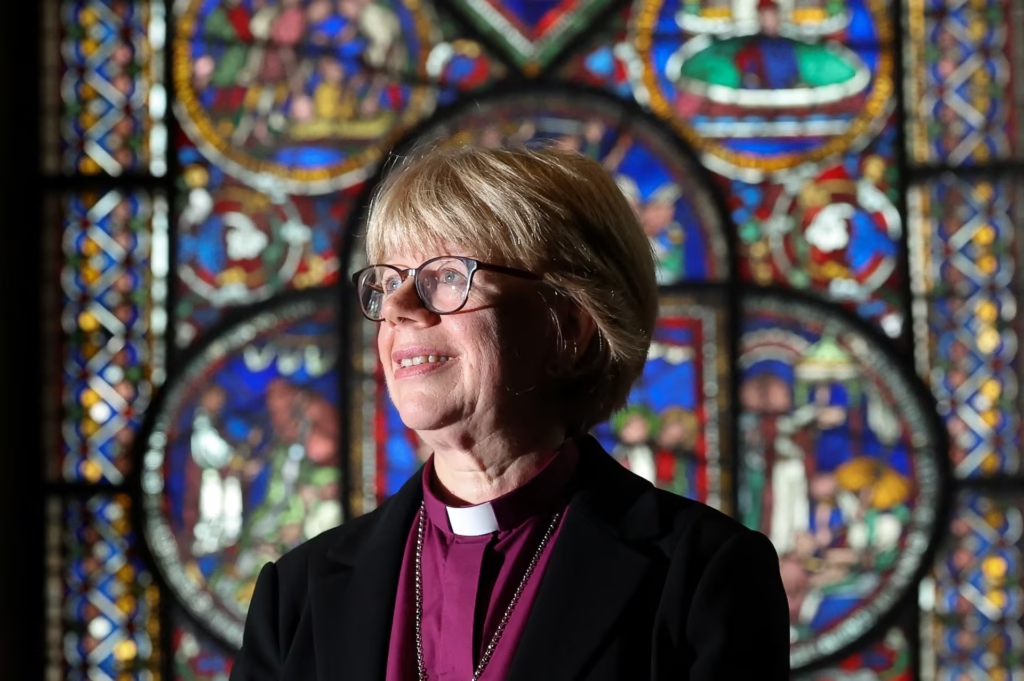
CANTERBURY (Realist English). The Church of England has appointed Sarah Mullally as the next Archbishop of Canterbury — the first woman to serve as the spiritual head of the global Anglican Communion. Her nomination, announced Friday by Prime Minister Keir Starmer’s office and formally approved by King Charles, marks a historic moment for the Church but immediately provoked criticism from conservative Anglicans in Africa and Asia.
The 63-year-old Bishop of London, who previously served as England’s Chief Nursing Officer, will succeed Justin Welby, who resigned following a child abuse cover-up scandal. Mullally inherits a deeply divided Communion, split between liberal churches in the West that support women’s leadership and same-sex blessings, and traditionalist provinces — particularly in Africa — that reject such reforms.
In her address at Canterbury Cathedral, Mullally pledged to “help every ministry flourish, whatever our tradition,” while acknowledging that issues such as same-sex relationships “may not be resolved quickly.” She also vowed to strengthen the Church’s safeguarding standards after a series of sexual abuse scandals and condemned the “horrific violence” of a synagogue attack in Manchester that killed two people the previous day.
The appointment drew sharp responses from conservative leaders. Laurent Mbanda, Archbishop of Rwanda and head of the Global South Fellowship of Anglican Churches, told Reuters that Mullally “will not unite the Communion.” In Nigeria, Bishop Funkuro Godrules Victor Amgbare called the choice “very dangerous,” insisting that “from creation God has never handed over the position of leadership to a woman.”
Mullally, a mother of two, was ordained in 2002 and became one of the first women bishops in 2015. Known for her moderate liberal stance, she has supported blessings for same-sex couples and opposed legislation to legalize assisted dying.
The Vatican, while noting it does not ordain women, congratulated Mullally and said the challenges facing the Anglican Church were “considerable.”
Linda Woodhead, professor of theology at King’s College London, described Mullally as “a unifying figure whose emphasis on gentleness and strength is exactly what the Church — and the nation — needs right now.”
Reflecting on the long and often turbulent history of Canterbury’s archbishops, local resident David Pestell, 74, said: “Some have been brilliant, some contentious, and some ended up murdered. I hope it doesn’t happen to this one — it’s delightful.”