


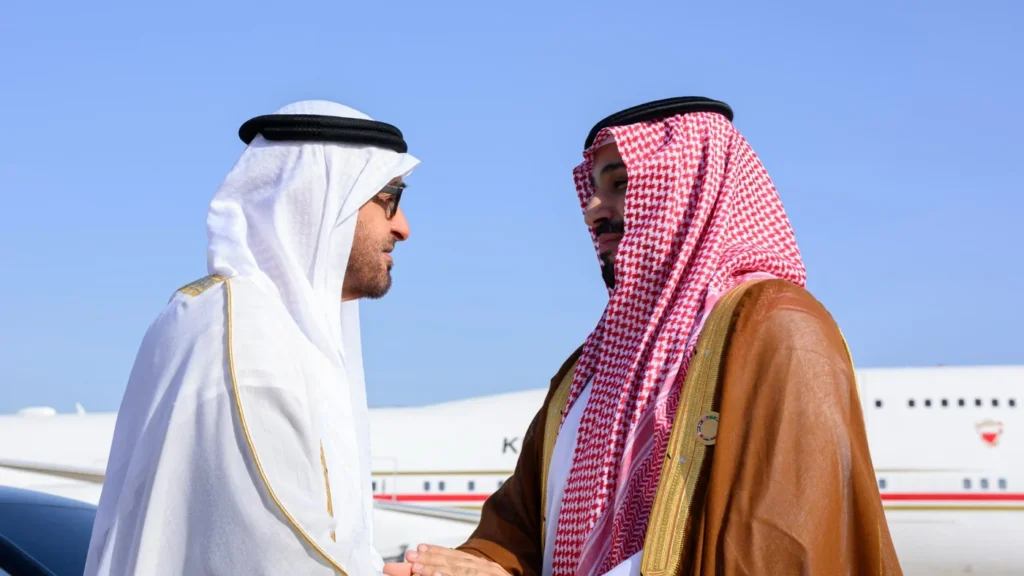
RIYADH (Realist English). Rare public criticism by a Saudi academic of the United Arab Emirates’ relationship with Israel has drawn attention to what analysts describe as growing strategic tensions within the Gulf.
Dr. Ahmed Altuwaijri, a Saudi writer and commentator, recently published an article sharply critical of Abu Dhabi’s close ties with Israel. In unusually direct language, he accused the UAE leadership of aligning itself too closely with what he described as Israel’s broader regional ambitions.
The article briefly disappeared after publication, prompting speculation about official disapproval, before being restored. Its publication in a newspaper seen as close to Saudi authorities has fueled debate about whether it reflects broader shifts in Riyadh’s strategic posture.
Altuwaijri said he was speaking in a personal capacity and did not consult government officials before publishing. He framed his remarks as a response to what he called a “national crisis,” referring to the war in Gaza and its regional fallout.
The episode comes against the backdrop of mounting anger across parts of the Middle East over Israel’s military campaign in Gaza. While Saudi authorities have restricted public demonstrations and political mobilization over the conflict, officials have hardened rhetoric in recent months.
Saudi Arabia has historically promoted Arab-Israeli peace initiatives based on the principle of land for peace, including proposals under King Fahd and later under King Abdullah. Riyadh has also hosted Palestinian reconciliation efforts. According to Altuwaijri, the scale of the current conflict has prompted a reassessment in the kingdom of prospects for normalization with Israel.
The controversy also underscores reported strains between Riyadh and Abu Dhabi on broader regional issues. Analysts have pointed to diverging interests in Yemen, Sudan and parts of the Horn of Africa. Saudi officials have not publicly endorsed Altuwaijri’s comments, and the UAE has not formally responded.
At the same time, Saudi Arabia has maintained cautious engagement with Washington and preserved a détente with Iran, while participating in U.S.-backed diplomatic initiatives. The kingdom is also reported to have urged restraint as indirect talks between Tehran and Washington continue.
The debate highlights the delicate balance Gulf states are attempting to maintain amid regional instability, shifting alliances and renewed great-power competition. While normalization with Israel remains part of broader diplomatic discussions, the war in Gaza has complicated the trajectory of those efforts and exposed underlying tensions within the region.