


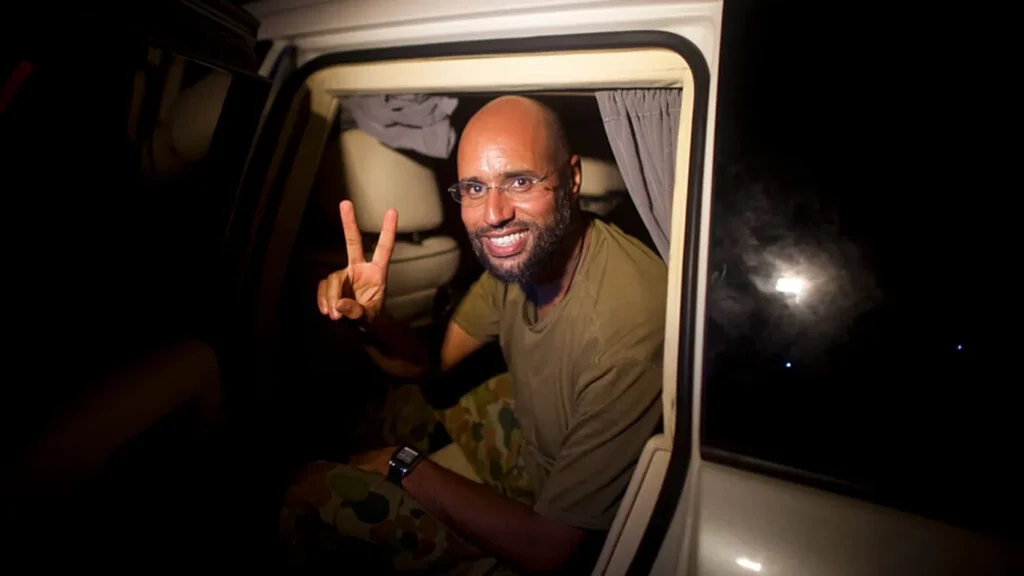
TRIPOLI (Realist English). Seif al-Islam Gadhafi, the son and one-time heir apparent of Libya’s late ruler Muammar Gaddafi, was killed late on Tuesday after gunmen stormed his home in the western town of Zintan, according to sources close to him.
The 53-year-old was shot by armed assailants who forcibly entered his residence, local media reported. His death was confirmed by his lawyer, Khaled al-Zaidi, in a Facebook post that did not provide further details. The killing was also confirmed by Abdullah Othman Abdurrahim, who represented Gadhafi in UN-brokered political talks aimed at ending Libya’s conflict.
Abdurrahim told local outlets that the killing appeared to be a targeted assassination and said prosecutors in the region had opened an investigation.
In a later statement, members of Gadhafi’s political team said four masked gunmen entered the house, disabled its CCTV system and fatally shot him. The statement described the killing as “cowardly and treacherous”, claiming that Gadhafi attempted to resist the attackers before being killed.
Born in 1972 in Tripoli, Seif al-Islam was educated in Libya and later pursued doctoral studies at the London School of Economics. For years, he was portrayed as the reform-minded face of his father’s authoritarian rule, which lasted more than four decades.
Muammar Gaddafi was overthrown during the 2011 NATO-backed uprising that formed part of the Arab Spring and was killed later that year as the country descended into civil war. Since then, Libya has remained fragmented, with rival governments and armed groups competing for power and control over the country’s oil resources.
Seif al-Islam was captured in 2011 by fighters from Zintan while attempting to flee to neighbouring Niger. He was released in 2017 after receiving an amnesty from one of Libya’s rival authorities and had remained in Zintan since.
He was wanted by the International Criminal Court on charges of crimes against humanity linked to the 2011 uprising and was sentenced to death in absentia by a Libyan court in 2015 for inciting violence and the killing of protesters.
In late 2021, Seif al-Islam announced his bid for Libya’s presidency, a move that sparked controversy and unrest, particularly among anti-Gaddafi factions in both eastern and western Libya. He was later disqualified by the electoral commission, and the vote was ultimately cancelled amid ongoing disputes between rival administrations and militias.
His killing adds another layer of uncertainty to Libya’s fragile political landscape, where efforts to stabilise the country and revive a stalled electoral process remain deadlocked.