


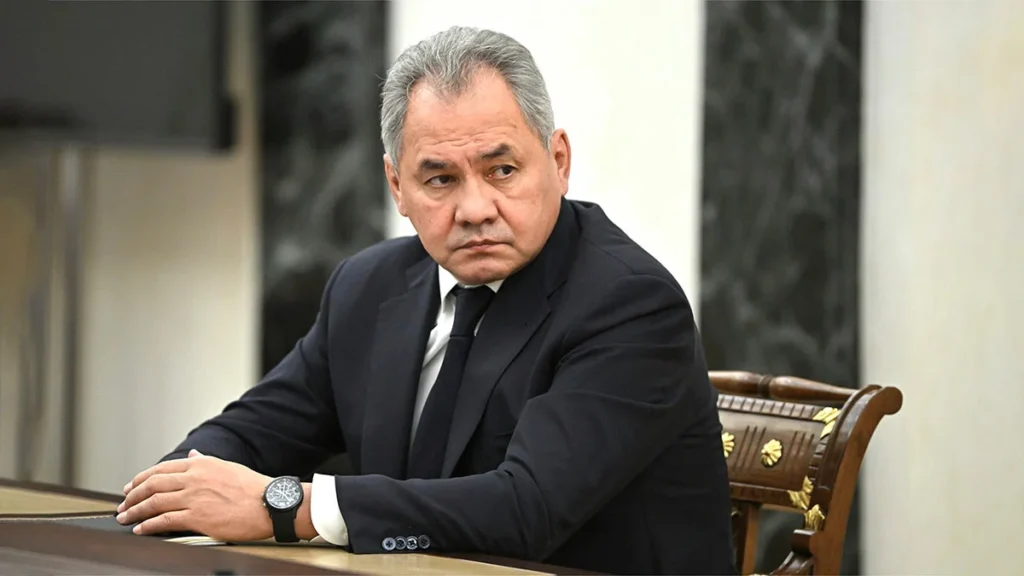
MOSCOW (Realist English). Russia’s Security Council Secretary Sergei Shoigu warned that Armenia’s reported plans to replace Russia in managing the country’s railway network could prove destabilizing and economically risky.
Speaking to TASS, Shoigu said any attempt to transfer control of Armenia’s railways from the current Russian concession operator to another foreign partner would be an “ill-considered” decision that could cause the system to “collapse overnight.”
“I will not assess the competence of other states in railway management,” Shoigu said, “but I can confidently state that it is unlikely any other company could fully replace the Russian railway operator that has long and effectively worked in Armenia under very difficult conditions.”
His remarks followed statements by Armenian Prime Minister Nikol Pashinyan suggesting that Russia’s concession over the country’s rail network may be discouraging potential regional partners. Pashinyan proposed that management could potentially be transferred to a country friendly to both Moscow and Yerevan, naming Kazakhstan, the United Arab Emirates and Qatar as possible options.
Shoigu drew parallels with what he described as other “insufficiently thought-out decisions,” including Armenia’s cooperation with the United States on nuclear issues, and questioned whether such moves could result in “dangerous experiments” affecting ordinary Armenian citizens.
The current operator, South Caucasus Railway — a subsidiary of Russian Railways — has managed Armenia’s railway system under a concession agreement signed in 2008 and valid until 2038.
According to Shoigu, Russian investments in Armenia’s railway infrastructure over nearly two decades exceed 30 billion rubles. He said more than 520 kilometers of track have been repaired, around half of railway sleepers replaced, and over 50 structures — including 38 bridges and two tunnels — renovated. The company also transports more than 500,000 passengers and 1.6 million tons of freight annually, he added.
Shoigu emphasized the strategic importance of rail transport for landlocked Armenia, arguing that the network ensures delivery of critical goods and provides employment to more than 2,500 people, most of them Armenian citizens.
He also recalled that after the collapse of the Soviet Union Armenia’s railway system faced severe deterioration, prompting the Armenian government to hold a tender for its rehabilitation, which was won by Russia. The resulting concession agreement transferred management of more than 1,200 immovable assets and over 12,500 movable assets to the Russian operator.
While Pashinyan has stated that Armenia harbors no hostility toward Russia, he has argued that the current arrangement creates “competitive disadvantages” for the country.
Shoigu said he hopes Armenian authorities will base any future decisions solely on the interests of their citizens, warning that “friendly countries” would not bear responsibility should the system falter following a change in management.