


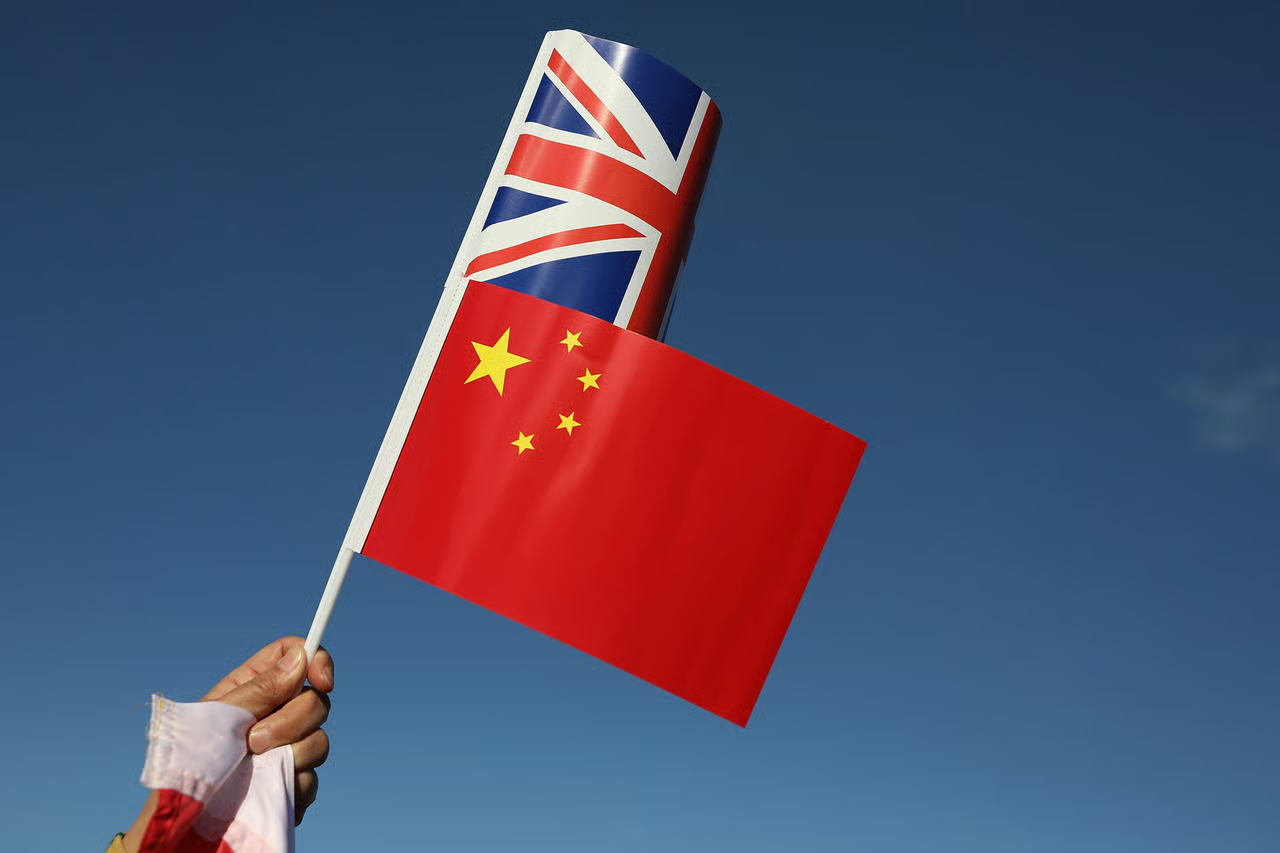
Cabinet figures promote trade and investment revival ahead of high-stakes meeting with Xi Jinping, despite security concerns
LONDON (Realist English). British ministers have spent months laying the diplomatic and political groundwork for Prime Minister Keir Starmer’s expected meeting with Chinese President Xi Jinping in Beijing this week, signalling a deliberate effort to reset economic relations with China after years of deterioration.
In a series of private speeches delivered in the UK and China — obtained by POLITICO — senior Labour figures have sought to reassure officials, academics and business leaders on both sides that restoring trade and investment ties is a strategic priority, even as warnings over economic security and political coercion grow louder.
UK–China relations cooled sharply in the late 2010s after a brief “Golden Era” under former Conservative prime minister David Cameron. Ties frayed after Beijing’s crackdown on Hong Kong, the suspension of trade talks under Boris Johnson, and Britain’s decision to remove Huawei from its telecoms infrastructure under pressure from US President Donald Trump.
Since Labour took office, Starmer’s cabinet has moved to revive that relationship. Speeches over the past year by Chancellor Rachel Reeves, Foreign Secretary David Lammy, Energy Secretary Ed Miliband and other ministers reveal a coordinated push to frame China as an economic opportunity — even before the government completed a security audit of UK exposure to Chinese interference last summer.
That approach has raised concerns inside parliament. Liam Byrne, chair of the House of Commons Business and Trade Committee, said lawmakers were “not convinced” the emerging UK-China investment strategy was robust enough to withstand future coercion risks. With US tariffs reshaping global trade, Byrne warned China could redirect subsidised exports toward the UK, threatening key sectors such as energy.
A government spokesperson said the UK’s China policy would be “grounded in strength, clarity and sober realism,” adding that London would “cooperate where we can and challenge where we must,” without compromising national security.
Behind the scenes, the reset began in earnest in September 2024 at a high-profile reception in London marking the 75th anniversary of the People’s Republic of China. There, then Indo-Pacific minister Catherine West publicly praised China’s economic rise and spoke of the benefits of deepening trade ties, even as official transcripts of her remarks were later partially withheld under freedom-of-information rules.
As foreign secretary, Lammy followed up with a two-day visit to Beijing and Shanghai, meeting Chinese counterpart Wang Yi and pitching closer cooperation on trade, climate and clean energy, while stressing the need to safeguard UK security interests. He cited China’s role as both the world’s largest carbon emitter and the biggest producer of renewable energy as justification for long-term engagement.
Other ministers echoed that message. Investment minister Poppy Gustafsson urged greater Chinese investment in UK finance and clean energy. Reeves later travelled to Beijing to relaunch the China-UK Economic and Financial Dialogue, frozen since 2019, alongside senior figures from the City of London. Subsequent talks revived energy and trade commissions and committed hundreds of millions of pounds in potential business gains, according to government figures.
Energy Secretary Miliband capped the reset with a visit to Beijing for the first bilateral energy dialogue in five years, arguing that Britain’s clean-energy ambitions required deeper cooperation with China, even while acknowledging disagreements over human rights and supply chains.
The flurry of diplomacy underscores the scale of Starmer’s gamble: reviving a vital economic relationship with the world’s second-largest economy while attempting to avoid the political and security pitfalls that derailed previous UK governments. Whether the reset can endure growing geopolitical tension — and scepticism at home — will be tested as Starmer prepares to meet Xi face-to-face.