


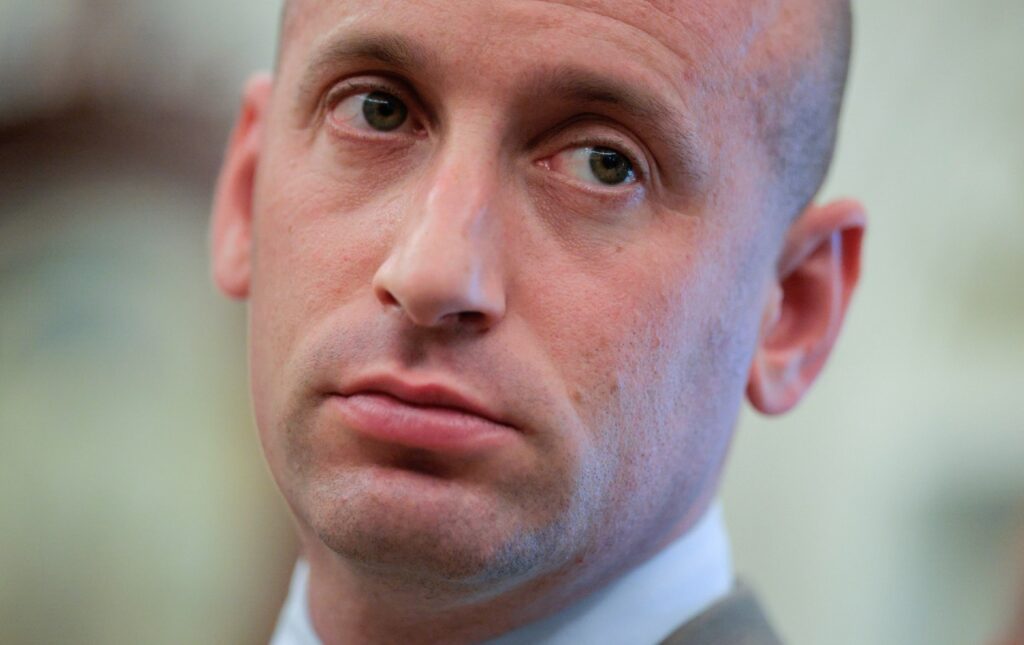
WASHINGTON (Realist English). Stephen Miller, a senior White House adviser long associated with hardline immigration policies, has become one of the most influential figures in President Donald Trump’s second administration, shaping both domestic enforcement and elements of foreign policy, according to officials and political observers.
Though not elected to office, Miller is widely described inside Washington as a central force behind the administration’s policy direction. Former strategist Steve Bannon has referred to him as Trump’s “prime minister,” while White House press secretary Karoline Leavitt told The Atlantic that Miller “oversees every policy the administration touches.”
His influence is most visible in the administration’s aggressive immigration strategy, including expanded deployments by Immigration and Customs Enforcement (ICE) in major US cities, attempts to curtail birthright citizenship, and the transfer of detained migrants abroad under expedited procedures. The approach has drawn sharp criticism from civil rights groups and Democratic lawmakers, particularly following violent incidents linked to enforcement operations in Minneapolis.
Miller’s role has also extended into foreign policy debates. He has publicly defended the administration’s assertive stance in the Western Hemisphere, arguing in a recent interview with CNN that global affairs are “governed by strength” and “power.” Analysts say his rhetoric reflects a broader worldview that prioritizes unilateral action and national sovereignty over multilateral engagement.
Despite his growing authority, public opinion toward the administration has weakened over the past year. Trump’s net approval rating has declined steadily, and polls show that voters remain primarily concerned about inflation and the broader state of the economy. Immigration enforcement policies, in particular, have drawn mixed to negative reactions in national surveys.
Political analysts note that Miller combines ideological consistency with bureaucratic skill. Biographer Jean Guerrero, author of “Hatemonger,” describes him as adept at navigating internal power structures and translating hardline positions into actionable policy. During Trump’s first term, Miller cultivated close ties with key figures in the president’s inner circle, reinforcing his standing as a trusted adviser.
Supporters view Miller as a disciplined strategist advancing a coherent vision. Critics describe him as emblematic of a maximalist governing style that risks deepening domestic divisions and complicating US relations abroad.
The administration has shown no sign of sidelining him, even as midterm elections approach and Democrats are favored in some forecasts to regain control of the House of Representatives.
The trajectory of Miller’s influence underscores a broader pattern in contemporary US politics: unelected advisers can wield significant authority when aligned closely with presidential priorities. Whether that authority translates into durable policy outcomes will depend not only on internal White House dynamics but also on economic conditions, public opinion, and the limits imposed by courts, Congress, and international actors.