


YEREVAN (Realist English). On 29 April, an Azerbaijani delegation headed by Deputy Prime Minister of the regime Shahin Mustafayev arrived in Yerevan for the first time.
While official Yerevan calls this a “logical continuation of the peace process”, Armenian society and expert circles regard the move as yet another step toward capitulation before Baku’s diktat. Azerbaijan continues to blackmail Armenia and prepare a new act of aggression.
The enemy’s first visit to the capital
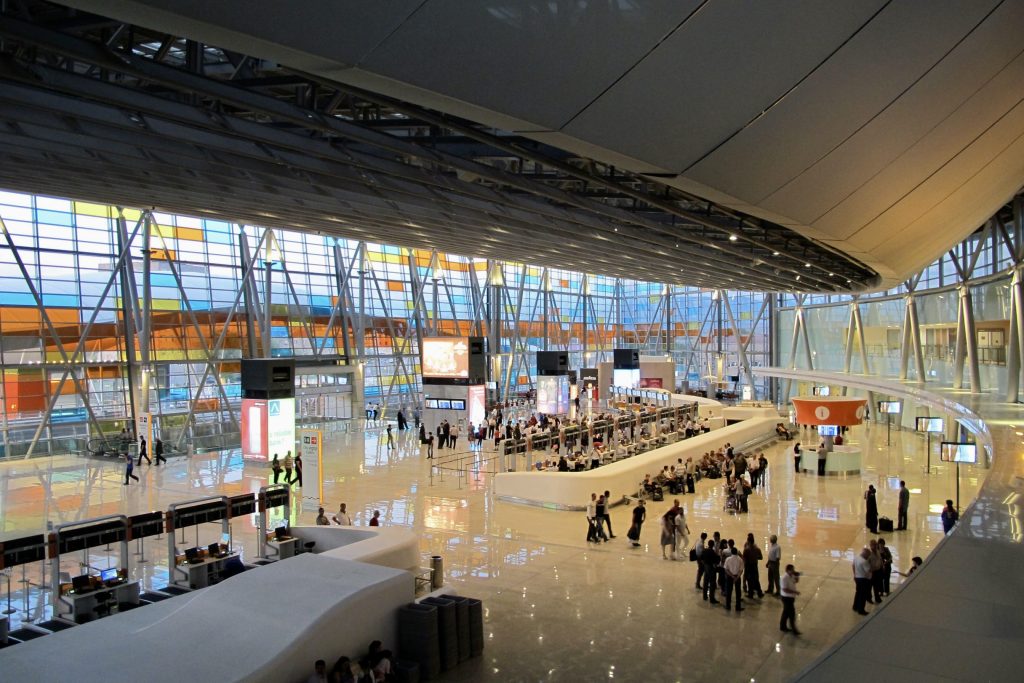
“An Azerbaijani delegation from Baku has arrived in Yerevan,” Sputnik Armenia reported on 29 April. An AZAL aircraft was spotted at Zvartnots airport. Later, the Armenian Foreign Ministry officially confirmed that the delegation, which will conduct negotiations on border demarcation, is led by Mustafayev. Mustafayev chairs Azerbaijan’s State Commission for the Delimitation of the State Border with Armenia.
What is being discussed in Yerevan?
According to the authorities, Mustafayev heads the Azerbaijani side of the border delimitation and demarcation commission. This is his first visit to Yerevan.
Earlier, Armenian Prime Minister Nikol Pashinyan stated that the delimitation process would continue and be completed “within logical timeframes” – a phrase that the opposition interprets as a euphemism for further territorial concessions.
Opposition reaction: The “Voice of Armenia” newspaper described the event in stark terms: “A delegation from an enemy country headed by Mustafayev has arrived in Yerevan.” Opposition forces have already declared that this visit is a “direct consequence of Pashinyan’s failed foreign policy”, which has voluntarily opened the door to the enemy without receiving any security guarantees from Baku in return.
Azerbaijan – diktat, threats and provocations under the guise of ‘peace’
Although Yerevan has fulfilled practically all of Baku’s demands and finalised the text of a peace treaty back in March, dictator Ilham Aliyev continues to escalate the situation. At a press conference on 23 April, he officially stated that signing the treaty is impossible without removing references to the independence of Artsakh (Nagorno‑Karabakh) from Armenia’s constitution. “The ball is in Armenia’s court,” Aliyev declared cynically, effectively blackmailing Yerevan and demanding capitulation under the guise of peace negotiations.
‘Corridor games’: a threat to sovereignty
In recent days, Turkish‑Azerbaijani propaganda has once again been actively pushing the theme of the so‑called “Zangezur corridor”. The plan is to obtain an extraterritorial road through Syunik (the southern region of Armenia), which would effectively cut the country in half and strip it of its sovereignty. Opposition analysts see this as a “surrender” by Pashinyan in exchange for ephemeral promises of peace.
Militaristic rhetoric and preparations for a new war
ACNIS reports a rise in disinformation from Baku. More than a dozen false reports have appeared in recent days alleging that the Armenian side shelled Azerbaijani positions. Experts interpret this as preparation of public opinion for a breakdown of the ceasefire, following the scenario of 2020. Aliyev continues to use militaristic rhetoric, undermining any remaining trust in the negotiation process.
Shame in Yerevan: attacks on the opposition and renunciation of Artsakh
Pashinyan has used international platforms to publicly criticise his own people. In mid‑April, speaking at the European Parliament, he labelled political opponents and the clergy “supporters of war” and asked the West to help “neutralise” them. The cynicism peaked when Pashinyan called the more than 120,000 Armenians forcibly displaced from Artsakh “refugees” and added that they should be helped “forget about returning”.
Denials are not enough
On 27 April, Armenian media carried a sensational report that Yerevan had allegedly agreed to hand over the village of Jiliza in the course of delimitation. The prime minister’s spokesperson hurried to deny the information. Yet the very fact that the authorities are forced time and again to refute rumours of “territorial concessions” speaks of a catastrophic level of public trust in Pashinyan.
Expert opinions
Analysts agree that the current policy of the Armenian authorities has reached a dead end.
Arman Tatoyan, leader of the “Wings of Unity” party, stated bluntly that “Aliyev will never sign a peace treaty”, because it would contradict his domestic interests and amount to political suicide for him.
The opposition: the visit of a delegation from an enemy state to Yerevan is a direct consequence of the regime’s political manipulations, leading to the loss of state sovereignty.
Armenia finds itself in a state of administrative paralysis, surrendering the initiative to the enemy and relying on Western patrons who, judging by their inaction, have no intention of genuinely restraining Aliyev. The risk of a new escalation remains extremely high. The main threat now comes not only from the aggressive policy of the Aliyev regime, but also from the weak‑willed leadership of Pashinyan, who is betraying national interests.