


WASHINGTON (Realist English). On the afternoon of April 21, US President Donald Trump gathered his national security team at the White House to face a critical decision: what to do about Iran. The deadline for his ceasefire was approaching, and the vice president’s plane was already on the tarmac at Joint Base Andrews for his departure to Pakistan for the next round of talks. But the administration was confronted with a puzzle: virtual silence from the Iranians.
Days earlier, the US had sent Iran a list of broad deal points that they wanted the Iranians to agree to before the next round. But days passed without a response, raising suspicions about how much Vice President JD Vance could achieve by going to Islamabad for in‑person talks, according to three officials familiar with the matter.
When Trump met with Vance, Secretary of State Marco Rubio, Defense Secretary Pete Hegseth, Chairman of the Joint Chiefs of Staff Dan Caine, and CIA Director John Ratcliffe on April 21, the administration still had received no answer from the Iranians. Officials urged the chief mediator from Pakistan, Field Marshal Asim Munir, to get some kind of response before Vance boarded the plane. But hours later, nothing had changed.
Reason for the silence: rift in Iran’s leadership
Trump’s top advisers at the White House believe the main reason for the lack of response is fractures within Iran’s current leadership, based in part on dispatches from the Pakistani intermediaries. The administration senses that the Iranians have no consensus either on their position or on how much authority to give their negotiators on uranium enrichment and the current stockpile of enriched uranium — the main stumbling block in the peace talks.
Part of the complicating factor, the US believes, is whether the new Supreme Leader Mojtaba Khamenei is giving his subordinates clear instructions — or whether they are simply having to guess what he wants without specific guidance. US officials believe his efforts to remain hidden have disrupted internal discussions in the Iranian government.
Despite these significant hurdles, one official said there is still a chance that US and Iranian negotiators could meet soon. But when and whether that will happen is far from certain.
Decision: extending the ceasefire without a deadline
Rather than resuming military strikes, Trump chose to extend the two‑week ceasefire shortly before it was set to expire. This time, he did not specify an end date. Trump, who called Iranian officials “seriously fractured” in an afternoon Truth Social post, remains eager for a diplomatic solution to the war, wary of reviving an unpopular conflict he has claimed the US already won.
Nevertheless, the collapse of the talks underscores the difficulties Trump continues to face as he seeks a deal that meets his numerous demands.
Iran has publicly insisted that Trump lift the blockade on ships entering or leaving Iranian ports in the Strait of Hormuz before Tehran will engage in a new round of talks. Trump has resisted the demand. “We’re not going to open the strait until we have a final deal,” he said on CNBC on the morning of April 21.
How the decision was made
At the afternoon meeting, Trump and the rest of the group decided to extend the ceasefire, which Pakistani mediators said would expire in just a few hours, although Trump had earlier suggested he believed it would last until Wednesday evening Washington time. In theory, this could give Iran more time to coalesce around a single position with Khamenei’s approval, though officials said there were few guarantees.
Officials said a trip could be arranged quickly if they receive indications that Iran is prepared to come back to the table. Both the US and Tehran stand to suffer economically as long as the strait remains effectively closed, leading some officials in the region to hope that both parties are motivated to reach a solution sooner rather than later.
Pakistani officials, who on April 21 scrambled to convince Iran to join the talks, were simultaneously encouraging Trump to extend the ceasefire. As its expiration neared, Trump made the call to “extend the Ceasefire until such time as their proposal is submitted, and discussions are concluded, one way or the other.”
Iran’s reaction: ‘Extension means nothing’
Iranian officials sounded unmoved. Mahdi Mohammadi, an adviser to Iranian Parliament Speaker Ghalibaf who led the Iranian negotiating delegation, said: “Trump’s ceasefire extension means nothing. The losing side cannot dictate terms. The continuation of the siege is no different from bombardment and must be met with a military response.”
Uncertainty and risks
Trump’s announcement that the truce would remain in place capped a day clouded by uncertainty, which began with a proclamation from Trump that he “expected to be bombing” Iran again in the near term. Still, without a new deadline, Trump’s advisers have privately warned the president that alleviating pressure could allow Iran to drag out negotiations, according to sources familiar with the discussions.
At the least, negotiators had hoped to produce a framework understanding this week between the US and Iran. US officials had hoped that would then lead to more detailed talks over the coming weeks on the finer points of a deal. That approach, however, had its detractors, who warned that Iran could be drawing out the discussions as a play for time as it unearths some of its missile systems that have been buried over the course of the war.
A number of critical points — including Iran’s future ability to enrich uranium, what becomes of its stockpile of highly enriched uranium, and what sanctions on the country are lifted — remain unresolved, according to people familiar with the talks.
How flexible each side is on their terms will ultimately dictate whether a deal can be reached. For Trump, one imperative is not agreeing to a deal that could be likened to the Obama‑era Joint Comprehensive Plan of Action, an Iran nuclear deal Trump withdrew from in 2018 and has continuously derided as weak.
Over the last several days, Trump has sounded bullish on securing a superior agreement based on his negotiating skills, even claiming on April 21 that he would have “won Vietnam very quickly” if he had been president at the time.
“I think we’re going to end up with a great deal,” he insisted. “I think they have no choice. We’ve taken out their navy, we’ve taken out their air force, we’ve taken out their leaders, frankly, which does complicate things in one way.”
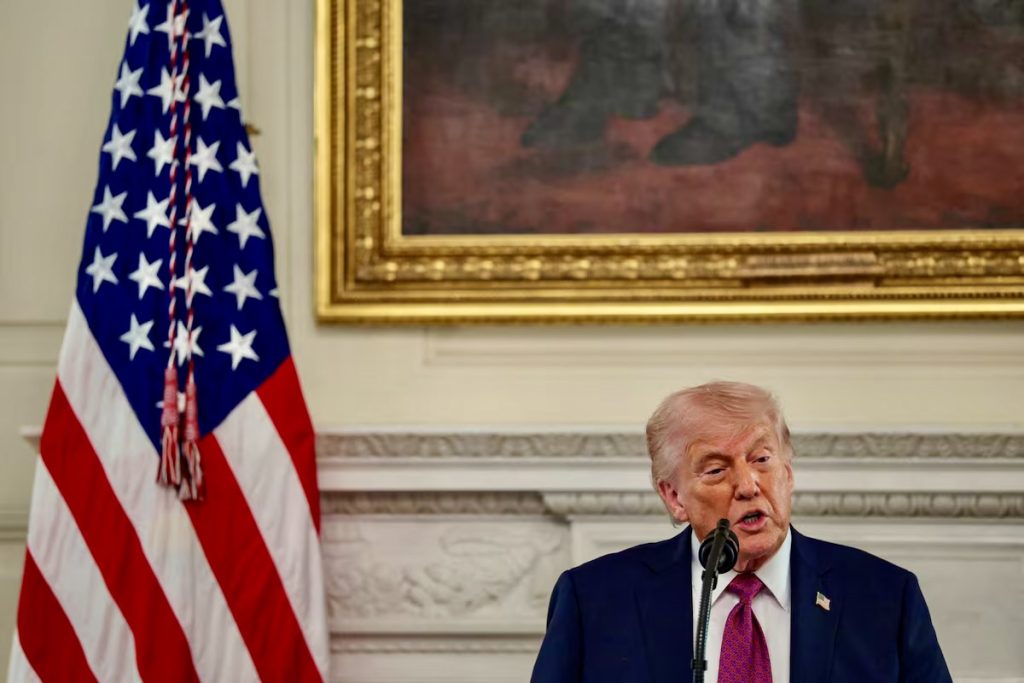
Hours later, as he was honouring college athletes from the State Dining Room, Trump was uncharacteristically silent on the war during his remarks, waving to reporters who tried to ask questions about the war before he exited the room.
Iran agrees to return to the negotiating table only on the condition that the dialogue is “result‑oriented” and not for its own sake. Mediators from Pakistan are trying to persuade Tehran to change its position, but so far without success.
The possibility of moving the talks to a third country is being discussed, but the US insists on Islamabad. The US has presented Iran with a list of 15 demands, while Tehran has responded with its own list of 10 points, but no compromise has been found.
The head of the Iranian parliament’s National Security Committee, Ibrahim Azizi, has stated that the republic will not “achieve peace at any price,” outlining clear “red lines” for the US.