


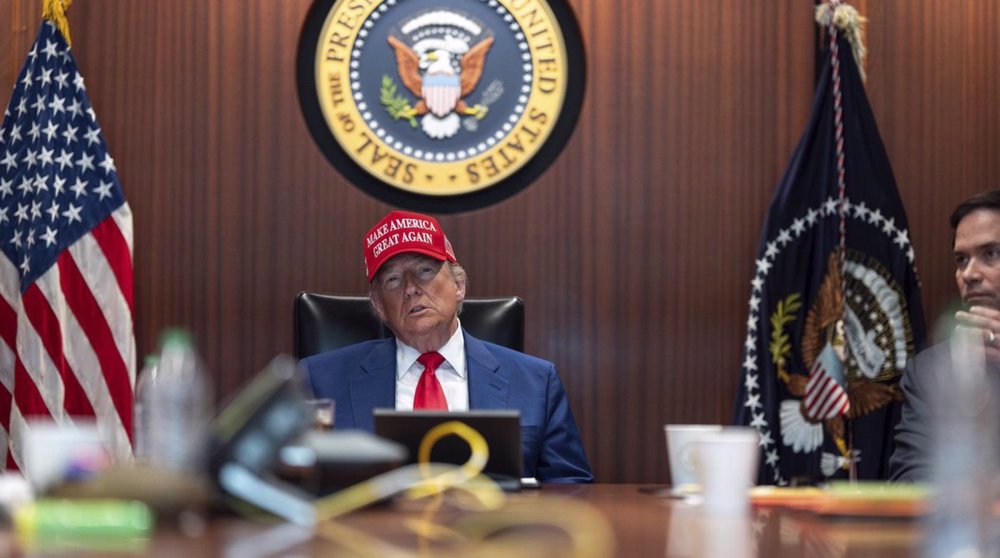
WASHINGTON (Realist English). U.S. President Donald Trump is facing a wave of criticism from lawmakers and commentators following his Easter address on the ongoing war with Iran, with some calling for the unprecedented use of the 25th Amendment to remove him from office.
The backlash has come primarily from Democratic lawmakers and political commentators, who described the president’s remarks as alarming in tone and content. Senator Bernie Sanders said the statement raised serious concerns and urged Congress to act to end the war. Representative Jim McGovern also criticised the remarks, questioning the president’s judgment.
Former Republican congressman Joe Walsh, now a vocal critic of Trump, joined calls for invoking constitutional mechanisms, highlighting growing divisions within the broader political landscape.
The 25th Amendment, ratified in 1967, allows the vice president and a majority of the cabinet to declare a president unable to perform their duties. Section 4 of the amendment has never been used, and legal experts note that its application would require a high political threshold.
Additional criticism came from lawmakers including Chris Murphy and Yassamin Ansari, who warned about the potential national security implications of the president’s rhetoric. Others, such as Melanie Stansbury, framed the issue as a broader institutional concern.
Beyond Congress, commentators and public figures have also weighed in, reflecting a wider debate over leadership, decision-making and the conduct of the war with Iran. Some critics have pointed to the absence of public response from senior administration officials as evidence of internal divisions or caution within the executive branch.
The White House has not issued an official response to the criticism or to calls for invoking the 25th Amendment.
Analysts note that while such calls are politically significant, the likelihood of removing a sitting president through constitutional mechanisms remains low without bipartisan consensus and support from within the administration itself.
The episode underscores the intensifying political pressure surrounding the Iran conflict, which has become a central issue in U.S. domestic debate, raising questions about executive authority, wartime decision-making and institutional checks on presidential power.