


TEHRAN (Realist English). On 17 May, Washington made no concrete concessions in response to Tehran’s peace proposal, instead putting forward “maximalist” demands, Iranian media reported.
Iran’s conditions, conveyed through a Pakistani mediator on 10 May, include: an end to the war on all fronts (with particular emphasis on Lebanon); the lifting of US sanctions; the unfreezing of Iranian assets abroad; payment of reparations for war damage; and recognition of Iran’s sovereignty over the Strait of Hormuz.
The American response, according to Iran’s Fars news agency, consists of a five‑point list: rejection of any reparations or compensation; refusal to unfreeze Iranian assets (even by 25%); a demand to transfer 400 kg of enriched uranium to US control; a demand to leave only one nuclear facility operational in Iran; and linking a ceasefire to the start of negotiations themselves, not to their outcome.
“The United States, without offering real concessions, wants to obtain concessions that it failed to achieve during the war, which will lead to a dead end in the talks,” Iran’s Mehr news agency reported.
Iranian Armed Forces spokesman Abolfazl Shekarchi warned Donald Trump: “If his threats are carried out and Islamic Iran is attacked again, the resources and armed forces of his country will face unprecedented, offensive, surprising and unpredictable scenarios.”
Deputy Speaker of Parliament Hamidreza Haji Babaei threatened that in the event of a strike on Iranian oil infrastructure, Tehran “will take measures that will long deprive the United States and the world of access to oil from the region.”
Trump’s rhetoric: “It will be very bad for them”
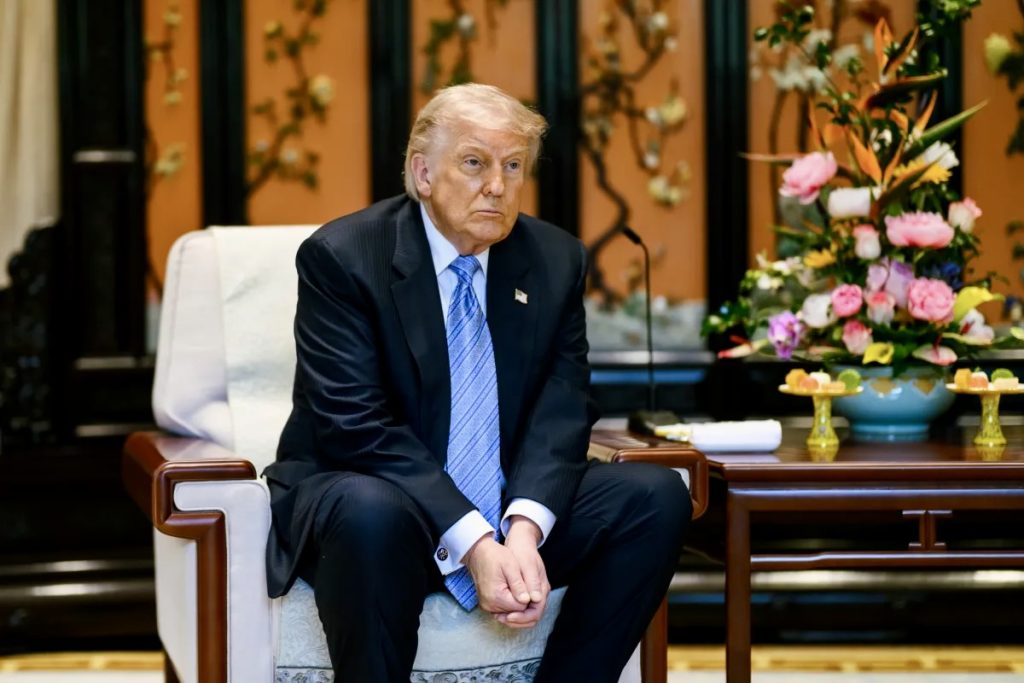
On 16 May, US President Donald Trump told French broadcaster BFMTV that Iran was “interested in reaching a deal,” but added: “If they don’t, it will be very bad for them.” According to media reports, Trump is expected to decide in the coming hours whether to resume strikes on Iran, as the talks have so far yielded no results.
The head of Iran’s parliamentary national security committee, Ebrahim Azizi, said Tehran had prepared a mechanism for managing shipping through the Strait of Hormuz along a specific route, which would be presented shortly. He also said Iran would charge fees for specialised services.
Iranian Foreign Minister Abbas Araghchi said his country “cannot trust the Americans at all” but was trying to maintain a “fragile” ceasefire “to give diplomacy a chance.”
Lebanese front: ceasefire on paper, war on the ground
While diplomats argue in Washington, Israel and Hezbollah continue to exchange blows in southern Lebanon.
Extension of the truce. On 15 May, after two days of talks in Washington, Israel and Lebanon agreed to extend the ceasefire by 45 days. The truce, which was due to expire on 17 May, has been extended until early July.
Continued strikes. Despite the diplomatic success, hostilities have not ceased. According to the Israel Defense Forces (IDF), between 15 and 17 May, roughly 100 Hezbollah targets in southern Lebanon were struck.
The Israeli military warned residents of nine villages in the Sidon and Nabatieh districts to evacuate ahead of the strikes. The shelling affected not only southern but also eastern areas of Lebanon (the Bekaa Valley), including the town of Sohmor.
Hezbollah, for its part, reported dozens of attacks on Israeli forces, including with rockets, mortars, drones and explosives. The group also claimed to have destroyed Israeli engineering bulldozers near the border.
According to the Lebanese Health Ministry, since 2 March 2026, Israeli strikes have killed 2,969 people (including more than 400 since the start of the truce) and wounded 9,112.
Hezbollah’s reaction. Hezbollah parliamentarian Hussein Haj Hassan called direct talks with Israel a “dead‑end path” that would lead only to “concession after concession.” He categorically ruled out the possibility of disarming the group, saying that “no one will be able to achieve what the enemy wants.”
Israel’s Iranian front: preparing for a new war
Israel’s leadership appears to be preparing for a new round of escalation regardless of the outcome of the US‑Iranian talks.
According to a 15 May report in The New York Times, the US and Israel are engaged in “the most intensive preparations to resume attacks on Iran,” possibly as early as next week. Scenarios under discussion include:
- A more intense bombing campaign against military and infrastructure targets.
- The seizure of Kharg Island – Iran’s key oil export hub in the Persian Gulf.
- The landing of commandos on Iranian territory to retrieve nuclear materials buried under rubble after previous strikes.
Minister of Jerusalem and Jewish Heritage Ze’ev Elkin said Israeli forces were ready to strike Iran’s strategic infrastructure if authorised, but that the final decision rested with the US president.
According to Israel’s Channel 12, IDF and CENTCOM representatives have held consultations on possible scenarios for resuming the conflict. Tel Aviv insists that the war with Iran ended “earlier than it should have” and is pushing for an immediate return to active hostilities. Options under discussion include limited US strikes on Iranian energy infrastructure.
An unnamed Israeli official said: “The Americans understand that the talks with Iran are going nowhere. We are preparing for days and weeks of fighting and await Trump’s final decision. We will know more in the next 24 hours.”
The situation in the Middle East remains extremely tense and paradoxical: diplomacy and military action go hand in hand. The US‑Iran talks have effectively reached an impasse – each side is putting forward conditions that are clearly unacceptable to the other. Israel, feeling Washington’s support, continues its military escalation in Lebanon despite the extension of the ceasefire, and is preparing for new operations against Iran.