


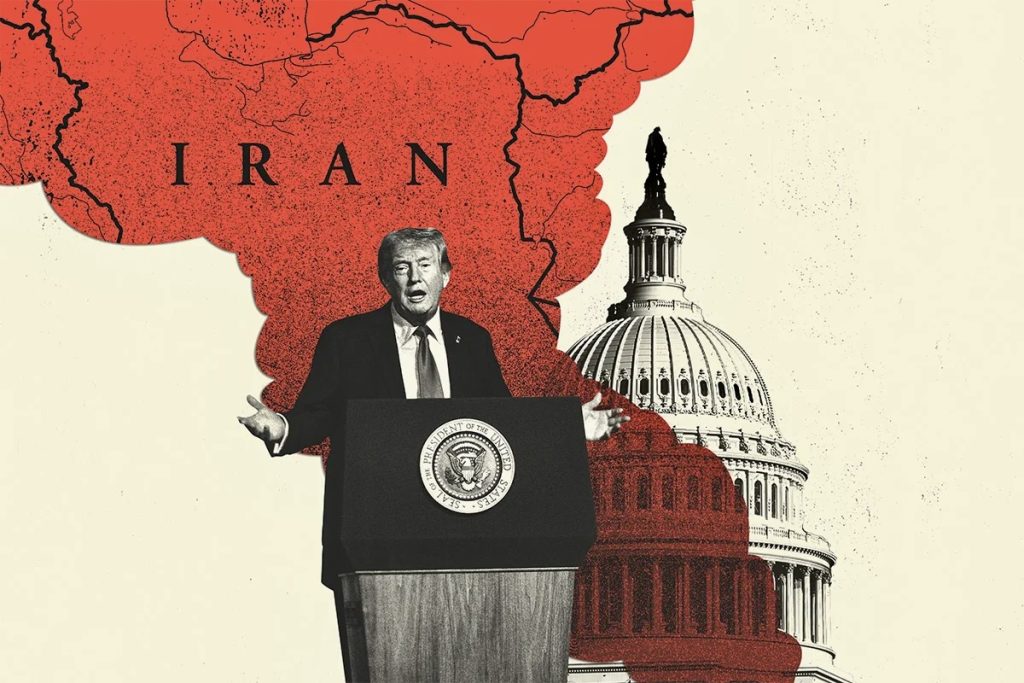
WASHINGTON (Realist English). US President Donald Trump has said he is reviewing a new peace plan presented by Iran, but “can’t imagine that it would be acceptable.”
Tehran, according to state media, has sent a 14-point response to the American proposal.
At the same time, Washington has fast‑tracked weapons deliveries to its Middle East allies worth $8 billion, and Israel has approved the purchase of new fighter squadrons.
Iran submits 14-point response
According to the state‑run Tasnim news agency, Tehran has presented a 14‑point response to the US proposal for resolving the conflict. The document includes demands for the release of frozen Iranian assets, the lifting of sanctions and the introduction of a “new mechanism for managing the Strait of Hormuz.”
It also covers guarantees against military aggression and the withdrawal of US forces from the region surrounding Iran.
Mehran Kamrava, Professor of Government at Georgetown University in Qatar, told CNN that for Iran the release of frozen assets and the lifting of sanctions are of primary importance, while control over the strait is “more of a bargaining chip that they’re willing to give up rather than something they’re going to stick to, hard and fast.”
Commenting on the new proposal, Trump said: “I will soon be reviewing the plan that Iran has just sent to us, but can’t imagine that it would be acceptable.” He added that Iran had not yet “paid a big enough price for what they have done to Humanity, and the World, over the last 47 years.”
Iranian parliament approves law on the Strait of Hormuz
Iran’s parliament, according to Press TV, is poised to adopt a law that would impose strict restrictions on shipping in the Strait of Hormuz. Under the draft, Israeli vessels would be banned permanently from crossing this strategic waterway, while ships from “hostile countries” would have to pay reparations in order to obtain a transit permit.
Other vessels would be allowed to pass only after obtaining authorisation from Iran under a law to be approved by parliament. Deputy parliament speaker Ali Nikzad described Iran’s proposed management of the strait as “as important as the nationalisation of the oil industry.”
U.S. Accelerates Weapons Deliveries to Allies
Amid ongoing negotiations, Washington has intensified military support for its Middle Eastern partners. The Trump administration has fast-tracked $8.6 billion in arms deliveries to U.S. allies in the region.
The package includes missile systems for Israel, Qatar, and the United Arab Emirates, as well as Patriot interceptors for Qatar totaling $4.01 billion and an Integrated Battle Command System for Kuwait worth $2.5 billion.
US Secretary of State Marco Rubio approved the emergency sales under a special procedure that allows for immediate approval of deals, bypassing the standard Congressional review process.
Israel purchases new fighter jets
Israeli Defence Minister Israel Katz announced on 3 May that the Ministerial Procurement Committee had approved a plan to acquire two new fighter squadrons. The deal involves F‑35 aircraft (manufactured by Lockheed Martin) and F‑15IA jets (Boeing). The cost of the deal is estimated at billions of dollars.
“The operational lessons from the campaign against Iran require us to accelerate force buildup,” Katz said. “Our mission is clear: to stay ahead of our enemies.”
He noted that this is only the first step in implementing a 350 billion shekel ($118.9 billion) force buildup plan for “an intensive security decade” in the defence sphere. The new jets are intended to bring Israel’s F‑35I inventory to 100 aircraft and its F‑15IA fleet to 50.
US troop withdrawal from Germany
Trump also said that the US plans to cut its military presence in Germany “way down” and “a lot further” than the 5,000 troops the Pentagon announced it would withdraw over the next year.
According to Department of Defense data, as of December 2025 there were 36,436 US military personnel in Germany – the second largest US contingent abroad after Japan. The cancellation of a planned long‑range fires battalion deployment deprives Germany of a significant missile capability.
The collapse of the nuclear deal
In 2015, under the administration of Barack Obama, the Joint Comprehensive Plan of Action (JCPOA) was concluded, which limited Iran’s uranium enrichment in exchange for a partial lifting of sanctions. In 2018, Trump withdrew from the deal during his first presidential term, calling it “rotten.”
From 2019, Iran began gradually reducing its compliance, and after US and Israeli strikes in February 2026 hopes for a new agreement collapsed. Tehran is now using the closure of the Strait of Hormuz as a lever of pressure, refusing to discuss its nuclear programme until the war ends.