


WASHINGTON (Realist English). U.S. President Donald Trump on Saturday threatened to “obliterate” Iran’s power plants within 48 hours unless Tehran fully reopens the Strait of Hormuz, marking a sharp escalation in the fourth week of the conflict, according to statements published on his social media account.
“If Iran doesn’t fully open… the Strait of Hormuz within 48 hours… the United States… will hit and obliterate their various power plants,” Trump said, signaling a potential expansion of U.S. strikes to civilian-linked energy infrastructure.
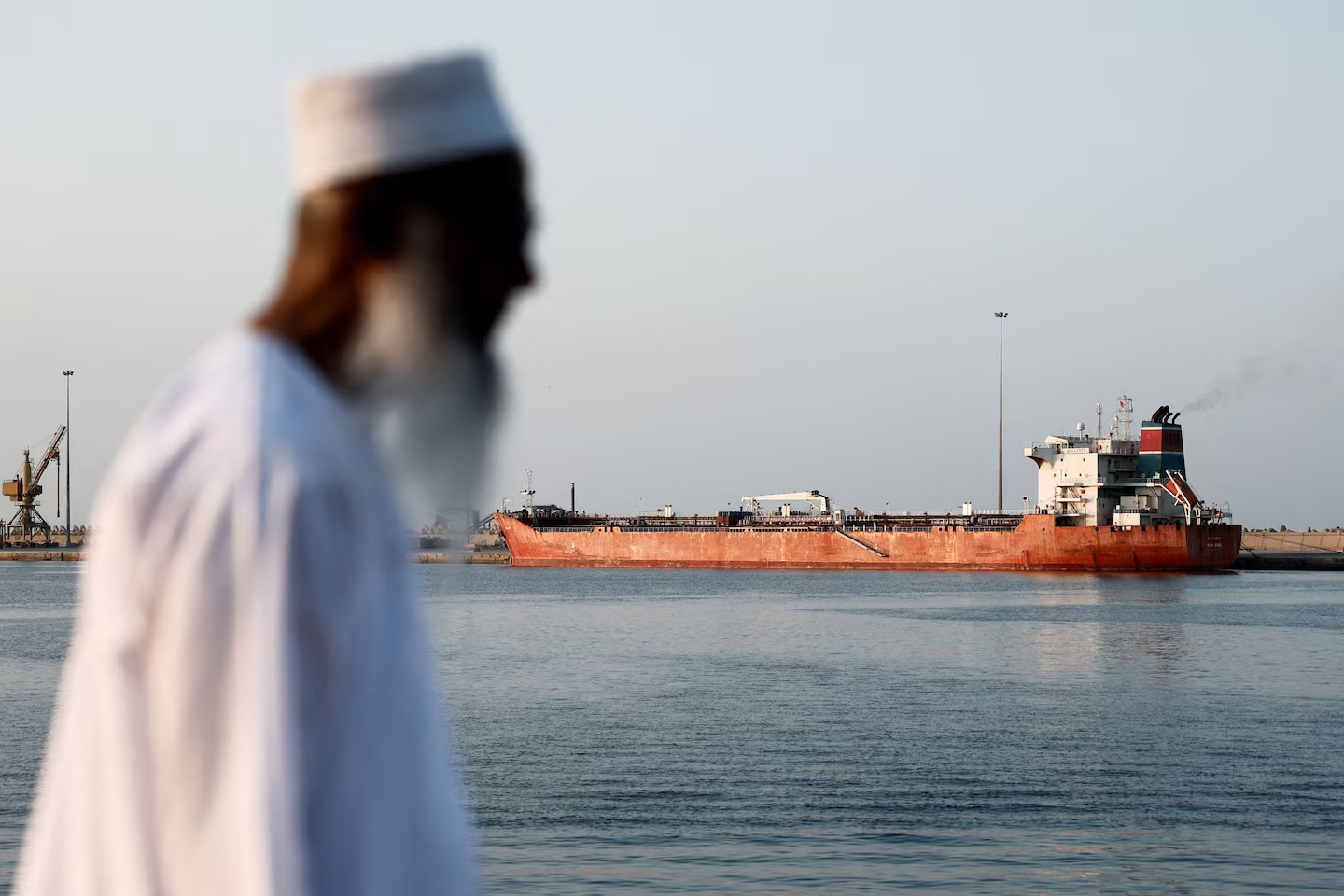
The ultimatum follows disruptions in the Strait of Hormuz, a strategic maritime corridor through which around 20% of global oil and liquefied natural gas flows. The near-closure has already triggered market volatility, with European gas prices rising by as much as 35% last week, reflecting fears of a broader energy shock.
Iran responded by warning that any U.S. attack on its fuel or energy infrastructure would prompt strikes on American assets across the region. The Khatam al-Anbiya central military command said potential targets would include U.S. energy, information technology, and desalination facilities, significantly widening the scope of the conflict.
The escalation comes after a series of attacks on critical infrastructure. Iran struck Qatar’s Ras Laffan Industrial City — a hub processing roughly one-fifth of global liquefied natural gas — causing damage expected to take years to repair. The attack intensified concerns about the vulnerability of global energy supply chains.
Military dynamics have also shifted. Israeli officials said Iran for the first time deployed long-range missiles, including strikes toward the U.S.-British base at Diego Garcia in the Indian Ocean. According to Israeli Chief of Staff Eyal Zamir, the missiles have a range of up to 4,000 km, placing parts of Europe within potential reach.
At the same time, Iranian missile strikes hit southern Israel, including the cities of Dimona and Arad, injuring dozens. The areas are located near key military facilities, including Israel’s nuclear infrastructure. Israeli Prime Minister Benjamin Netanyahu said the country would continue operations “on all fronts.”
Trump’s latest statement contrasts with earlier signals suggesting a possible de-escalation. Just a day before, he had indicated interest in “winding down” the conflict. The shift to a fixed 48-hour deadline and explicit targeting of Iran’s power grid introduces a new phase of coercive pressure.
Iran’s energy infrastructure presents high-impact targets. Major facilities such as the Damavand power plant near Tehran (2,868 MW capacity) and other large stations underpin the country’s electricity supply. Strikes on these assets would directly affect civilian life and could trigger prolonged outages.
The conflict has already resulted in more than 2,000 deaths, with at least 15 fatalities reported in Israel. Meanwhile, U.S. allies remain divided. Several NATO members have expressed reluctance to support operations to secure the strait, citing concerns over escalation and lack of prior consultation.
Analytically, the U.S. ultimatum shifts the conflict from military containment toward economic and infrastructure warfare, increasing risks of systemic disruption across energy markets and regional stability.
The key uncertainty is whether Iran will comply under pressure or escalate further, potentially drawing in additional regional and global actors into a widening conflict centered on energy security.