


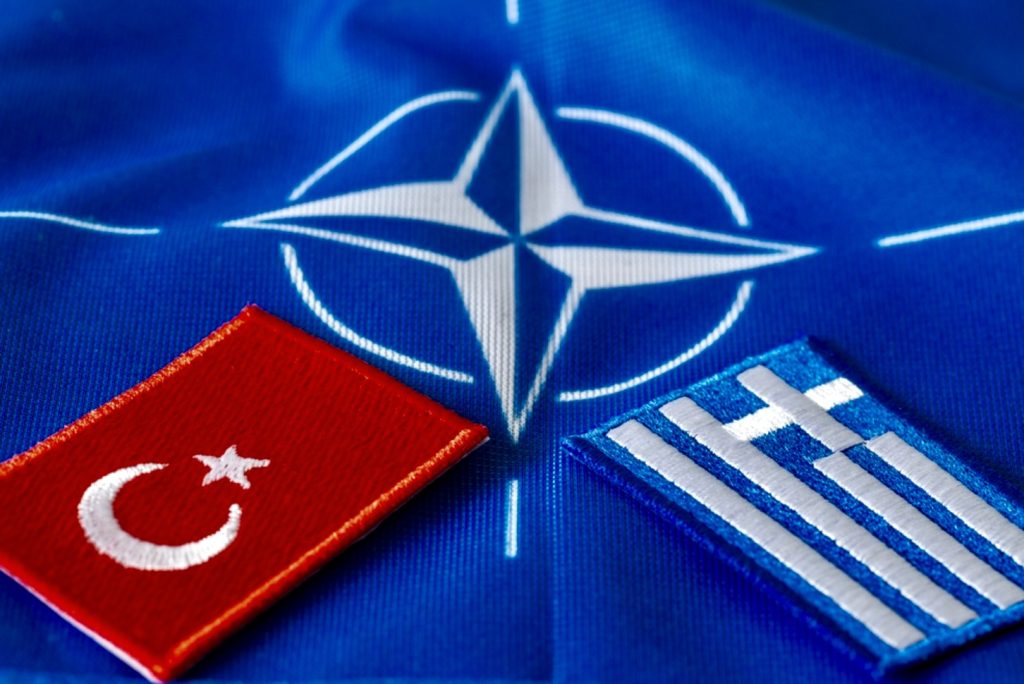
ANKARA (Realist English). While the world watches the escalation in the Middle East, Turkey is taking unprecedented steps to redraw the map of the Eastern Mediterranean, using the military chaos as a cover for revanchist attacks on the sovereign rights of Greece and the Republic of Cyprus.
Military ultimatum in the Aegean Sea
Ankara’s revanchism has once again manifested itself in violations of basic norms of international law. On January 29, the Turkish Ministry of Defence issued an indefinite NAVTEX, effectively prohibiting Greece from conducting scientific research in the Aegean Sea. According to the European Parliament, Ankara’s goal is to “establish the perception that the entire Aegean region east of the 25th meridian is under Turkey’s jurisdiction.”
Member of the European Parliament Emmanouil Kefalogiannis called Turkey’s actions “unacceptable, illegal, and provocative,” demanding immediate condemnation by the EU. Greece, for its part, stated that it does not intend to “coordinate” its actions on its own continental shelf with Ankara.
Tanks near the UN buffer zone and militarisation of Cyprus
Cyprus has remained divided since 1974, when Turkey invaded the north of the island. Today, Ankara is only increasing the pressure. In March 2026, Turkey transferred six F-16 fighter jets and air defence systems to the occupied territories of Cyprus. On April 16, the Cypriot news agency reported the appearance of 15 Turkish tanks near the village of Pyla, close to the UN buffer zone.
Ankara also installed a flag of the puppet “Turkish Republic of Northern Cyprus” (TRNC), which is recognised only by Turkey itself. Nicosia regarded these actions as a direct provocation. The Turkish Ministry of Defence claimed they were “measures to protect the Turkish community,” but independent observers see this as preparation for a forceful scenario.
Energy blackmail and “Blue Homeland”
Using the military conflict as a cover, Turkey has stepped up illegal drilling in the Exclusive Economic Zone (EEZ) of Cyprus. Ankara has dispatched two drilling vessels (“Fatih” and “Yavuz”) and two seismic research vessels to the region, ignoring EU warnings. The European Union called these actions an “illegal escalation” and threatened sanctions. However, Ankara rejects Brussels’ claims, stating that the EU “cannot be an impartial mediator” on the Cyprus issue.
Migration crisis as a tool of pressure
Turkish propaganda tries to shift responsibility for the migration crisis onto Greece. Yet it is Ankara that has for years used refugee flows as a lever of pressure on the EU. Remarkably, even pro-Ankara media are forced to admit: “Turkey pushes refugees across the border, and Greece pushes them back. We are witnessing a war of attrition.”
“New Attila”? Threats from Ankara
The Turkish pro-government press openly discusses the possibility of a new military invasion. Ozay Şendir, editor-in-chief of the pro-government newspaper Milliyet, stated that the Turkish armed forces are ready for a “new ‘Attila’ operation” (the code name for the 1974 invasion). According to him, if “political will in Ankara” gives the order following a provocation, military action could be taken “immediately.”
Expert opinions: Ankara – a source of instability
Middle East expert Dmitry Bridge said that the new crisis in the Eastern Mediterranean “could well lead to shooting.” In his words, NATO membership would not be an obstacle to a short-term military conflict between Greece and Turkey. The expert also emphasised that Athens is actively drawing closer to Jerusalem, thereby creating a coalition against Turkish expansion.
Dr. Stella Gerani of Israel’s Dayan Institute notes in her analytical article that Ankara has adopted a “position of tough pragmatism,” using the Iranian chaos to strengthen its own “Blue Homeland” doctrine. She points out that Turkey’s military presence in the occupied part of Cyprus has today reached its highest level since 1974.
The Greek analytical centre ELIAMEP states in its annual report that in 2026 Turkey’s agenda includes the resumption of Cyprus talks. However, as the centre’s experts explain, given Ankara’s current rhetoric, they assess the likelihood of a real peace process as extremely low.
Reaction and prospects
While Turkey attempts to rewrite history and borders, Greece and Cyprus are strengthening their defences. Athens has deployed a Patriot battery on the island of Karpathos, and the “3+1” strategic cooperation format (Greece – Cyprus – Israel – USA) is gaining momentum.
As US Congressman Randy Feenstra said during hearings in Congress: “Turkey has become a destabilising force in the Middle East. Ankara’s ambitions resemble an attempt to recreate the Ottoman Empire.”
Realist English will continue to monitor the situation in a region where the ambitions of one NATO member threaten to plunge the alliance into the abyss of internal conflict.