


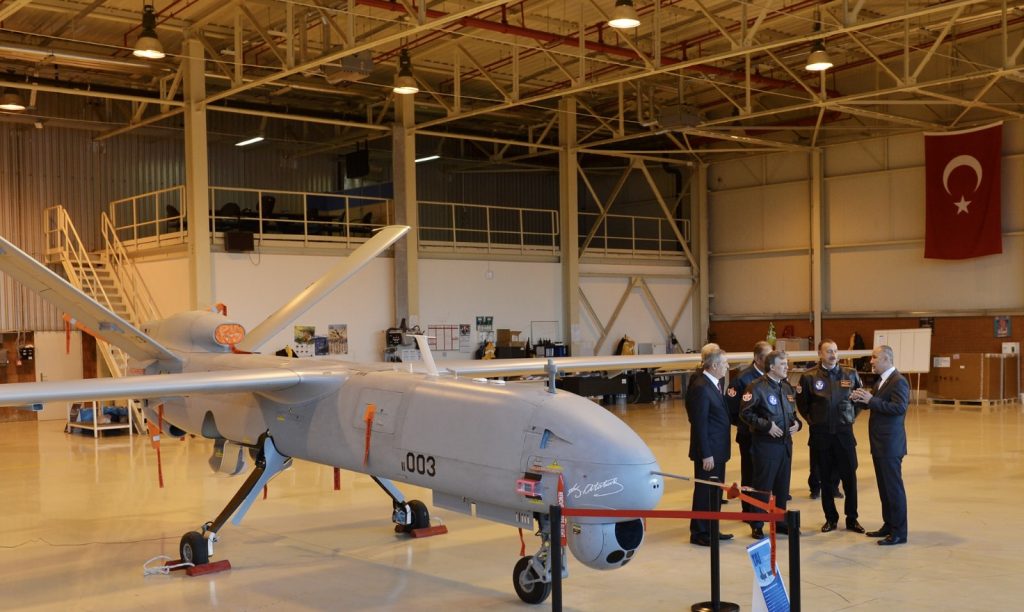
ANKARA (Realist English). Turkey’s defence industry is experiencing an unprecedented boom. Over the past five years, Turkish arms exports have tripled, reaching $10 billion in 2025 — accounting for 3.7% of the country’s total exports.
By 2026, Ankara set a target of $13 billion, and in May a record monthly figure of $996 million was already recorded. Today, Turkey is the 11th largest arms exporter in the world, supplying weapons to nearly 40 countries, and its share of the global drone market stands at 65%.
European Appetite: Purchases Despite Barriers
Turkish weapons attract buyers with their speed of delivery, flexibility and price. Against the backdrop of Europe’s rearmament following the outbreak of the conflict in Ukraine, demand for Turkish products has surged. Exports to Europe and the US have nearly quadrupled over five years — to $5.6 billion.
Turkish companies have already signed defence agreements with Poland, Spain, Portugal and Romania. In June 2026, a historic event took place: Turkey exported a warship for the first time to a country that is both a NATO and EU member — Romania.
The flagship of Turkey’s defence industry remains Baykar, whose drones are actively used in Ukraine. The company acquired Italian aircraft manufacturer Piaggio Aerospace and signed a contract with Italy’s Gruppo Esea to create a robotic production line. SAHA Istanbul, Europe’s largest industrial cluster, brings together more than 1,300 members.
Geopolitical Ambitions and Structural Barriers
Despite its successes, the Turkish defence industry faces serious obstacles in the European market. Ankara is not an EU member and has not been granted access to the European defence fund SAFE (Security Action for Europe), worth €150 billion. Greece, which has long-standing disputes with Turkey, threatens to block any Turkish participation in European defence initiatives.
Turkey has for decades complained about restrictions and embargoes imposed by the US and Europe, due to regional disagreements and Ankara’s purchase of Russian S‑400 systems. These restrictions, according to Turkish officials, undermine the spirit of the alliance.
At the same time, President Donald Trump promised Erdoğan at the NATO summit something that would make him “very happy” — likely the supply of F110 engines for Turkish KAAN fighters.
At the NATO summit in Ankara on July 7–8, Turkey intends to push for the lifting of restrictions and inclusion in European defence structures. NATO Secretary‑General Mark Rutte has already called Turkey a “key hub” with nearly 3,000 defence companies.
Authoritarian Drift: The West Prefers Not to Notice
Alongside the defence boom, Turkey’s democratic crisis is deepening. The European Parliament has recorded the country’s “authoritarian drift,” and CFR analysts note that Turkey “can no longer be considered even a competitive authoritarian state.”
On the eve of the NATO summit, Turkish authorities carried out a large‑scale crackdown: hundreds of people, including academics, teachers and activists, were detained, and opposition journalists were denied accreditation. The West, however, prefers to remain silent.
In 2021, 10 ambassadors nearly triggered a diplomatic crisis by calling for the release of political prisoner Osman Kavala. Since then, especially after the outbreak of war in Ukraine, Western countries have stopped publicly criticising Ankara over human rights violations.
Former US Ambassador to Ankara David Satterfield warned: “It remains important for the West to continue commenting on the degradation of democratic institutions in Turkey, because the course has not yet been irreversibly set.” However, his voice remains in the minority: European leaders, including EU foreign policy chief Kaja Kallas, focus on security, migration and energy in their meetings with Erdoğan.
Europe’s Dilemma: Security or Values?
Europe finds itself facing a classic dilemma. Turkey has NATO’s second‑largest army, is a key player in deterring Russia, managing migration and ensuring regional security. Its defence industry has become an indispensable supplier in an era of rearmament.
As TBS News notes, “the West has shifted to strengthening ties with a regional military power and major arms exporter.” Critics believe that this silence encourages Erdoğan’s authoritarian drift.
Erdoğan himself insists: “If we want to overcome the challenges, we must remove restrictions on defence trade.” Turkey, he said, is “ready to participate in all defence initiatives on the continent.”
Thus, the future of Europe‑Turkey relations will be determined not so much by democratic standards as by the need for security. And as long as Turkish drones protect European interests, Brussels is prepared to turn a blind eye to what is happening inside Turkey itself.