


WASHINGTON (Realist English). The U.S. House of Representatives on Wednesday passed a sweeping $901bn National Defense Authorization Act (NDAA) for fiscal year 2026 — the largest military budget in American history and $8bn above what President Donald Trump requested in May.
The vote was 312–112, reflecting broad bipartisan support for the annual defense package, which has passed every year since 1961. The legislation now moves to the Senate, where leaders expect to secure approval next week before sending it to the White House for Trump’s signature.
The 3,086-page bill includes major funding for acquisitions aimed at countering China and Russia, as well as improvements to service member welfare — including an almost 4% pay raise and upgrades to base housing.
Lawmakers also inserted provisions reinforcing Washington’s commitments to European security. The NDAA allocates $400mn per year in military assistance for Ukraine over the next two years and requires the Pentagon to maintain at least 76,000 troops and core equipment in Europe unless NATO allies are formally consulted about any reduction.
At the same time, the bill cuts programmes strongly opposed by Trump, including approximately $1.6bn in funding for diversity, equity and inclusion initiatives and climate-related work inside the Department of Defense.
Oversight of Hegseth’s maritime strikes becomes flashpoint
Lawmakers from both parties also used the NDAA to push back against the Pentagon’s secrecy surrounding deadly U.S. strikes on alleged drug-smuggling vessels in the Caribbean and eastern Pacific. At least 86 people have been killed across 22 strikes since operations began in early September.
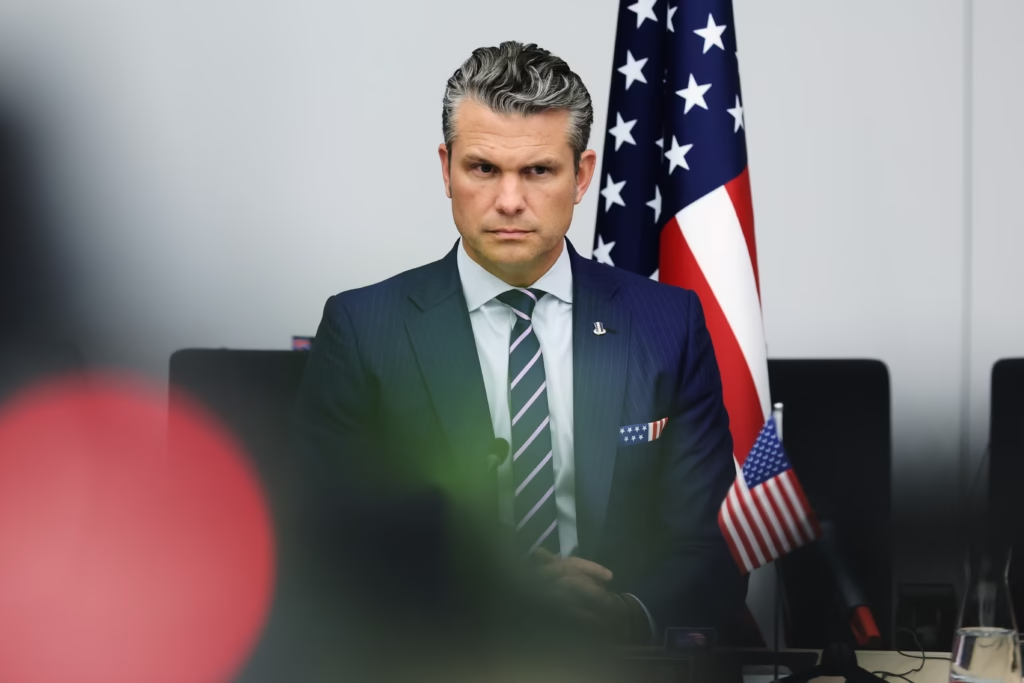
One provision threatens to withhold 25% of Defense Secretary Pete Hegseth’s travel budget unless he provides Congress with unedited video of the attacks and the orders authorising them. Analysts say the clause reflects unusual tensions between the Trump administration and the Republican-controlled House over military oversight.
“This is a very strong move by the House,” Al Jazeera’s Mike Hanna noted, saying it effectively forces the Pentagon to brief lawmakers more thoroughly.
Trump has defended the strikes as essential counter-narcotics operations, even though legal experts widely view them as violations of international and U.S. law.
Debate inside Congress
Hardline conservatives said the bill did too little to scale back U.S. overseas commitments. But House Armed Services Chair Mike Rogers, a Republican, rejected that argument:
“We need a ready, capable and lethal fighting force. The threats to our nation, especially from China, are more complex than at any point in the last 40 years.”
Democratic ranking member Adam Smith supported the bill but warned that Congress must reassert control over a Pentagon he described as insufficiently accountable under Hegseth and Trump.
“The biggest concern I have is that the Pentagon… is simply not accountable to Congress or accountable to the law,” Smith said.
Congress aims to complete final passage of the NDAA before its holiday recess.