


TEHRAN (Realist English). Mediators believe the parties are close to an agreement to extend the ceasefire between the United States and Iran by 60 days. The deal would also lay the groundwork for discussions on the Islamic republic’s nuclear programme, the Financial Times reports.
The package includes the gradual reopening of the Strait of Hormuz and a commitment to discuss the dilution or transfer of Iran’s stockpile of highly enriched uranium. The US, for its part, would ease its blockade of Iranian ports and, in phases, agree to sanctions relief and unfreezing Tehran’s overseas assets.
“Solid 50/50”: Trump holds back
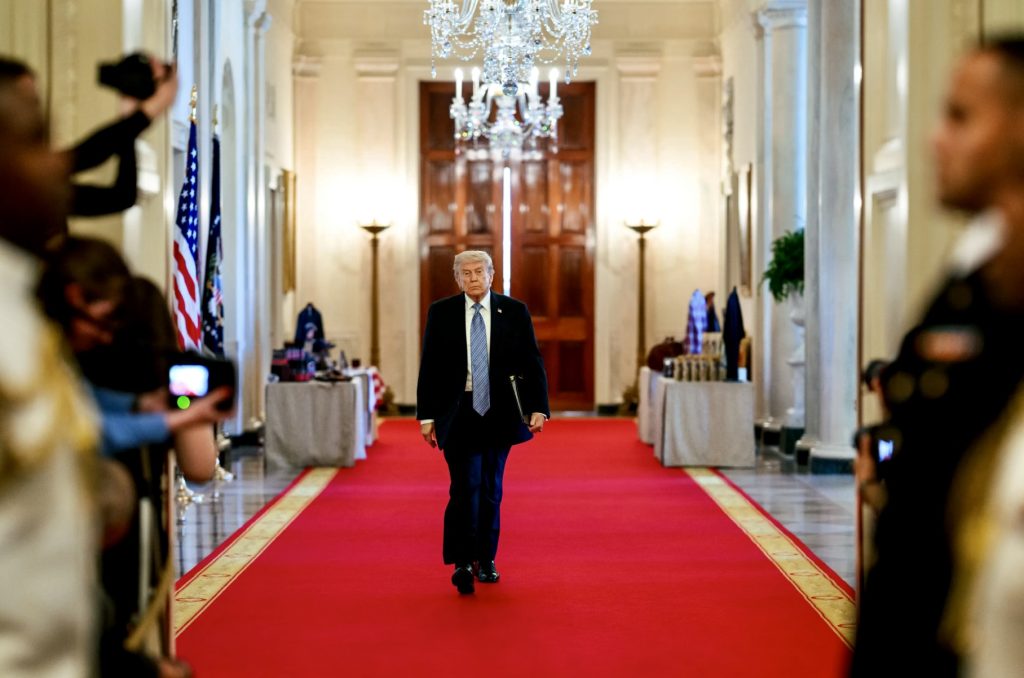
President Donald Trump told Axios on May 22 that he would discuss the proposal with senior advisers, but rated the chances of a “good” deal as a “solid 50/50”. Otherwise, he said, he was ready to “blow them to kingdom come”.
On May 22, Trump was also expected to hold telephone talks with the leaders of Saudi Arabia, Pakistan, Qatar, the UAE, Egypt and Turkey.
Iran: we are preparing a memorandum of understanding
Iranian Foreign Ministry spokesman Esmaeil Baghaei said Tehran is discussing a “memorandum of understanding” to end the war as the first phase of a deal. The details of a broader agreement are to be worked out within 30 to 60 days. “We are now finalising this memorandum of understanding,” Baghaei said.
At the same time, he stressed the contradictory nature of the US position: “On one hand, we have the experience of the American side’s contradictory statements and shifting positions. They have put forth conflicting stances several times. We cannot be completely certain that this approach will not change.
On the other hand, the views are getting closer, not in the sense that we have reached an agreement on such significant issues, but in the sense that we can reach a mutually satisfactory solution based on a set of parameters.”
Pakistan’s role and Ghalibaf’s position
After Field Marshal Asim Munir, Islamabad’s lead negotiator, left Tehran on May 22, the Pakistani army said the talks “resulted in encouraging progress towards a final understanding” between the US and Iran.
Parliamentary speaker Mohammad Bagher Ghalibaf told Munir that Tehran would not step back from its “rights”, especially when dealing with the US, which “has not been sincere and cannot be trusted”.
According to Iranian media, Ghalibaf also said Iran had rebuilt its military capabilities during the ceasefire (which began in early April) and was prepared to respond in a more “crushing” manner should the US commit the “folly” of restarting the war.
Stumbling blocks: nuclear ultimatum
One of the main obstacles remains Trump’s demand for the transfer of Iran’s uranium stockpile (440 kg enriched to 60%) and the dismantling of its three main nuclear sites – Natanz, Fordow and Isfahan – which were destroyed during the joint US-Israeli 12‑day war in June 2025. The highly enriched uranium is believed to be beneath the rubble of those sites, mostly at Isfahan.
Threat of a new war and position of US regional allies
Intense efforts to reach an agreement and build on the fragile ceasefire agreed on April 8 are driven by fears that if no deal is reached, Trump would resume strikes, escalating a war that has already spread across the Middle East.
Washington’s regional allies fear that a resumption of US-Israeli strikes would cause Iran to retaliate by striking Gulf states, which have already suffered from Iranian attacks, and exacerbate the worst global energy crisis in decades.