


TEHRAN (Realist English). On June 1, the US armed forces and the Islamic Revolutionary Guard Corps (IRGC) exchanged new strikes.
The escalation came as negotiators from both sides, with Pakistani mediation, try to finalize the text of a 60‑day memorandum of understanding aimed at ending the three‑month war and reopening the Strait of Hormuz.
Despite a formal ceasefire declared in early April and extended indefinitely by US President Donald Trump, military activity has not subsided.
US Strikes: Eliminating Air Defense and Drone Control Centers
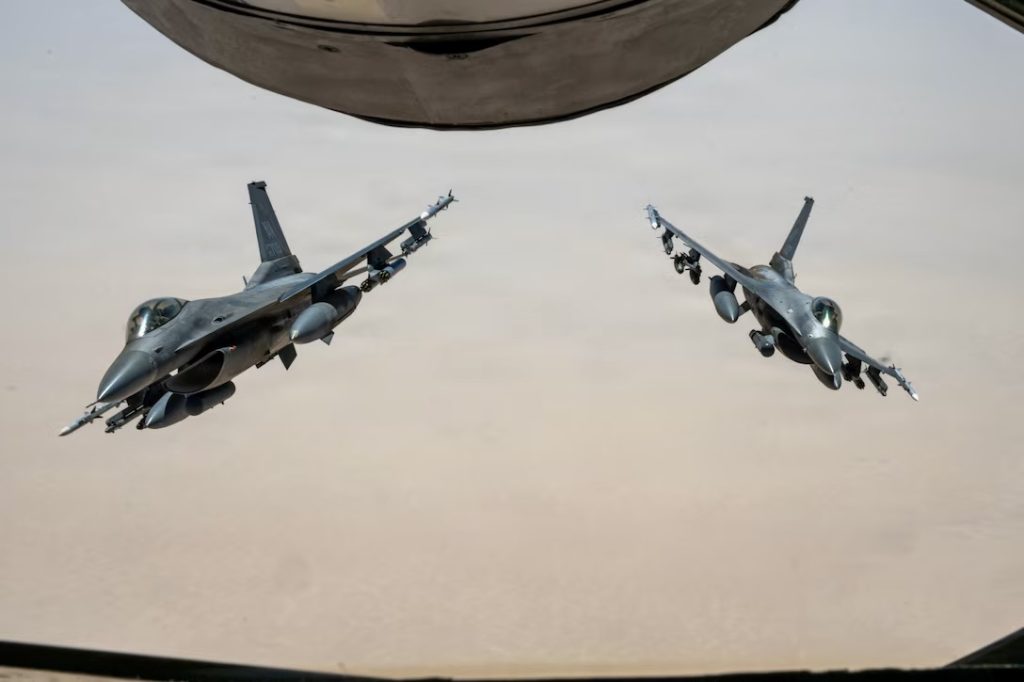
On May 30–31, US fighter jets carried out “proportional and deliberate strikes” on Iranian radars and drone control centers in the Goruk area and on Qeshm Island in the Strait of Hormuz. A spokesman for US Central Command (CENTCOM) said the operation was in response to the earlier downing of an American MQ‑1 Reaper drone operating over international waters.
A Pentagon statement emphasized that the strikes targeted “clear threats to vessels in regional waters”: the fighters destroyed Iranian air defense systems, a ground control station and two kamikaze drones. This is the third such wave of attacks in the past week and a half.
IRGC Retaliation: Missile Strike on Air Base in Kuwait
Iran reacted immediately. On June 1, the IRGC claimed responsibility for an attack on an air base from which, according to Tehran, the Americans had been conducting offensive operations. Kuwaiti air defense forces intercepted “enemy missiles and drones,” but debris fell on the base. Several people were reported wounded.
Later, the IRGC issued a warning: if attacks are repeated, “the response will be completely different in scale and nature,” and responsibility for escalation will be placed on the United States.
Diplomatic Impasse and Tough Bargaining
The escalation comes against the backdrop of extremely tense, almost deadlocked negotiations. The main sticking points are:
- The Strait of Hormuz: Iran continues to insist on its sovereignty over the strait and refuses to open it to free navigation, proposing instead a joint control commission involving Russia, China and Pakistan.
- Nuclear program: Tehran believes the US must first unfreeze $12 billion of Iranian assets before discussing its fate.
- The Lebanese front: Iran ties any agreement to a complete ceasefire on all fronts, including the Lebanese front, where Israel has recently captured the Crusader castle of Beaufort.
Contradictory Statements from the Sides
- Donald Trump, despite the attacks, said on May 31 that the US was “close to a very good deal,” claiming that Iran had allegedly agreed not to develop nuclear weapons. Later he threatened that, if necessary, the US would “finish the job another way.”
- Iranian Foreign Minister Abbas Araghchi called not to believe rumors of an imminent signing, stressing: “Discussions continue, and until a clear result is achieved, it is premature to draw any conclusions.”
What Next?
Analysts believe that if the sides fail to reach a compromise before the current agreements expire, the Middle East risks once again finding itself at the epicenter of a full‑scale war. For now, diplomats in Doha continue their work, while military forces on both sides remain on high alert.