


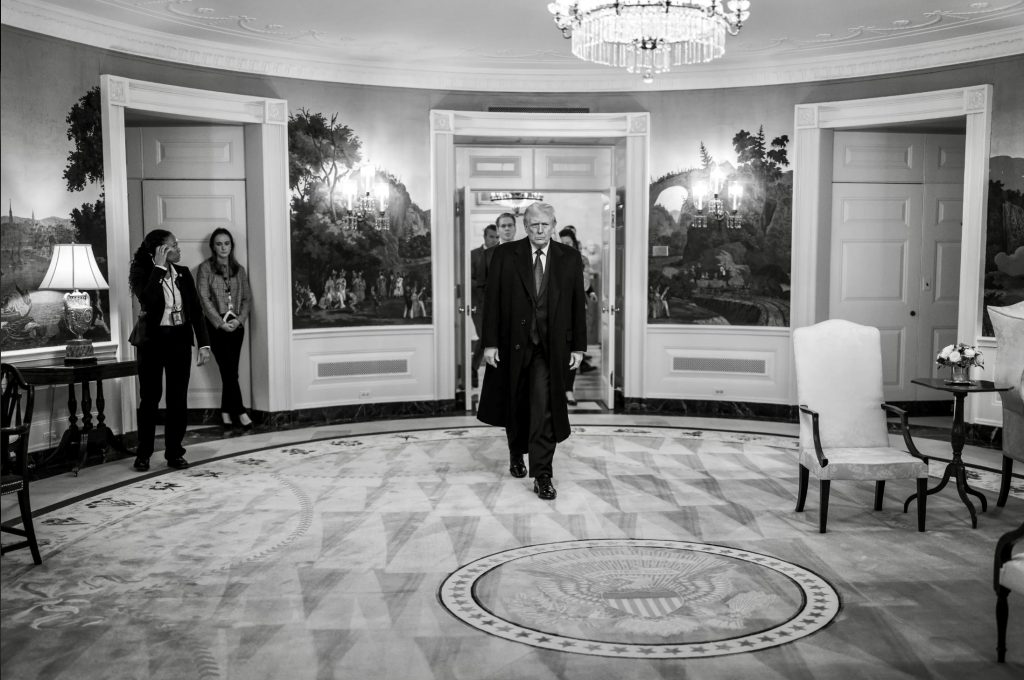
PARIS (Realist English). US President Donald Trump and Iranian President Masoud Pezeshkian have signed a memorandum of understanding, bringing an end to nearly four months of war between the two countries. The ceremony took place on June 17 at the Palace of Versailles, on the sidelines of the G7 summit in France — one day earlier than originally planned.
The document, known as the “Islamabad Memorandum of Understanding,” was signed in two copies — in English and Persian. The ceremony had initially been scheduled for June 19 in Geneva, but after a personal meeting between the leaders in France, the need for that ceremony was obviated.
Electronic signature and confirmation by both sides
The memorandum was signed in two stages. On June 14, the document was electronically signed by US Vice President JD Vance and Iranian Parliament Speaker Mohammad-Bagher Ghalibaf. President Trump acted as a witness to the electronic ceremony. The physical signature of the White House chief was affixed in Versailles during a dinner with French President Emmanuel Macron.
The Iranian side confirmed the signing of the document. Iranian Foreign Ministry spokesman Esmaeil Baghaei stated that the text of the memorandum had been “finally agreed and signed by both sides.” According to him, “now is the time to test the implementation of the agreement in practice.”
Key provisions of the 14-point agreement
The memorandum, containing 14 points, provides for:
Immediate ceasefire — military operations are to cease on all fronts, including Lebanon.
Opening of the Strait of Hormuz — Iran undertakes to restore free passage for commercial vessels through the strait, while the US lifts its naval blockade of Iranian ports.
60-day negotiation period — the parties undertake to conclude a final agreement within 60 days, with the possibility of extension by mutual consent.
Nuclear issue — Iran confirms that it will not produce or develop nuclear weapons. Enriched uranium will be diluted on site under IAEA supervision. Final arrangements on the nuclear programme are to be reached during the 60‑day negotiations.
Lifting of sanctions — the US undertakes to terminate all types of sanctions against Iran, including both unilateral US restrictions and UN Security Council resolutions.
Reconstruction plan — the creation of an economic development programme for Iran worth at least $300 billion with support from regional countries is envisaged. Trump has repeatedly stressed that the US will not contribute its own funds to this fund.
Trump’s reaction: ‘Agreement signed’
President Trump confirmed the signing to journalists: “It’s signed. I signed it in Versailles.” The White House chief said the agreement would prevent a “global economic catastrophe,” but warned that if the final negotiations fell through, the US would “bomb Iran.”
Iran: mistrust remains
Despite the signing, the Iranian side is showing cautious optimism. Parliament Speaker Ghalibaf told state media that his distrust of the US remains and that “Iran’s finger is on the trigger.”
He also indicated that the Strait of Hormuz “will not return to pre-war conditions” — after the 60‑day period, Iran may introduce a fee for ship passage.
Market reaction
Following the announcement of the agreement, oil prices fell. During Asian trading on June 18, Brent crude declined by about 1% to $78.79 per barrel. However, prices remain roughly $8 higher than before the conflict began.
Outlook
The signed memorandum is only the first step. The main issues — the fate of Iran’s nuclear programme, the mechanisms for lifting sanctions, and the long‑term status of the Strait of Hormuz — will be addressed during the 60‑day negotiation period.
Iranian Foreign Minister Abbas Araghchi had earlier stated that an agreement with the US “has never been closer,” but a final settlement will require serious compromises from both sides.