


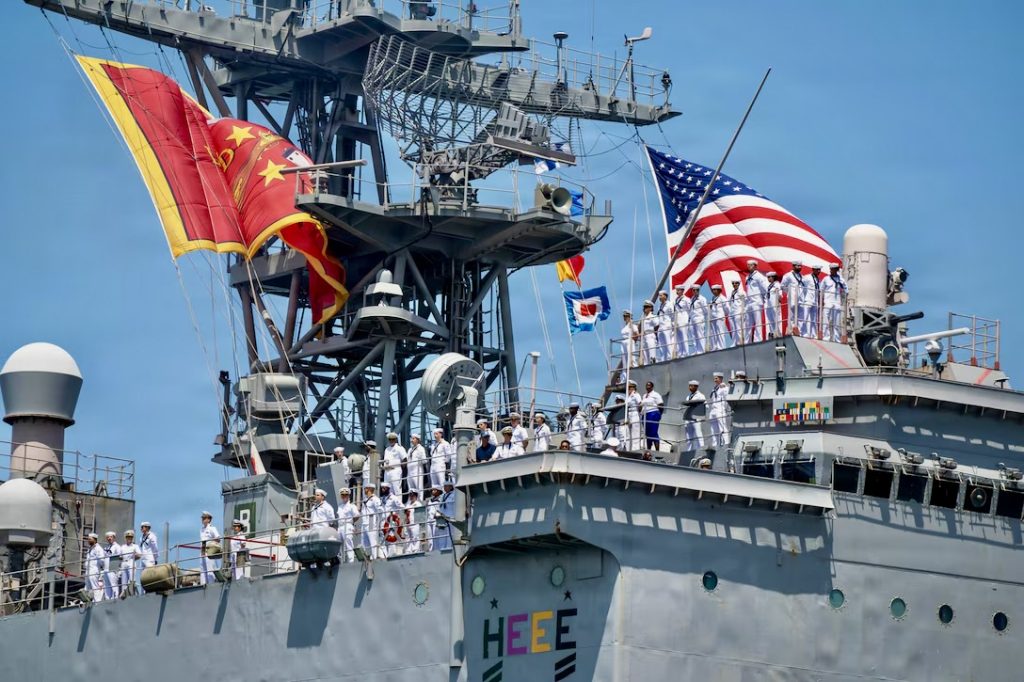
BRUSSELS (Realist English). The United States has demanded that its European NATO allies and Canada immediately increase the number of manned and unmanned aircraft, as well as warships, contributed to the alliance’s defense plans.
The reason is the systematic reduction of the US military presence in Europe, which the administration of Donald Trump explains as a need to reallocate resources to other theaters of operation.
US Withdrawal from the Role of Main Guarantor
The statement, made on June 3 by the Commander of NATO’s Joint Forces in Europe and head of US forces in Europe, US Air Force General Alexus Grynkewich, became the first public signal of which areas Washington intends to cut and where it expects allies to step in.
Earlier, in May, the US side notified partners of its decision to reduce its contribution to the so-called NATO Force Model — a pool of forces that could be activated in a crisis — but details were not disclosed.
“There has been an unhealthy co-dependence in the NATO Force Model on US forces,” Grynkewich said in a written statement. “President Trump, Secretary Hegseth and others have been clear that this needs to change, and it will change. The potential reality of simultaneous conflict in multiple theaters demands it.”
A Third Fewer Fighters
According to a report by German magazine Spiegel last week, the number of US fighter jets available to NATO will be reduced by a third. In addition, the US will provide fewer destroyers and no submarines as part of the crisis pool. Europe will also have to provide its own reconnaissance drones, while Washington plans to significantly scale back the supply of armed models.
A spokesperson for NATO’s military headquarters, US Army Colonel Martin O’Donnell, tried to soften the impact, stating that the areas mentioned by Grynkewich are “where allies already have or soon will have sufficient capabilities, meaning no defence gaps are expected to emerge.”
According to him, countries “just need to assign the capabilities they have to NATO.”
He declined to elaborate on when the command expects European countries and Canada to replace the outgoing US capabilities. NATO leaders will meet at a summit in Ankara in July.
Unprecedented Strain Within the Alliance
NATO is experiencing unprecedented strain. Trump’s decision to reduce forces available for Europe’s defense only intensifies fears in a number of European capitals that Washington might leave the alliance entirely. Earlier, the US president repeatedly criticized NATO and stated that Europeans must take primary responsibility for the continent’s defense.
Grynkewich emphasized that manned and unmanned aircraft, as well as warships, are precisely the two areas where Canada and European allies “can step up now and in the near term — as the United States reduces forces ‘sourced’ to the NATO Force Model in Europe and refocuses them elsewhere.”
Aviation: Current Estimates
According to military analysts, at the beginning of June 2026, the US tactical aviation group in Europe could number about 50 combat aircraft. This figure is approximate, as it constantly changes due to redeployments and scheduled rotations. A more detailed picture comes from analyzing key air wings.
For example, it is known that F-15 and F-35 squadrons are based at RAF Lakenheath in the UK. According to reports, the US European Command’s area of responsibility may include: 36 F-35s, 24 F-15s, 28 F-16s, and 12 F-22s.
However, these data are not static and reflect the situation at a specific moment, including temporary deployments.
One thing is certain: the administration has notified NATO allies of its decision to reduce by roughly a third the number of US fighter jets available to the alliance in Europe by 2029.
Submarine Fleet: No Permanent Basing
Unlike aviation, the US has no permanent submarine base in Europe. Nuclear submarines (both multi-purpose and strategic) conduct regular but temporary voyages into the Atlantic and Mediterranean waters.
Approximately 3–4 US nuclear submarines may be present in European waters at any given time.
This composition is also variable and depends on the operational situation. As part of the same package of measures announced for aviation, it has been announced that the US will completely stop allocating its submarines for NATO needs in Europe from 2029.