


MOSCOW (Realist English). A memorandum of understanding between the United States and Iran has been signed in Islamabad — the first step toward ending the armed conflict between the two countries.
However, according to Stanislav Ivanov, a leading researcher at IMEMO RAS and Candidate of Historical Sciences, the implementation of this document is fraught with serious obstacles, the main ones being the situation in Lebanon, Israel’s position, and the lack of clear mechanisms on key military and economic issues.
The analyst, specifically for Realist English, examines the “pitfalls” of the Islamabad memorandum and assesses the chances for peace in the region.
The Islamabad Memorandum: A Protocol of Intent
On the night of June 18, the US and the Islamic Republic of Iran remotely signed a memorandum in the Pakistani capital as a first step toward ending the armed conflict between the countries. This document supposedly should give the “green light” to negotiations on a wider range of issues.
Later, technical negotiations between the US and Iran took place in Switzerland, during which the parties agreed on a “roadmap” for reaching a final peace agreement within 60 days.
The “Islamabad Memorandum of Understanding between the US and the IRI” includes 14 points, the most important of which is Tehran’s renunciation of any plans to acquire or develop nuclear weapons. The document is publicly available, and readers can freely familiarise themselves with its contents.
Although the very first point of the memorandum includes an immediate cessation of hostilities between the signatory countries and their allies, it is still premature to talk about a lasting peace in the region.
The Lebanese Knot: The Main Obstacle
The main obstacle to the implementation of this document could be the actions of Israel and the Lebanese non-governmental military-political group Hezbollah, which remain in acute confrontation.
Will Tehran be able to secure a halt to Hezbollah’s strikes on Israel, and is Washington able to initiate the withdrawal of Israeli troops from southern Lebanon? So far, there are no prerequisites for such a scenario.
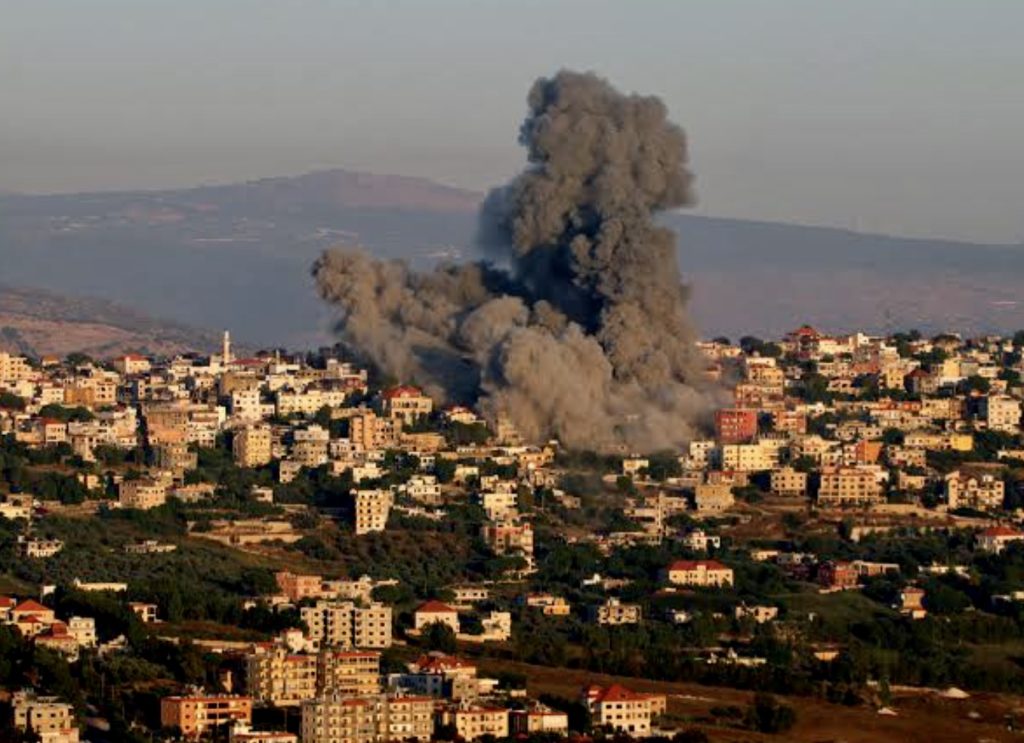
The IDF controls significant territories in southern Lebanon and carries out missile and bomb strikes not only along the line of contact in the south but also on certain areas of Beirut. These attacks even served as a reason for Tehran to temporarily suspend negotiations in Switzerland and declare its readiness to again block the Strait of Hormuz.
Only on June 19 did the US and Iran manage to achieve a ceasefire between Israel and Hezbollah.
The memorandum provides for ensuring the territorial integrity and sovereignty of Lebanon. At the same time, Netanyahu’s government, in cooperation with the Lebanese authorities, is seeking the disarmament of Hezbollah fighters as illegal armed formations and the creation of a security zone in southern Lebanon under the control of the Lebanese national army.
The Lebanese government, in turn, is interested in restoring order in the country and neutralising the threat to internal security posed by Hezbollah and its external sponsors and handlers from Tehran.
Lebanon Against Iranian Influence
Back in March 2026, the Lebanese Foreign Ministry revoked the accreditation of Iranian Ambassador Mohammad Reza Shibani and declared him persona non grata. At the same time, the Lebanese authorities recalled their ambassador to Tehran, Ahmad Suwaydan, for consultations.
At the same time, dozens of officers of the Iranian Islamic Revolutionary Guard Corps (IRGC) and members of their families were forced to urgently leave Beirut and the territory of Lebanon. This happened against the backdrop of another phase of escalation of the conflict, ultimatums to the Lebanese government from Israel, and strikes on the positions of pro-Iranian Al-Quds units in Lebanon.
Nevertheless, it is unlikely that Hezbollah’s leaders will voluntarily agree to disarmament. In their time, the Iranian authorities invested significant financial and material resources in the creation and functioning of this group, helped with weapons, and continue to view Hezbollah as an important link in the “axis of resistance” to Israel.
Despite the fact that after the events of October 7, 2023, when Hezbollah fighters opened their front of struggle against Israel, the spiritual leader of this organisation, Nasrallah, was killed, a number of his associates and many field commanders died, the group as a whole suffered heavy losses in manpower and combat strength in battles in Syria and southern Lebanon, and its land and air communications with Iran were interrupted, it has survived and continues to remain, as it were, a state within a state.
Relying on the support of the Lebanese Shia community and Palestinian refugees, Hezbollah plays an important role in the political life of Lebanon, and its armed forces are not inferior to the country’s regular army.
It cannot be ruled out that it is the situation in Lebanon that will become one of the obstacles and a testing ground for the implementation of the provisions of the memorandum between the US and the IRI.
The Israeli Factor: Missile Programme and Proxy Forces
An equally complex problem could be the absence in this document of a clause on limiting Iran’s missile programme and Iran’s abandonment of support for its proxy forces in the Middle East. Israel’s leadership considers it vital to include these provisions in the final peace agreement between the US and Iran.
It is obvious that Jerusalem will use all its capabilities in the US Congress and Trump’s entourage to ensure that Israel’s national interests are taken into account in the final document.
Economic and Logistical Challenges
It will not be easy for the signatory countries of the memorandum to quickly establish safe navigation in the Strait of Hormuz, since there is still no clear idea of who will be engaged in its demining. The clause on investing $300 billion in the reconstruction and economic development of Iran also sounds declarative.
Which specific countries, when, on what terms, and in which projects will invest — all this will have to be discussed and agreed upon during subsequent rounds of negotiations.
The parties will also have to develop a procedure and schedule for unfreezing Iranian assets and lifting sanctions against the IRI, including UN Security Council resolutions, resolutions of the IAEA Board of Governors, and unilateral restrictions from Washington, which will give permission for the export of Iranian oil, petroleum products and all related services, including banking operations, insurance, transportation and others.
Prospects: 60 Days to Test Intentions
Thus, the memorandum signed in Islamabad is a first step towards peace and security in the region. For now, it can be regarded only as a protocol of intentions of the parties and nothing more.
The next 60 days will show how seriously the signatory countries and their regional allies take the implementation of all points of the memorandum.