


WASHINGTON (Realist English). The United States and Israel launched coordinated strikes on Iran on Saturday, targeting senior leadership and military infrastructure in an operation President Donald Trump said was aimed at eliminating a security threat and opening the door for political change in Tehran. Iran responded with missile launches toward Israel, raising fears of a broader regional escalation.
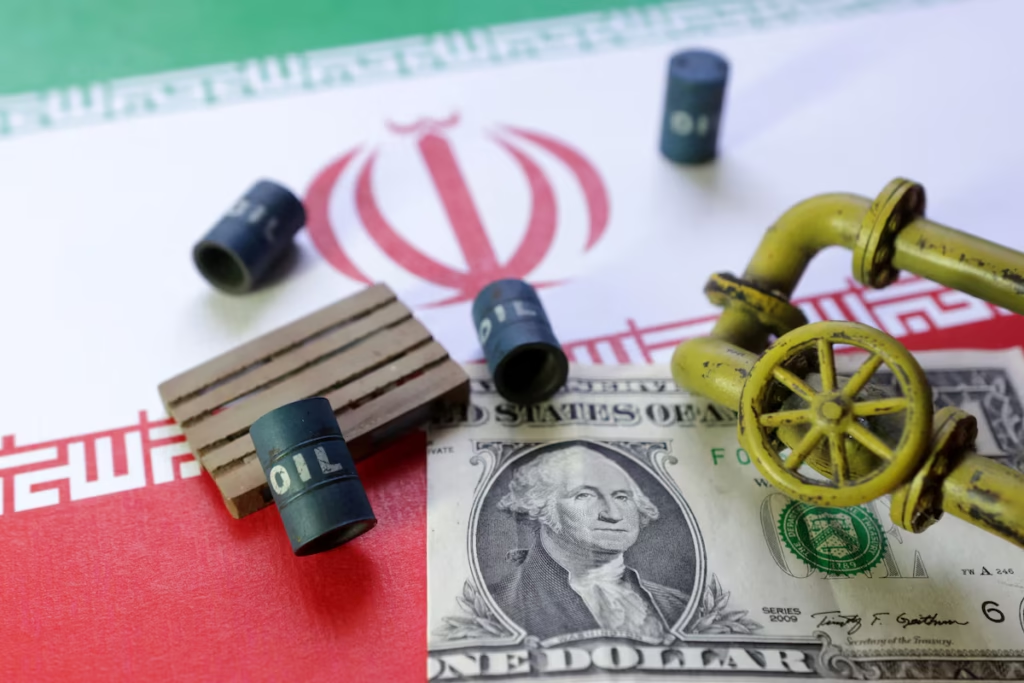
The renewed conflict has immediately unsettled global markets, particularly in the energy sector. Iran is a major oil producer and sits across the Strait of Hormuz from the oil-rich Gulf states. Roughly 20% of global oil supply passes through the narrow waterway, making it a critical chokepoint for energy markets.
Brent crude, which was trading near $73 per barrel on Friday and already up about 20% this year, is expected to rise further if tensions persist. Some major oil companies and trading houses have reportedly suspended shipments through the Strait of Hormuz following the strikes. Analysts at Capital Economics said that even a contained conflict could push Brent toward $80 per barrel, while a prolonged disruption could lift prices toward $100, potentially adding up to 0.7 percentage points to global inflation.
Beyond oil, the conflict is likely to fuel volatility across asset classes. Global markets have already experienced sharp swings this year amid US tariff measures and a downturn in technology stocks. The VIX volatility index has climbed significantly, while bond market volatility has also increased.
Currency markets are expected to react depending on the scale and duration of hostilities. Analysts note that during the brief June war last year, the US dollar initially weakened but quickly recovered. If oil supplies are significantly disrupted, the dollar could strengthen against most currencies, reflecting the United States’ position as a net energy exporter. Traditional safe-haven currencies such as the Japanese yen and Swiss franc may also benefit.
Israel’s shekel is likely to remain sensitive to developments. It fell sharply at the outset of previous confrontations but later rebounded. Some analysts warn that a more sustained conflict or broader operations against Iran-aligned groups could weigh more heavily this time.
Safe-haven assets are already drawing attention. Gold, which has gained more than 20% this year, could see additional inflows, as could silver. US Treasury bonds may also attract demand, continuing a recent decline in yields. In contrast, bitcoin — once viewed by some as a hedge — has declined, shedding significant value in recent months.
Regional markets will provide an early gauge of investor sentiment. Stock exchanges in Saudi Arabia and Qatar, which are closely tied to oil price movements, may face pressure if hostilities intensify. Gulf equities could fall several percentage points in the event of sustained fighting.
The aviation sector is also exposed. Airlines have begun cancelling flights across parts of the Middle East, and further airspace closures could affect carriers globally. Conversely, defense companies — particularly in Europe — may see renewed investor interest amid expectations of higher military spending.
The trajectory of oil supply, shipping through the Strait of Hormuz, and the scope of military operations will be key factors shaping global financial markets in the days ahead.