


WASHINGTON (Realist English). The US administration has warned European allies, including the United Kingdom, Poland, Lithuania and Estonia, of lengthy delays in the delivery of American weapons, the Financial Times reports.
The reason is the depletion of Pentagon stockpiles during the war with Iran, which has now lasted more than two months.
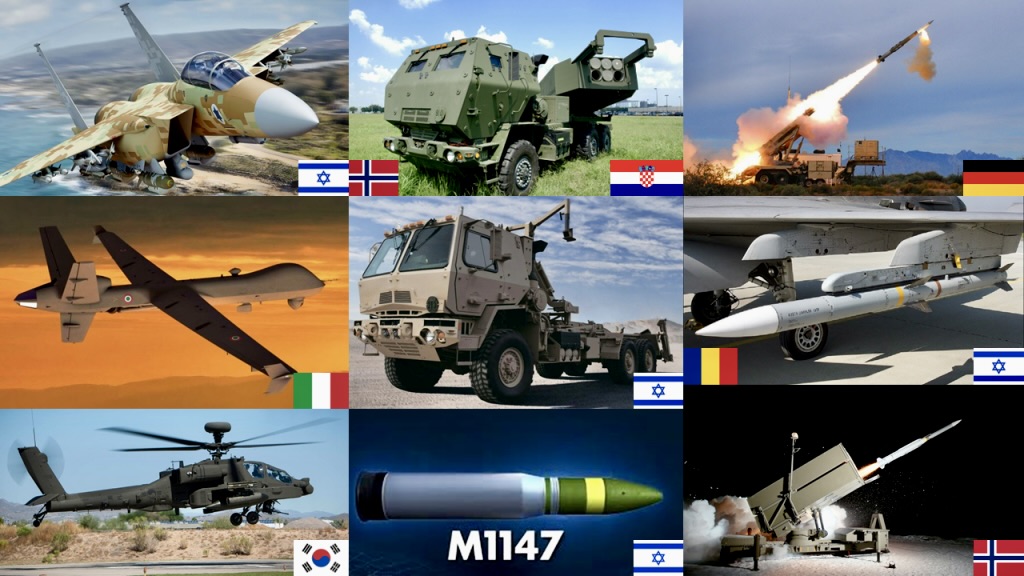
Shipments of missiles for HIMARS and NASAMS systems, critical both for Ukraine’s defence and for containing China, are at risk.
Pentagon warns allies
According to nine sources familiar with the matter, the Pentagon has informed allies of serious delays in the delivery of several missile systems. Two sources said negotiations were also underway to postpone shipments to Asia.
The delays will affect munitions for High Mobility Artillery Rocket Systems (HIMARS), manufactured by Lockheed Martin, and medium-range surface-to-air missile systems NASAMS, co-produced by Raytheon and Norway’s Kongsberg.
Cause: Iran war depletes US arsenals
Heavy munitions consumption over two months of conflict with Iran has raised acute concerns about the level of Pentagon stockpiles. US forces have already been forced to move weapons from other regions, including the Indo-Pacific, to make up for the shortfall. Moreover, the war has exacerbated fears that the US may lack sufficient weaponry to deter China or prevail in any future conflict over Taiwan.
Impact on Ukraine
The delays are causing alarm in Europe and are bad news for Ukraine, which has been fighting a full-scale war with Russia for four years and fears a weakening of US support. According to a senior Ukrainian official, shipments of US weapons to Kyiv have faced delays since the start of the Iran war. Ukrainian President Volodymyr Zelenskyy has said that late arrivals sometimes leave Patriot launchers empty during Russian missile barrages.
Pentagon response and expert opinion
The Pentagon said it is “carefully evaluating new requests for equipment from partners as well as existing arms transfer cases to ensure alignment with operational needs,” but declined to provide details, citing the “operationally sensitive nature of these matters.”
Tom Wright, a former official in the Biden administration now at the Brookings Institution, said: “The Pentagon may now need to fight a long war in the Middle East and it’s also desperate to shore up deterrence in the Indo-Pacific. It’s more than willing to throw Europe under the bus to do that. Europe needs to rebuild its own defence industrial base at warp speed.”
Concerns in Asia and Trump’s position
Experts warn that US allies in Asia should also prepare for delays. Christopher Johnstone, a former senior Pentagon official at The Asia Group, said: “Allies in Asia are likely underestimating the impact that US munition shortfalls will have on them and how long the impact will last. Japan was already deeply frustrated with delivery delays for systems they have paid for, including the Tomahawk cruise missiles. This reality will drive Japan, South Korea and other allies to focus more heavily on indigenous and non-US options, even in areas where US equipment is clearly superior.”
President Donald Trump, responding on 1 May to concerns about inventories, said: “All over the world, we have inventory, and we can take that if we need it.” He also said defence companies had agreed to “quadruple” output of high-precision systems. However, according to Admiral Samuel Paparo, commander of the US Indo-Pacific Command, big defence contractors will need as long as two years to increase production to the scale needed to address the inventory shortfalls.
Scale of the problem
NASAMS customers include Taiwan, Norway, Finland, Spain, the Netherlands, Lithuania, Indonesia, Australia, Hungary, Ukraine, Denmark, Qatar and Oman. HIMARS systems are used by 14 US partners, including Taiwan, Ukraine, Poland, Estonia, Australia and the United Arab Emirates.
Special approach to Israel
Since the start of the war on 28 February 2026, Israel has received more than 115,600 tonnes of military cargo from the United States.
In just two weeks in April, 403 heavy air cargo flights and 10 sea shipments were used.
On 9 April 2026, two ships and several aircraft arrived in Israel with 6,500 tonnes of munitions in a single day, including thousands of ground and air munitions, light armoured vehicles and military trucks.
Israeli Defense Ministry Director General Amir Baram said the flow of munitions would “continue and intensify in the coming weeks.” Additionally, within 48 hours, 30 US military transport aircraft (29 Boeing C-17 Globemaster IIIs and one Lockheed Martin C-130J Hercules) flew from Germany to the Middle East.
Seven of them were destined directly for Israel. Israeli Defense Minister Israel Katz said the shipments were ensuring the Israeli military’s “operational superiority” and allowing its forces to act “effectively on any potential theatre of operations.”