


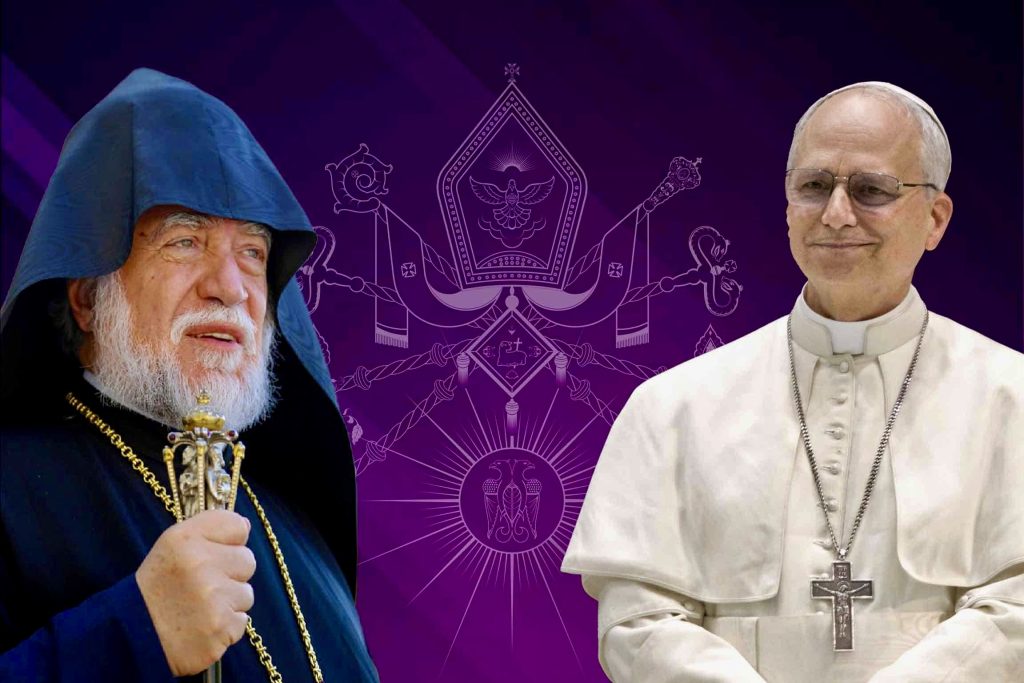
VATICAN (Realist English). During the official visit of Catholicos of the Great House of Cilicia Aram I to the Vatican, the Holy See officially and publicly announced the decision to include the name of Saint Nerses Shnorhali (the Gracious) in the list of saints venerated by the Catholic Church.
This event, which took place on May 18, 2026, has been called the “ecumenism of saints” and is seen as an important step toward Christian unity.
Pope Leo XIV, welcoming Catholicos Aram I, stated: “Recently, Saint Nerses Shnorhali was included in the Roman Martyrology. This is a new example of the universality of saints, which already today unites our Churches.”
As the Pope said, Saint Nerses, who lived eight centuries ago, is a “great pioneer of ecumenism.” His life and work have become a model for the peaceful resolution of religious and ethnic conflicts, which is extremely relevant for the modern world.
The Pontiff also expressed hope that this decision reflects the common spiritual heritage of Christians and highlights the role of saints in strengthening unity between Churches.
Who is Saint Nerses Shnorhali?
Saint Nerses Shnorhali (c. 1102 – August 13, 1173), also known as Nerses IV the Gracious, is one of the most revered figures in the history of the Armenian Apostolic Church. He came from the noble princely Pahlavuni family, was the great‑grandson of the famous theologian Grigor Magistros, and received an excellent education at the school of the Karmir monastery in Cilicia.
In 1166 he was elected Catholicos of All Armenians. His contemporaries gave him the epithet “Shnorhali” (Gracious) for the refined, peaceful and inspired tone of his theological and poetic works. He was not only an outstanding religious leader but also a mystic, poet, composer and diplomat, leaving behind a vast literary heritage, including the famous poems “Jesus, Only‑Begotten Son of the Father” and “Word on Faith.”

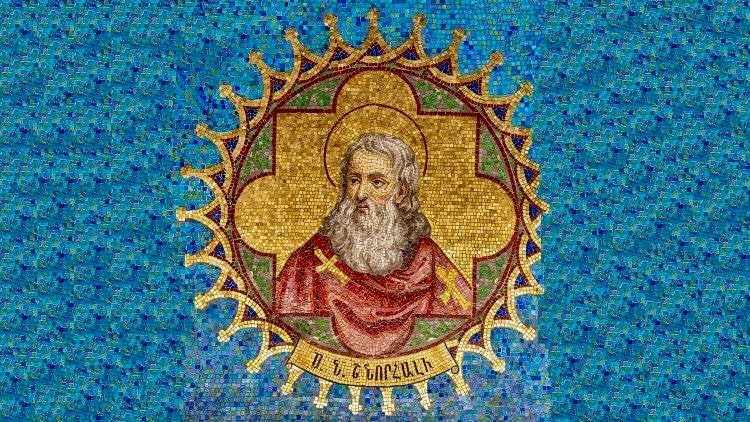
Of particular significance is the fact that he was one of the first thinkers in the history of Christianity to lay the foundations of ecumenism – the movement for the unification of divided Christian denominations.
He conducted active correspondence and negotiations with the Byzantine Church and Emperor Manuel I Komnenos, striving to overcome the dogmatic differences dividing the Christian world. Saint Nerses took part in the Council of Antioch (1141), which initiated communion between the Armenian and Roman Catholic Churches.
Recognition and veneration
The inclusion of Saint Nerses Shnorhali in the Roman Martyrology (the official list of saints of the Catholic Church) was enthusiastically welcomed both in the Vatican and in the Armenian Apostolic Church. August 13 – the date of his blessed repose – was established as his feast day.
The significance of Nerses Shnorhali’s figure was recognised and confirmed at the highest international level on the eve of his inclusion in the Catholic calendar.
- UNESCO recognition (2023): On the 850th anniversary of his death, UNESCO included Nerses IV in its calendar of memorable dates for outstanding personalities and events.
- Vatican conference (2023): An international conference organised by the Pontifical Oriental Institute was held in the Vatican, where he was compared with the greatest Western saints — Francis of Assisi and Bernard of Clairvaux.
- Postage stamp issued (2023): The Vatican postal service issued a commemorative stamp, describing him as an “original spiritual author, deeply immersed in the doctrine of his Church, with complete devotion to the passion of Christ.”
Catholicos Aram I called the event an important gesture that further brings the two Churches together, and expressed deep gratitude and appreciation to the Pope for this gesture of respect toward Armenian spiritual heritage.
This historic decision of the Vatican is expected to become an important milestone in the dialogue between the Catholic and Armenian Apostolic Churches and to serve the cause of strengthening Christian unity in the world.
Nerses IV proved himself not only as a profound theologian but also as a reformer of church music, systematising and supplementing the “Sharagnots” – the main collection of chants of the Armenian Apostolic Church.